
About
The Section has two aims:
- To provide an interdisciplinary forum to promote the use and advancement of microscopy in cell biology. This includes the imaging and quantification of the structure, location and composition of components important to cell behaviour.
- To represent the interests of those using the microscope for cell biology in the UK and internationally by liaising with National and International Societies with similar and overlapping objectives.
Areas in which the Section have a strong interest include:
- The study of living cells, either expressing recombinant fluorescent probes (e.g. the green fluorescent protein) or loaded with vital fluorescent dyes (e.g. ion-sensitive dyes), in order to analyse molecular and organelle dynamics and signalling events.
- The exploitation of established and emerging imaging and quantification techniques involving conventional microscopy, confocal microscopy, low light detection and multi-photon microscopy, together with newer imaging methods such as FRET, BRET, FLIM, FRAP and FLAP; and the use of a range of microscopically useful probes including fluorescent and bioluminescent ion indicators, fluorescent protein-based biosensors, FlaSh probes, nanodots and nanoprobes.
- Localisation of nucleic acids using labelled probes (in situ hybridisation) and enzymes by their actions on artificially applied substrates (enzyme histochemistry).
- Identification of cell constituents with visually-detectable labelled antibody/antigen reactions (immunocytochemistry).
Meetings, Courses and Workshops
The Section organises meetings, courses and workshops throughout the year to encourage education and discussion both on theoretical and applied aspects of the use of microscopy as it relates to cell biology and its interface with molecular biology.
The Pearse Prize
The recipient of the Pearse Prize is decided by The Life Sciences Committee. The prize is awarded to a scientist who has made a significant contribution to histochemistry and life sciences and is still active in their field.
The RMS is committed to being a welcoming, inclusive Society and encourages diversity across all activities and in the membership of our committees and groups.
If you are interested in joining any of the committees in the future, please visit our Join a Committee page.
International Federation of the Societies for Histochemistry and Cytochemistry
The RMS Life Sciences Section is also part of the International Federation of the Societies for Histochemistry and Cytochemistry (IFSHC). Read the latest IFSHC newsletter here:
 IFSHC Newsletter January 2023
RMS Section Awards
Launched in 2014, the Section Awards (formerly known as the Medal Series) recognise those who have made significant contributions to the field of microscopy. The RMS Section Awards celebrate outstanding scientific achievements across all areas of microscopy and flow cytometry with each RMS Science Section able to select a winner for their own award.
Find out more
Committee

Steve Thomas
Steve is a Lecturer in the Institute of Cardiovascular Sciences, College of Medical and Dental Sciences. His interest is in using imaging approaches to understand the cytoskeletal organisation of platelets and their precursor cell the megakaryocyte, and how this regulates platelet production and function. He has a background in plant cell biology and made the move to studying the mammalian cytoskeleton during a postdoc with Prof Laura Machesky. Steve’s recent focus has been on applying new advances in fluorescence microscopy, including TIRF, super-resolution and light sheet microscopy to study how the actin cytoskeleton is required for protrusion of proplatelets through blood vessel walls during platelet formation, and in help platelet aggregates adhere and resist shear forces in blood flow.

Ferran Valderrama
Ferran is a cell biologist with research interest in cell polarity and migration in the physiological context of cancers of epithelial origin (particularly prostate cancer). Our laboratory has been developing 3D cell culture models aiming to recapitulate the early events observed in the glandular structures of the prostate that lead to prostate cancer. Using epifluorescence and confocal microscopy in live and fix specimens we aim to understand how changes in cell polarity and cell migration lead to early disruption of the epithelial organization of the glands (intraepithelial neoplasia) and subsequent proliferation and migration towards the lumen (intraluminal proliferation). We believe that cytoskeleton-adaptor proteins, such as the Ezrin-Radixin-Moesin family, may have an important role in controlling these processes. Since 2013, Ferran is also the academic director of the Image Resource Facility at St George’s University that holds a light microscopy section including widefield, confocal and light-sheet imaging systems as well as an electron microscopy section.

Jacquelyn Bond
Jacquie is a Senior Lecturer in the Leeds Institute of Biomedical and Clinical Sciences, Faculty of Medicine and Health based at St James’s University Hospital. Her research group uses imaging approaches to investigate genes and proteins involved in mitosis, which when mutated cause Autosomal Recessive Primary Microcephaly (MCPH). The group use live cell imaging, confocal, super resolution and high-content high-throughput microscopy to identify and quantitate changes in mitotic spindle orientation, microtubule and actin organisation and cell cycle progression in patient cells and modified cancer cells. Jacquie’s interest in cell biology and imaging has led to her developing a high-throughput high-content imaging bio-screening facility at Leeds, which screens whole and partial genome siRNA/miRNA libraries and small molecule libraries to identify components of biological/disease pathways, therapeutic targets and novel therapeutic drugs. Currently she is the Academic Lead for imaging for the SCIF Flow Cytometry and Imaging Facility, University of Leeds, which for imaging encompasses a number of widefield, live cell and confocal imaging systems and the bio-screening service.

Janosch Heller
Janosch is an Irish Research Council Laureate and Assistant Professor of Biomedical Sciences in the School of Biotechnology at Dublin City University (DCU), Ireland. Additionally, he is an Honorary Lecturer at University College London Queen Square Institute of Neurology, UK. His research group uses a range of microscopy techniques [single molecule localisation microscopy (SMLM), stimulated emission depletion (STED), light-sheet, multiphoton and confocal] to decipher the role that astrocytes play in neurological diseases.
Janosch has been using microscopy as the main tool to answer biological questions for almost two decades. He was the first to adapt SMLM at the Queen Square Institute of Neurology at University College London, UK and investigated the nano-environment of tripartite synapses in rodent brain sections. In 2018, Janosch joined the Royal College of Surgeons in Ireland and the Science Foundation Ireland Research Centre FutureNeuro as a Marie Skłodowska-Curie Fellow. There he used different microscopy techniques to decipher microRNA control of local translation in astrocytic processes in epilepsy. In 2020, Janosch joined DCU to start his research group focussing on astrocytes as therapeutic targets in neurological diseases.

Morag Rose Hunter
Morag Rose Hunter is a cell biologist with a special interest in high throughput, high content imaging assays. After her PhD in Pharmacology at the University of Auckland (New Zealand) and a postdoctoral position at the University of Cambridge (UK), Morag joined AstraZeneca in 2018 as a postdoctoral fellow. Now she is an Associate Principal Scientist in Functional Genomics, running target identification screens with complex imaging and machine learning / artificial intelligence-based analysis techniques. Her long-term interest is in cellular membrane trafficking and it’s influence on the efficacy of RNA therapeutics.

Chun Hao Wong
My research combines microscopy, CRISPR perturbation and high-throughput screening to study cellular processes that can only be uncovered through visualisation. I am interested in the development of spatial imaging technologies to study complex phenotypes. My previous work has applied multiplexed protein mapping, image-based profiling and in situ sequencing to systematically map the genetic perturbation effect at scale. At the Functional Genomics Screening Laboratory, I lead initiatives in forming academic-industry collaborations to apply CRISPR screening, often paired with imaging endpoints across diverse cell models to advance mechanistic understanding.

Alexander Johnson
Dr Alex Johnson is an Independent Research Fellow in Biosciences at the University of Exeter, UK. His research uses a combination of microscopy and spectroscopy to investigate how plant cells interact with their environments. Specifically, the molecular mechanism of plant endocytosis and how they mediate plant growth and development in response to environmental stresses. While his PhD investigated synaptic vesicle recycling in the lab of Prof. Mike Cousin (University of Edinburgh), he became interested in how eukaryotes with different protein machinery and biophysical properties completed the same cellular processes, and thus began to work with plants. He joined the groups of Dr. Christien Merrifield and Dr. Grégory Vert (CNRS-I2BC, France), and later Prof. Jiří Friml (ISTA, Austria), to investigate planta endocytosis, where he established quantitative imaging tools to directly visualise plant endocytosis at the ultrastructural, live single event, and tissue scales. He then joined the lab of Dr. Kareem Elsayad (Medical University of Vienna, Austria), where he developed optical approaches to determine cellular biomechanical properties in a range of biological samples.
Johannes Lehmann
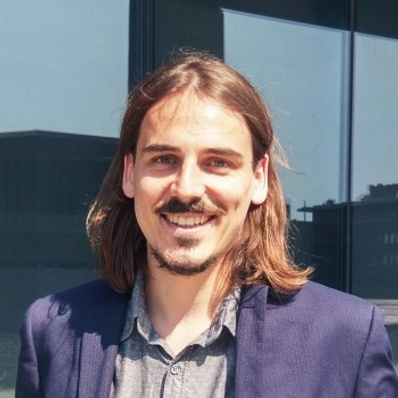
Johannes manages the Digital Pathology Omics Core (DPOC) at the Kennedy Institute of Rheumatology (University of Oxford, UK), where he develops 3D spatial proteomics methods and tools to map cell states across tissues. He is especially interested in making spatial proteomics easier to use, more scalable and more affordable (‘multiplexing for the masses’), tapping geospatial analysis workflows from outside the life sciences and integrating single cell fate recording with tissue-level phenotype mapping.
Johannes started working on spatial proteomics when he characterised cellular senescence in ageing and cancer as postdoctoral researcher in the group of Peter de Keizer at the University Medical Center Utrecht (the Netherlands).
Senescent cells are both rare and heterogenous, so he worked on improving the throughput of spatial proteomics to identify them in biopsies and then leveraged that to build organoid models of ageing and cancer-associated senescence. His interest on senescence in turn stemmed from his PhD with Prof. Gerjo van Osch and Dr. Derk ten Berge at the Erasmus Medical Center Rotterdam (the Netherlands) where he investigated the intersection of ageing and WNT signalling in cartilage regeneration.

Stefan Linder
Stefan is Professor for Cellular Microbiology at University Medical Center Hamburg-Eppendorf (UKE). Stefan completed his PhD, which was focused on the analysis of unusual tubulins in amoeba, in Cell Biology at Ludwig-Maximilians-University (LMU) in Munich in 1997. He then moved to the Department of Medicine in Munich as a postdoc, where he started to work on the cytoskeleton of primary human cells. Following his habilitation for Clinical Cell Biology in 2003, Stefan established his own group at LMU. He was appointed Professor for Cellular Microbiology at UKE Hamburg in 2009. His group is particularly interested in the dynamic regulation of the macrophage actin and tubulin cytoskeletons, especially in the context of intracellular transport, cell migration and invasion, as well as phagocytosis of bacteria (www.linderlab.de). His fascination with cellular and subcellular dynamics led to a strong emphasis on microscopic techniques in the lab, including high speed live cell imaging, macro-based image analysis and superresolution techniques. Stefan admits to being quite partial to podosomes, highly dynamic cellular adhesion and invasion structures. In consequence, he became founding member and co-president of the Invadosome Consortium (www.invadosomes.org), a group of labs focusing on the analysis of podosomes and invadopodia, and served as a coordinator for the FP7-funded international training network „T3Net“ (Tissue Transmigration Training network) from 2009-2013. Stefan has been an editor of European Journal of Cell Biology since 2010 and a member of Faculty of 1000 since 2010
Alan Marron
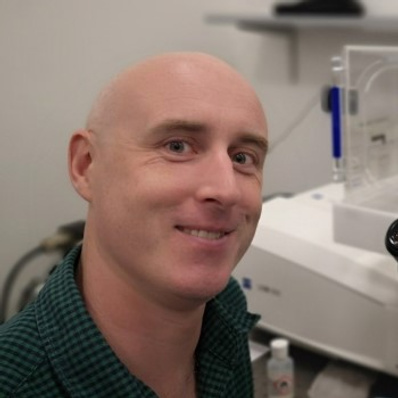
Alan is the Light Microscopy Specialist at the Oxford Brookes Centre for BioImaging. He did his PhD in Michael Akam’s lab at the Department of Zoology, University of Cambridge, investigating the evolution of silicon biomineralization in eukaryotes. This research focused on skeleton formation in choanoflagellates, a protist group that are the closest single-celled relatives to animals. Alan continued this research on choanoflagellates at the University of California, Berkeley and at DAMTP Cambridge. He used techniques such as high-speed imaging and fluorescent silica dyes to study how choanoflagellate colonies and flagella operate, and how their cells form individual skeletal elements. After this, Alan was a postdoc at the Department of Plant Sciences in Cambridge, working on an enhancer trap project to mark different cell types in the model liverwort Marchantia, and to investigate chloroplast dynamics. This involved confocal microscopy, time lapse imaging and laser ablation methods. In Alan’s current role at the Oxford Brookes Centre for BioImaging he is responsible for the running of the microscope facilities and supporting users of the light microscopes and collaborating on bioimaging projects. This involves everything from training and experimental design to image analysis and symposium organization. He is interested is in applying specialist techniques, such as expansion microscopy and FLIM, to more bespoke experimental systems such as protists and plants.


Claire Wells
Claire's laboratory is interested in how cancer cells are able to dissociate from the primary tumour, invade the surrounding tissue and subsequently metastasise to distal sites. They use a lot of microscopy in the work, including confocal, TIRF and FRET in addition to live cell imaging to investigate the role of PAK family kinases in cancer cell migration, adhesion and invasion.
AGM
The 2025 Annual General Meeting of the Life Sciences Section of the Royal Microscopical Society took place on Tuesday 1 July 2025 during mmc2025 incorporating EMAG 2025.
All the Society’s AGMs are free to attend for both members and non-members.