
This meeting is designed to talk about the current challenges in developing and using super-resolution microscopy. With short talks and lots of time for discussion, the workshop will discuss recent advances in super-resolution imaging from new developments in imaging to analysis of super-resolution data. We particularly want to encourage early career researchers to attend and contribute to the meeting. Please contact the organisers if you would like more information on how to contribute.
Scientific Organisers

Ruby Peters
Dr. Ruby Peters completed her undergraduate studies (Physics, MSci) at King’s College London in 2015, where she was awarded several prizes including the Josh Amesbury Award, the Randall Medal, Layton Research Prize and the Gordon Rogers Scholarship. She then undertook doctoral research in the lab of Professor Dylan Owen at King’s College London, where she used state-of-the-art single molecule localisation microscopy (SMLM) to investigate the T-cell actin cytoskeleton. This resulted in the first analytical methods to quantify actin nanoarchitecture from spatial point patterns generated by SMLM, and the Tadion Rideal Prize for the best molecular thesis across King’s College London.
In 2019, Dr. Peters joined the lab of Professor Ewa Paluch at the University of Cambridge as a postdoctoral research associate, where she investigated how eukaryotic cells control their shape through the nanoscale organisation and dynamics of the actomyosin cortex. Her postdoctoral research uncovered that the extent to which the motor protein myosin penetrates the actin cortical layer fundamentally regulates cell mechanics. Alongside her core research, she was further elected to serve as a College Research Associate of St. John’s College Cambridge, she co-organised the Theory of Living Matter seminar series, and co-chaired the Equality, Diversity and Inclusion taskforce.
Dr. Peters joined the School of Mathematical and Physical Sciences at the University of Sheffield in 2024 as a Physics of Life Early Career Fellow. Her research group investigates how the structural, mechanical and material properties of actin cytoskeletal networks drive cell functions. To address this, her group develops advanced fluorescence microscopy approaches to quantify the nanoscale organisation and dynamics of the actin cytoskeleton, applies atomic force microscopy to map the biophysical properties of the cell surface and develops custom analytics to integrate multimodal datasets.
Throughout her career, Dr. Peters has been actively involved with several outreach, mentorship and public engagement schemes, in efforts to improve research culture, grow the UK biological physics community and support the next generation of interdisciplinary scientists.
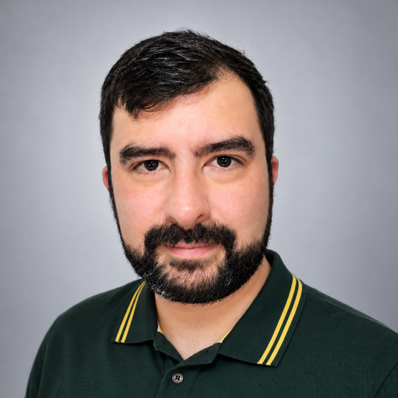
Daniel Nieves
Dr Daniel Nieves is a Research Fellow and Deputy Director of COMPARE at the University of Birmingham. His research focuses on understanding how cell-surface receptors are organised and regulated at the nanoscale, using single-molecule and super-resolution microscopy. He develops and applies approaches including single-particle tracking, SMLM and DNA-PAINT, alongside quantitative and computational methods for analysing molecular organisation and dynamics. His current work particularly focuses on growth factor receptor signalling and on developing new tools and methods for quantitative super-resolution imaging.
RMS Organiser
