Browse through articles previously published in infocus Magazine. If you are an RMS member you can view any article. Non members will be able to read articles over a year old.
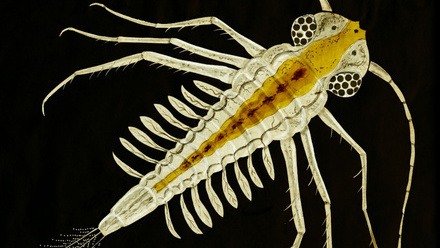
Captivating images created by a 19th-century microscopy pioneer and past president of the RMS were the subject of a fascinating exhibition at a prestigious London gallery earlier this year.
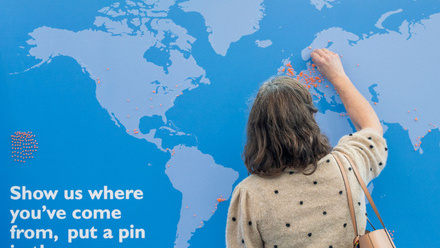
As the dust settles on the 21st International Microscopy Conference (IMC21), we take a look at some of the action from a memorable few days in Liverpool, UK (31 August – 4 September).
As scientists we are fully aware of how important microscopy and other imaging methods are for carrying out biomedical research, and in its translation to clinical benefit for patients.
Microscopy is the science of seeing for oneself. From Leeuwenhoek’s single lenses to the digital instruments of today, its authority rests on the honest recording of what is actually observed under the objective.
Metastasis is the leading cause of cancer mortality. Neutrophils, a type of immune cell, play important roles in cancer with both potent anti- and pro-tumour activities.
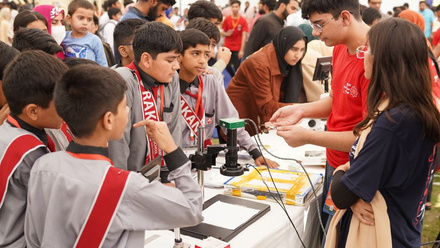
A major outreach and education milestone was recently passed, as the total number of primary school-aged children to have benefitted from the RMS Microscope Activity Kits (MAKs) - since the scheme was established 15 years ago - went beyond 200,000.
infocus is delighted to feature an interview with Professor Kang-Nee Ting, who was recently announced as winner of the 2025 RMS Chris Hawes Outreach and Education
Award.
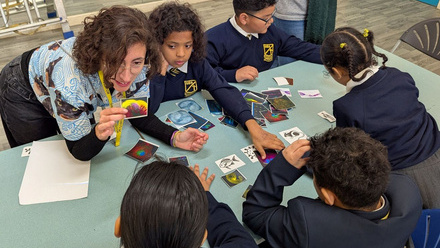
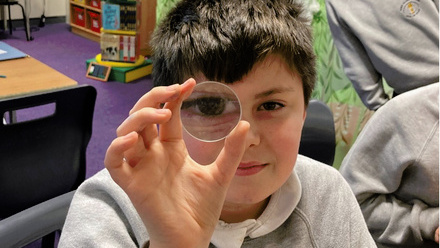
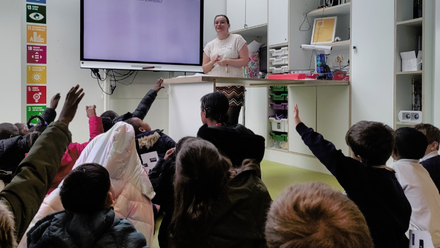
We are the Electron Microscopy Scientific Technology Platform team from the Francis Crick Institute in London, and we share our experience of developing and delivering our Science Ambassador programme ‘Picturing Science in Schools’ to two local primary schools in the London borough of Camden.
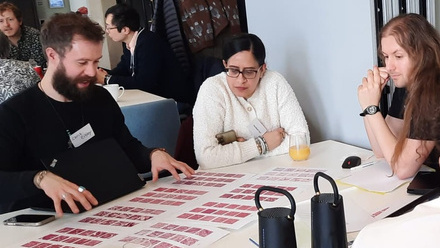
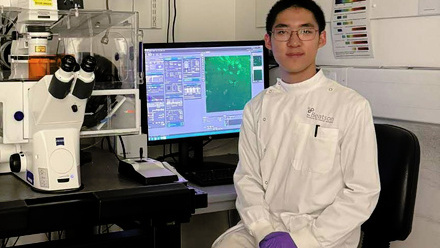
When financial barriers stand between talented students and research experience, potential is lost. The BBSRC-funded BioImagingUK and UK Physics of Life Summer Studentships programme set out to change that — and the results speak volumes about what's possible when we remove obstacles to opportunity.
Atomic force microscopy (AFM) is a powerful technique often used to study surfaces at the nanoscale, helping researchers to better understand the structure and properties of materials.
Peroxisomes are essential organelles found in all eukaryotic cells. They are membrane bound compartments that play a critical role in lipid metabolism and detoxifying toxic products, such as hydrogen peroxide.