
RMS Council
The RMS is governed by its board of Trustees. All actions and updates from each science section are reported to the RMS Council
The RMS Executive Board oversee the main activities of each of the committees, providing a strategic steer to the operational work that the RMS Team deliver and ensuring that the finances of the society are prudently used and that we are meeting our charitable aims all of which are dedicated to furthering the science of microscopy. The executive committee does that through a wide range of activities that support research and education in microscopy, and through enabling microscopists to make advances and developments in microscopy, cytometry and imaging.
The President, Vice President, Executive Honorary Secretary and Honorary Treasurer are the Honorary Officers of the Royal Microscopical Society and have 3-year terms of office. We also have our respective Honorary Secretaries for Physical and Biological Science to ensure a fair and equitable reflection of our diverse communities. In order to reflect our charitable aims we also invite the Chair of the Education and Outreach Committee to attend our Executive Committee meetings.
The Executive Committee meets five times a year and also attends the Executive Finance Committee meetings (held twice a year and also chaired by the President). All members of our Executive Committee are also Trustees of the Society. Our Chief Executive attends these meetings along with the Senior Leadership Team at the RMS.

Peter heads the Imaging and Cytometry Labs within the Technology Facility at the University of York which includes an array of confocal microscopes, flow cytometers and electron microscopes. Peter gained his PhD in the Cell Biophysics Laboratory at the University of Essex and has been involved in many aspects of fluorescence imaging. Research is currently focused on both technology and method development of novel probes and imaging modalities.
Peter has ongoing collaborations with many leading microscopy and cytometry companies and his group also provides research support to many academics and commercial organisations. Peter is also heavily involved with teaching microscopy and flow cytometry which includes organising and teaching on both the RMS Light Microscopy Summer School and the RMS Practical Flow Cytometry courses.

Rik holds a chair in the Institute for Materials Research (IMR) in the School of Process Environmental and Materials Engineering at the University of Leeds. He heads the NanoCharacterisation group based around the Leeds Electron Microscopy and Spectroscopy (LEMAS) centre which is shared between Materials and Earth Sciences and also acts as an EPSRC facility for external UK researchers. He has a general research interest in high spatial resolution chemical analysis in nanostructured materials, and has a current research h index of 32 with over 25 years research experience in nanomaterials characterisation. He has managed extensive national and international collaborations including being current consortium leader for the UK National Facility for Aberration corrected Electron Microscopy, SuperSTEM at Daresbury.
Rik is also on the Management Board of the European Microscopy Society. He has written an RMS Handbook on Electron Energy Loss Spectroscopy (Bios /Taylor and Francis 2001), has co-written a book on “Nanoscale Science and Technology" (Wiley 2005), edited a recent RMS book on Analytical Aberration-corrected Transmission Electron Microscopy with Wiley and has contributed a number of other chapters in specialist books on electron microscopy by other professional bodies covering Physics, Chemistry and Engineering. In recent years his research interests have focused on applying high spatial resolution characterisation methods (particularly TEM and EELS) to the nanochemical analysis of softer, more radiation sensitive materials.
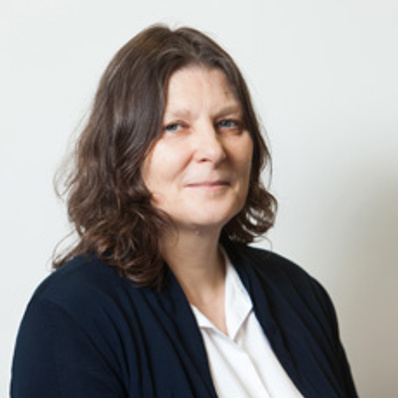
Michelle is Professor of Cell Biology in the Faculty of Biological Sciences. She obtained a BA in Physiology of Organisms at the University of York, and a PhD in Physiology at University College London. She moved to King's College London, and started to use a specialised form of light microscopy (birefringence) to investigate muscle crossbridge orientation. She then worked at UCSF, San Francisco for a year, where she used fluorescence polarisation to investigate muscle crossbridges. She moved back to the UK, to the University of York, to work on insect flight muscle. In 1990 she was awarded a Royal Society University Research fellowship, based at King's College London, and began working on the cell and molecular biology of muscle development, and started to use live cell imaging to investigate muscle cell behaviour in cultured cells, and confocal microscopy to investigate their cytoskeleton. She collaborated with Graham Dunn to use Digitally Recorded Interference Microscopy with Automatic Phase Shifting (DRIMAPS) to investigate cell crawling behaviour. She moved to Leeds in 1997 as a Lecturer, and has continued to use a wide range of both light and electron microscopy approaches to investigate the molecular motors and the cytoskeleton.

Rod has recently retired from his role at Thermo Fisher Scientific where he lead the Sales and Service Organisations as VP & Senior Director for over nine years in Europe, the Middle East and Africa.
Rod is a qualified Metallurgist and spent 13 years in Industry in a variety of roles culminating in heading the analysis department responsible for carrying out residual stress analysis on aerospace bearings for their main customer at Rolls Royce. It was from this position that he took his first steps into a commercial role in 1991 with Philips Analytical X-Ray responsible for XRD & XRF Sales in the Midlands and South West of England before switching to become the UK Sales Manager with FEI Electron Optics in 1998.

Maddy is Professor of Cell Biology at King’s College London. Maddy completed her PhD in Biochemistry within the Department of Medicine at University College London in 2000. During her PhD she analysed the role of mechanical forces in dermal scarring. She then moved to Cancer Research UK laboratories in London for a 4-year postdoctoral position where she used advanced microscopy techniques including FRET/FLIM to dissect adhesion receptor signaling to the actin cytoskeleton and how this controlled directed cell invasion. Based on these achievements, Maddy was awarded a Royal Society University Research Fellowship in 2005 to establish her own group within the Randall Division of Cell and Molecular Biophysics at King’s College London.
Following completion of her fellowship, Maddy was appointed Reader at King’s in 2013 and Professor of Cell Biology in 2015. Maddy has established collaborations with developmental biologists and clinical researchers to study adhesion receptor signalling in skin blistering, wound healing, inflammation and cancer. She works closely with physicists, biophysicists and other world-leading cell migration groups in the field to develop and apply new imaging technologies to dissect spatiotemporal cytoskeletal signalling events in live cells, tissues and whole organisms. As a result of her interest and applications of advanced microscopy, Maddy developed a strong working partnership with Nikon, which subsequently led to the establishment of the state-of-the-art, world-class Nikon Imaging Centre at King’s College London of which she is Director. Maddy also currently works alongside other biotech and pharmaceutical companies to develop and apply advanced imaging approaches to basic mechanisms that underpin drug discovery.

Andy is a Professor in the School of Chemical and Process Engineering at the University of Leeds and has a background in the application of analytical transmission electron microscopy to the characterization of materials, focusing more recently on nanoparticles and beam sensitive materials.

Kerry is a Lecturer in Anatomy at the University of Galway since 2017. She is the Programme Director for the newly established MSc in Microscopy & Imaging at Galway. In 2010 she was awarded her PhD for a microscopy heavy research project which focused on structure function relations in the human endometrium. In 2011 she began work as a Postdoctoral Microscopy Facility Scientist in the Centre for Microscopy and Imaging (CMI) in Galway and was a key member in its establishment.
In the 2014/2015 academic year Kerry acted as a project lead in the “Under the Microscope” Programme, which brought the Microscope Activity Kits from the RMS into Irish Primary Schools for the first time. Following this Kerry was elected on the Outreach & Education Committee of the RMS. With the support of both the RMS and the Microscopy Society of Ireland, the team continue to visit schools all over Ireland and partake in outreach events. In 2018 she succeed Prof Susan Anderson as the Honorary Secretary of Outreach and Education of the RMS. Her current research is focused on the development of correlative light and advanced electron microscopy techniques and technologies. She is keenly involved in the acquisition of microscopy related research infrastructure, and the development of adequate training and career progression pathways for Imaging Scientists and Core Facility Staff.
Our Council of Trustees has the ultimate responsibility for directing the affairs of the RMS and also ensuring that we are solvent, well-run, and delivering the charitable outcomes for which we were set up. The Council sets and monitors our strategy, which in turn delivers these charitable outcomes.
As a charity, we are governed by our Council. Our Council are made up of members of the Executive, Ordinary Members and also Chairs of our Sections (topic based committees whose role is to advise the Society as to what training, resources are needed within their fields of interest. All our council members are also Trustees.
Our Executive, Council and Section members are comprised of elected representative members, who contribute to guiding and driving our strategies and activities.
All members of the Council serve for a three year term of Office. The Council is chaired by the RMS President.
While the majority of our Executive Committee and Council representatives are drawn from the RMS membership, we are proud to announce that we have recently begun recruiting for a Lay element. This is part of our commitment to ensuring we are following the Charities Commission advice around what a healthy Executive Committee and Council should look like. Our lay trustees offer a valuable, external view, and are recruited with specific skills in mind to ensure we can draw on the requisite expertise for overseeing an international membership organisation.
Trustees give their time voluntarily and are not remunerated for their work on behalf of the RMS. Council generally meets three times per year.

The RMS is governed by its board of Trustees. All actions and updates from each science section are reported to the RMS Council
The delivery of our strategy and the management of the RMS is delegated to the Chief Executive, Sali Davis, who is supported in this by the Executive Committee. You can find more information on the Executive Committee below.

The day to day management of the Society is the responsibility of the Executive Committee, it consists of the President, the Vice-Presidents and Honorary Secretaries for Science and Education, the Honorary Treasurer and the Honorary Secretaries Science
The day-to-day management of our publishing activities is delegated to the Journal of Microscopy General Editor, Michelle Peckham. You can find more information on our Journal of Microscopy below.
The RMS has a Nominations Committee which meets to ensure that there is a healthy succession plan in place for each of our Section Committees and the RMS Council. All elections for positions are held via an ‘open call’, and any member in good standing is invited and encouraged to apply.
If you do want to apply and have any questions about the process, please contact Sali@rms.org.uk.
Why not join our Ambassadors programme as a starting point for your journey with the RMS? Being an ambassador for the Society is not only an opportunity to give back to your profession but is also a great way to raise your own profile within your chosen career or network, and to be part of the RMS family. You can find out more about our Ambassador programme below.
Would you like to take a more active role in the Society? RMS Ambassadors help raise our profile and promote our activities.
Our patrons provide invaluable support in a variety of ways. Here are some of their key roles:
Both of the Royal Microscopical Society’s patrons have a background in science, covering life and physical sciences and have actively promoted and supported bills and initiatives in parliament surrounding these areas of interest.

Baroness Finlay of Llandaff, Ilora Finlay, has a background in medicine and is currently a Professor of Palliative Medicine at the Cardiff University School of Medicine and consultant at the Velindre Cancer Centre. Having grown up in Wales and studying and working in medicine all of her career, Baroness Ilora Gillian Finlay of Llandaff actively promotes bills and projects supporting health and Wales. She is currently Vice-President of Marie Curie and chaired an inquiry in 2011 in the prevention of carbon monoxide poisoning.

Baroness Brown of Cambridge, Julia King, has a background in engineering having first studied Natural Sciences at Cambridge and then followed with a PhD in Fracture Mechanics. Lady Brown also has previous involvement with the Royal Microscopical Society having served on Council whilst teaching at Cambridge. During her career, Lady Brown was the first Royal Academy of Engineering Senior Research Fellow and has held positions at Rolls Royce, Aston University and was previously the Chief Executive of the Institute of Physics.
Lady Brown said “I am delighted to have been asked to become a patron of the Royal Microscopical Society. I started my career some 40 years ago as an academic metallurgist, spending many happy hours on a Cambridge Instruments SEM developing our understanding of the interaction of crack initiation and growth processes with microstructural features. I now chair the Henry Royce Institute for Advanced Materials. I can’t help thinking how much deeper my insights would have been with some of today’s equipment! One of my ambitions for the Royce is that all our young materials practitioners – whether PhD students or in industrial roles - can access the world-class modelling and characterisation techniques, and advice that we can offer, and hence the insights that will follow!
There is something addictive about being able to image materials at so many levels – the combination of insight and beauty is very powerful.”
The purpose of the Nominations Committee is to oversee the process of nominating and appointing members for the Executive Committee/Council.
The committee consists of at least three members, including the current President, Vice President, the Executive Honorary Secretary, the RMS Chief Executive and two Ordinary Members, one from life sciences and one from materials.
An Open Call for the 2 Ordinary Members take place from the 1-31 September every 3 years (or earlier if an Ordinary Member chose to stand down from the committee). Applications received will be reviewed by the Nominations Committee and approved by the Executive Committee ahead of the annual Nominations Committee Meeting. A Lay Trustee (if such a position is filled) could also be invited to attend.
The responsibilities of the committee are to try to identify and evaluate the right candidates for positions as specified above, to ensure a diverse and balanced Executive Committee/Council composition with appropriate coverage of key skills relevant to RMS activities and to oversee the succession planning process for key leadership roles.
The committee meet at least once a year or as needed (virtually) and they report their activities and recommendations to the Executive Board.
Peter heads the Imaging and Cytometry Labs within the Technology Facility at the University of York which includes an array of confocal microscopes, flow cytometers and electron microscopes. Peter gained his PhD in the Cell Biophysics Laboratory at the University of Essex and has been involved in many aspects of fluorescence imaging. Research is currently focused on both technology and method development of novel probes and imaging modalities.
Peter has ongoing collaborations with many leading microscopy and cytometry companies and his group also provides research support to many academics and commercial organisations. Peter is also heavily involved with teaching microscopy and flow cytometry which includes organising and teaching on both the RMS Light Microscopy Summer School and the RMS Practical Flow Cytometry courses.
Rik holds a chair in the Institute for Materials Research (IMR) in the School of Process Environmental and Materials Engineering at the University of Leeds. He heads the NanoCharacterisation group based around the Leeds Electron Microscopy and Spectroscopy (LEMAS) centre which is shared between Materials and Earth Sciences and also acts as an EPSRC facility for external UK researchers. He has a general research interest in high spatial resolution chemical analysis in nanostructured materials, and has a current research h index of 32 with over 25 years research experience in nanomaterials characterisation. He has managed extensive national and international collaborations including being current consortium leader for the UK National Facility for Aberration corrected Electron Microscopy, SuperSTEM at Daresbury.
Rik is also on the Management Board of the European Microscopy Society. He has written an RMS Handbook on Electron Energy Loss Spectroscopy (Bios /Taylor and Francis 2001), has co-written a book on “Nanoscale Science and Technology" (Wiley 2005), edited a recent RMS book on Analytical Aberration-corrected Transmission Electron Microscopy with Wiley and has contributed a number of other chapters in specialist books on electron microscopy by other professional bodies covering Physics, Chemistry and Engineering. In recent years his research interests have focused on applying high spatial resolution characterisation methods (particularly TEM and EELS) to the nanochemical analysis of softer, more radiation sensitive materials.
Michelle is Professor of Cell Biology in the Faculty of Biological Sciences. She obtained a BA in Physiology of Organisms at the University of York, and a PhD in Physiology at University College London. She moved to King's College London, and started to use a specialised form of light microscopy (birefringence) to investigate muscle crossbridge orientation. She then worked at UCSF, San Francisco for a year, where she used fluorescence polarisation to investigate muscle crossbridges. She moved back to the UK, to the University of York, to work on insect flight muscle. In 1990 she was awarded a Royal Society University Research fellowship, based at King's College London, and began working on the cell and molecular biology of muscle development, and started to use live cell imaging to investigate muscle cell behaviour in cultured cells, and confocal microscopy to investigate their cytoskeleton. She collaborated with Graham Dunn to use Digitally Recorded Interference Microscopy with Automatic Phase Shifting (DRIMAPS) to investigate cell crawling behaviour. She moved to Leeds in 1997 as a Lecturer, and has continued to use a wide range of both light and electron microscopy approaches to investigate the molecular motors and the cytoskeleton.

Liam is a Fellow in Bacteriology in the School of Infection & Immunity at the University of Glasgow. His research spans both the fields of microbiology and optical imaging, with other interests in 3D printing and Open Microscopy/Open Hardware research. He recently co‑developed the world’s first fully 3D‑printed microscope and promoted open sharing of high-performance low-cost 3D printed lenses for bioimaging. Liam's microbiology research focuses on understanding the spatial dynamics of infection and antimicrobial resistance across scales, using advanced imaging methods to tackle complex issues spanning infection biology, antimicrobial resistance, host-pathogen interactions, and image-based diagnostics.
He is an active member of the Microbiology Society and a Fellow of the Royal Microscopical Society, having served as Chair and then Vice Chair of the RMS Early Career Committe (2020-2025). He was honoured as the inaugural Scottish Microscopist of the Year 2023/24 and is actively engaged in several initiatives focussing on community engagement and EDIA. He is an organiser and lecturer on the Strathclyde Optical Microscopy Course, an annual 10-day residential practical course on all aspects of optical microscopy.

Julia is an X-ray microscopist at Diamond Light Source, the UK’s national synchrotron facility. Julia is responsible for the operation of the hard X-ray nanoprobe beamline, supporting nanoscale spectroscopy, diffraction and imaging experiments across the life and physical sciences. Julia joined Diamond in 2007 after completing her PhD at the University of Cambridge. Julia’s current research interests lie in the area of biomineralisation, using synchrotron techniques to unveil details of the structure of calcium carbonates formed by organisms such as shells and studying the crystallisation and formation pathways of calcium carbonates.

Phoebe works as Legal Counsel. She originally trained as a barrister and was called to the Bar by Gray’s Inn in 2019. As a non-practising barrister, she additionally qualified as a solicitor in 2023 under the new SQE system. She has worked in a diverse range of in-house commercial technology roles at a cybersecurity company, a financial technology company and Google.
Phoebe is a Director of the Intellectual Property Awareness Network and part of the agile management team at the Society for Computers and Law, overseeing the Advisory board.
Phoebe is dedicated to inclusion and diversity both within the legal profession and the technology industry. Her dedication to diversity and inclusion has garnered recognition, earning her the In-House Rising Star award at the Women and Diversity in Law Awards and the In-House Rising Star award at the Women, Influence and Power in Law UK awards.
Phoebe has sat on several DEI Committees. She is also Chair of the Board of Trustees of Codebar, a charity that facilitates the growth of a diverse industry by running free regular programming workshops for minority groups. She has a clear passion for developing people and enabling them to succeed.
Beyond her professional accomplishments, Phoebe is deeply involved in mentoring schemes. She is a volunteer with SEO London and mentors young women coming into the legal profession. She is also a Mentor in the Judicial Reverse Mentoring scheme, a program that aims to foster greater understanding among the judiciary of the experience of individual lawyers from underrepresented groups, and of the barriers faced by underrepresented groups in accessing a career in law and in the judiciary.
In combination with her professional roles, Phoebe has also been undertaking academic study. She has just finished her MSc in Intellectual Property at St Peter’s College, University of Oxford. Her research focused on the history of generative AI and its regulation in the UK. She hopes to further develop this area of interest and is passionate about bringing AI into the legal profession.
These FAQs can help clarify the roles and responsibilities of trustees, ensuring you are well-prepared to contribute effectively to the Council. If you have any specific questions or require further details, feel free to ask!
Trustees are responsible for overseeing the RMS’s mission by ensuring financial stability, and providing strategic direction. For example, they regularly review and approve the annual budget and ensure that funds are used effectively to meet the Society’s goals and ensure that our strategy is being adhered to, helping us set the direction of the Society.
Trustees must adhere to the duty of care, duty of loyalty, and duty of obedience. This means they should act in the best interest of the Society, avoid conflicts of interest, and ensure compliance with laws and regulations. For instance, a trustee should not use confidential information for personal gain.
You can find more information about being a Trustee on the Charity Commission website: https://www.gov.uk/government/publications/the-essential-trustee-what-you-need-to-know-cc3/the-essential-trustee-what-you-need-to-know-what-you-need-to-do
The President leads meetings, helps the Chief Executive sets agendas, and acts as the primary spokesperson for the Council. For instance, the President might facilitate discussions during board meetings to ensure all voices are heard.
The Honorary Treasurer oversees the Society’s finances, ensuring accurate financial reporting and compliance with financial policies. For example, they might present financial statements at Council meetings and work with auditors during the annual audit process.
The role of the Executive Honorary Secretary is crucial as they oversee the staff and line manage the Chief Executive, ensuring that the day-to-day affairs of the Society are in order and that our strategic objectives are being met.
Trustees can leverage their networks for fundraising, advocate for the Society in their community, and provide expertise in their respective fields. For instance, a lay trustee with a background in marketing might help develop outreach strategies.
New trustees should understand the RMS’s mission, financial status, and governance structure. They should also be aware of their time commitments and the expectations for participation in meetings and committees.
Our Ordinary Members make up the majority of the Society’s membership. An Ordinary Member is a standard member in good standing who pays their annual fees. They can and should feel free to apply to be a Trustee on our Executive Committee or Council, a member of a relevant science Section or an RMS Ambassador.
The Society is pursuing an ambitious long-term strategy that will result in significant steps forward in the areas of events, publications, membership and outreach.
The rolling 5-year strategy is formally reviewed, updated and approved by Council on an annual basis.
 Current RMS Strategy 2022 - 2027
The 2026 Annual General Meeting of the Royal Microscopical Society will take place on Wednesday 30 September 2026 during Microscopy: Advances, Innovation, Impact 2026 Meeting.
All the Society’s AGMs are free to attend for both members and non-members.
To comply with charity legislation, the Society produces an Annual Report which provides an overview of the performance of each of the Society's activities for the year. The Annual Report also includes a financial statement presented in the format required by the Statement of Recommended Practice Accounting and Reporting by Charities.