

Leandro Lemgruber
Leandro obtained his PhD in Biophysics in Brazil, studying the cellular structure of parasites and the interaction with host cells. He did a Post-doc at the University of Heidelberg (Germany) working on the cytoskeleton dynamics of the Malaria parasite Plasmodium sp and its structural organization. He took a position as a Research Support Specialist at the Electron Microscopy Resource Center of The Rockefeller University (New York, USA) and afterwards a position of Research Associate at the National Technology Institute in Brazil. Since 2015 he manages the Imaging sector of the Wellcome Centre for Molecular Parasitology at the University of Glasgow. Since his PhD, Leandro has applied optical, electron, super-resolution and cryo-microscopy in his work, as well as correlative microscopy.

Myfanwy Adams
Myfanwy obtained her PhD from Cornell University where she studied the structural features and mechanisms of host-pathogen interactions using X-ray crystallography, biophysical and biochemical techniques. She is currently a postdoctoral researcher at the University of Oxford working with Dr. Dmitry Ghilarov to leverage cryo-electron microscopy in pursuit of better understanding molecular machines in bacterial systems.

Trevor Almeida
Trevor is a Lecturer in the Materials and Condensed Matter Physics Group at the University of Glasgow. He obtained his PhD in Material Science at the University of Nottingham, focusing on the transmission electron microscopy (TEM) of magnetic nanoparticles. His research evolved to investigate a range of nanomagnetic processes by combining in-situ TEM methods with Lorentz microscopy techniques. This took place during time spent at Imperial College London, Centre for Electron Nanoscopy (Denmark), Ernst-Ruska Centre (Germany), the University of Glasgow and CEA-LETI in Grenoble (France). Trevor’s primary interests include the functional magnetism within 3D nanostructures, nanoelectronics, magnetotactic bacteria, meteorites, minerals, nanoparticles and thin films.

Maadhav Kothari
Maadhav is a materials scientist. Having previously worked in areas of heterogeneous catalysis, scale-up and development during his time at Unipetrol (Czech Republic), he then undertook his PhD at St Andrews University (JTSI group) with Johnson Matthey (Emission Control Technology) working on novel perovskite systems from autocatalysis applications. It was here that he developed his interest in microscopy and imaging.
Having a broad understanding of characterisation methods and beamline experience, Maadhav's knowledge base spans across metallurgy through to thermal battery development. Currently he holds a post as a research fellow at Cranfield University studying high temperature corrosion, fatigue and failure of Nickel Superalloys alongside Rolls Royce.
His current expertise and projects include building a high temperature environmental microscope with a fatigue rig to study in situ cracking of blades, developing Ion beam techniques for studying C-ring metallurgy and high throughput analysis of multiple micrographs using machine learning to predict microstructural failure.

Hilary Sandig
Hilary is currently a group leader at CRUK-TDL, where flow cytometry is used to progress immuno-oncology drug projects. After completing a PhD at Imperial College London, and several postdoctoral positions, she moved to Medimmune to support the use of flow cytometry across functions. This led her to a position. at Autolus, again with a focus on flow. The technology has been central to her career as an immunologist in academia and industry.

Thomas Slater
Tom is a Lecturer in Electron Microscopy in the School of Chemistry at Cardiff University. His research primarily focuses on electron microscopy of nanoparticle catalysts, particularly understanding their three-dimensional structure and monitoring their evolution in reaction conditions. He has developed python packages for analysing nanoparticles from electron microscopy images and for elemental analysis using energy dispersive X-ray spectroscopy.
He obtained an MPhys (2011) and PhD (2015) from the University of Manchester, where his PhD was supervised by Sarah Haigh. He subsequently worked as a postdoc in the group of Phil Withers at Manchester, linking X-ray tomography to 3D electron microscopy by developing correlative workflows. From 2018 – 2022, he was an Electron Microscopy Scientist at the ePSIC facility at Diamond Light Source, before taking up his current position at Cardiff University.

Ferran Valderrama
Ferran is a cell biologist with research interest in cell polarity and migration in the physiological context of cancers of epithelial origin (particularly prostate cancer). Our laboratory has been developing 3D cell culture models aiming to recapitulate the early events observed in the glandular structures of the prostate that lead to prostate cancer. Using epifluorescence and confocal microscopy in live and fix specimens we aim to understand how changes in cell polarity and cell migration lead to early disruption of the epithelial organization of the glands (intraepithelial neoplasia) and subsequent proliferation and migration towards the lumen (intraluminal proliferation). We believe that cytoskeleton-adaptor proteins, such as the Ezrin-Radixin-Moesin family, may have an important role in controlling these processes. Since 2013, Ferran is also the academic director of the Image Resource Facility at St George’s University that holds a light microscopy section including widefield, confocal and light-sheet imaging systems as well as an electron microscopy section.
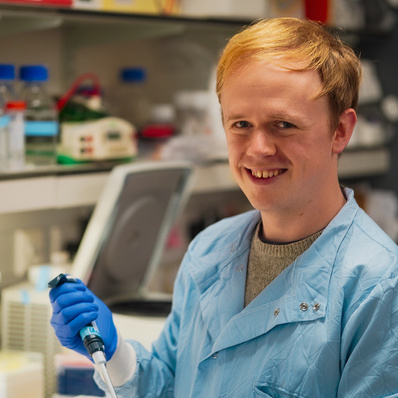
Tim Young
I qualified as a Biomedical Scientist in 2012 after completing my bachelor’s degree at The University of Essex but never entered practise. Instead I moved towards research; my first job was a technician with the MRC Epidemiology Unit, here I used a variety of methods to perform batch analysis of large cohorts of samples.
After this I moved towards cancer research and worked as a research assistant for Prof. Bruce Ponder in conjunction with the NHS Papworth Histology team. The research was directed towards the investigation of DNA repair dysfunction which can cause a genetic predisposition to lung cancer, particularly in smokers.
Then, in 2016, I joined the lab of Christian Frezza at Uni. Of Cambridge as part of the mass spectrometry team before becoming the lab manager and microscopist. When the lab moved out of the country I joined Prof. Paul Lehner’s team in CITIID and am continuing my RMS diploma here.
Office Team

Owen Morton
owen@rms.org.uk
+44 (0) 1865 254763
Contact Owen for press enquiries, infocus magazine and social media.

Lucy Ridler
lucy@rms.org.uk
+44 (0) 1865 254767
Contact Lucy for website development, RMS Wiley Book Series, ACEM website queries, RMS Digital Calendar, RMS Apps and the RMS Scientific Imaging Competition.
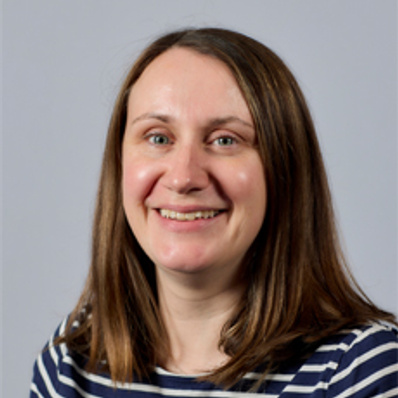
Jill Hobbs
jill@rms.org.uk
Contact Jill for Journal of Microscopy editorial information, Journal of Microscopy social media and infocus magazine advertising enquiries.