
Botanical Microscopy 2019
Botanical Microscopy 2019
Scientific Organising Committee: Chris Hawes, Beatrice Satiat-Jeunemaitre, Verena Kriechbaumer, Katja Graumann, Louise Hughes, Imogen Sparkes.
The 11th running of the International Botanical Meeting will in 2019 be held in the new lecture/conference facilities at Oxford Brookes University with accommodation in the famous Queen’s College, Oxford. As in recent meetings there will be 7 or 8 lead speakers and the rest of the programme will be chosen from offered talks. To attract postgraduate students to participate, a number of bursaries will be available alongside reduced registration fees. Topics will as ever be a mix of state-of-the art microscopy combined with the latest developments in plant cell biology, including organelle dynamics, nuclear structure and function, and autophagy. Planned associated activities will include a Zeiss/RMC sponsored workshop on 3-D imaging technologies, a trip round the museum of the History of Science (the world’s first public museum and home to the RMS microscope collection) and a tour of the famous Oxford Botanical Gardens. We welcome you all to the famous University City of Oxford.
Book now!
Please note, bursaries are available for early career researchers to attend this meeting. Please view details underneath the delegate information tab below.
Please note, submissions for oral presentations has NOW CLOSED.
The deadline for poster presentation consideration is Thursday 14 March 2019.
Abstracts should be emailed as an attachment to Kate Jermey.
Abstracts can be submitted under the following topics:
Plasmodesemata and oether oerganelles
- Please ensure you submit it as a Microsoft Word document and not a PDF.
- Abstracts should be approximately 300-500 words in length.
- Please include the title, all authors and their affiliations and indicate the presenting author.
- You may include images or diagrams where appropriate.
- You may also include references or keywords.
Acceptance of an abstract does not guarantee a place at the meeting – please remember to register!
Provisional Programme
Please note, this is a provisional programme and may still be subject to change
Invited Speakers
Guest Lecturer
"The root endodermis - a barrier in an organ built for uptake"
-

Prof Niko Geldner
Université de Lausanne
Niko Geldner studied biology at the Universities of Mainz, Bordeaux 2 and Tübingen. In Tübingen, he started to work in the lab of Gerd Juergens and did his diploma thesis (1998) and PhD thesis (1998-2003) in the same laboratory, working on the role of GNOM in Arabidopsis embryogenesis and the polar localisation of the PIN1 auxin efflux carrier. He left Tübingen in 2004 to do a Postdoc as an EMBO and HFSP fellow at the Salk Insitute in La Jolla, California, in the lab of Joanne Chory. There, he worked on the endosomal trafficking of the plant steroid receptor kinase BRI1 and developed the WAVE set of sub-cellular compartment markers. In summer 2007 he started as an Assistant Professor at the University of Lausanne in September 2007, where he was promoted to Associate Professor in 2012 and Full Professor in 2018. He was awarded a Starting grant of the European Research Council (ERC) in 2007 and a Consolidator grant in 2013. In 2011 he became an EMBO Young Investigator and was elected EMBO member in 2017.
GARNet Sponsored Speaker
"Investigating the mechanics of morphology with ACME an automated confocal micro-extensometer"
-
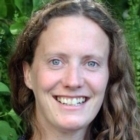
Dr. Sarah Robinson
University of Bern
Dr Sarah Robinson was recently awarded a Royal Society University Research Fellowship. She is interested in plant development and how growth, cell division and differentiation are coordinated and is investigating these processes using biomechanics, modelling and genomic approaches. She uses the ACME (Automated confocal micro-extensometer) method to measure the mechanical properties that accompany this plant growth. She developed this method while at the University of Bern where she held an EMBO long term Research Fellowship. She gained a PhD from the John Innes Centre under the supervision of Enrico Coen.
Topic - Cytoskeletons
"Cytoskeleton and Membrane Interactions"
-
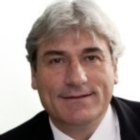
Prof Patrick Hussey
University of Durham
Patrick J. Hussey is the Professor of Plant Molecular Cell Biology at the University of Durham. He received his PhD in Biology from the University of Kent at Canterbury in association with the John Innes Centre in Norwich. After postdoctoral work at the University of Minnesota and the John Innes Centre, he took up a lectureship in Royal Holloway University of London where he was awarded a Personal Chair in 1999. He moved to the University of Durham in 2000. His main interest is in the structure, function and regulation of the plant cytoskeleton and its potential role in biotechnology.
Topic - The Nucleus
"Plant Chromatin Organisation at the Microscopic and Nanoscopic Scales"
-
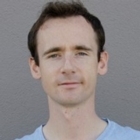
Dr. Ricardo Randall
University of Zurich
Ricardo's PhD in plant developmental biology was carried out in the laboratory of Jim Murray at Cardiff University, Wales, UK, where he collaborted with the group of Yka Helliaruta to characterise the roles of two genes in the promotion of plant secondary growth. After taking a particular interest in the microscopy tools used to study plant development, he went to work for a short time in Giovani Sena’s lab at Imperial College London, where he contributed to the development of a custom-built light sheet microscope for imaging growing Arabdipsis roots over days with high temporal resolution. He then left the UK and is currently working as a postdoc in Célia Baroux’s lab at the University of Zürich. He is using super-resolution microscopy tools to visualise nanoscale changes to chromatin structure during the naive plant light response.
Topic - Endomembranes
"Unfolded protein response in plants, a way to tame proteotoxic stress"
-
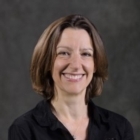
Prof Federica Brandizzi
Michigan State University
Federica Brandizzi graduated and obtained her PhD from the University of Rome before pursuing her post-doctoral experiences with Drs. Ian Moore (University of Oxford) and Chris Hawes (Oxford Brookes University). She them received a Canada Research Chair Tier II and opened her lab at the University for Saskatchewan. Next she moved to the Michigan State University Department of Energy Plant Research Laboratory in 2006. She is currently a MSU Foundation Professor and Team Lead for the Great Lakes Bionenergy Research Center. Her areas of expertise include live cell-microscopy and genomics to study the function of the plant endomembranes in growth and stress responses in model species and crops.
EMBO Young Investigator Lecture
Topic - Plasmodesmata and other organelles
"The plasmodesmata pores: cellular machines for inter- and intra-cellular communication"
-

Dr. Emmanuelle Bayer
Université Bordeaux Segalen
Emmanuelle Bayer obtained her PhD thesis in 2005 (A. Maule; John Innes Centre U.K.), where she had worked on the plant-specific plasmodesmata intercellular channels. After a post doc in Switzerland where she worked on auxin-polarised transport at the shoot apical meristem (2006-2009; C Kuhlemeier, Institute of Plant Science Switzerland), she obtained, in 2010, a permanent position at the CNRS, in Bordeaux France. Since 2015 she established her own group at the Laboratory of Membrane Biogenesis in Bordeaux. Her current research focus is to bring a better understanding on the role of membrane lipids, and organelle contacts to the function of plasmodesmata and plant cell-to-cell communication. 2017: Bourse ERC Consolidator BRIDGING.
Topic - Autophagy
"Regulation of autophagy by stress and hormone signaling pathways"
-
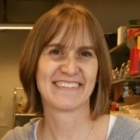
Dr Diane Bassham
Iowa State University
Diane Bassham received her B.Sc. (Honours) in Biochemistry from the University of Birmingham, England and Ph.D. in Biological Sciences from the University of Warwick, England. After completing a post-doctoral appointment in the MSU-DOE Plant Research Laboratory, Michigan State University in East Lansing, Michigan, she joined the faculty at Iowa State University in 2001. She is currently the chair of the Interdepartmental Plant Biology graduate program. In 2013, Prof. Bassham was chosen as the first Walter E. and Helen Parke Loomis Professor of Plant Physiology. Her research focuses on trafficking of macromolecules to the plant vacuole in response to environmental signals. A major project is analysis of the mechanism and regulation of autophagy, a vacuolar degradation pathway, in response to abiotic stress. Autophagy is required for the tolerance of multiple stress conditions, and therefore is a promising target for generation of stress-resistant plant varieties. Her lab is also studying how newly-synthesized proteins are transported to the vacuole, and the importance of this transport pathway in responding to environmental cues such as gravity.
Topic - Plant Pathogen interface
"How membrane trafficking regulates plant immunity"
-
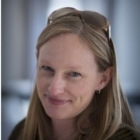
Prof Dr Silke RobatzeK
LMU Biocenter University of Munich
Prof Silke Robatzek is currently a Heisenberg Professor Fellow at the LMU Biocentre in Munich. She holds a PhD in Biochemistry (University of Cologne, Germany) and a Habilitation in Plant Cell Biology (University of Basel, Switzerland). In 2001 she was a postdoctoral fellow at the Friedrich Miescher Institute for Biomedical Research in Basel, Switzerland. In 2006, she obtained a group leader position at the Max Planck Institute for Plant Breeding Research in Cologne, Germany, followed in 2009 by her appointment as a group leader at the Sainsbury Laboratory in Norwich. She is a recipient of an ERC Young Investigator Grant, and has been awarded a Heisenberg Professor Fellowship in 2018. Her research focuses on the plant’s immune system and how pathogens achieve infection. In particular, she has investigated the role of membrane trafficking in the regulation of immune receptor signaling and the application of quantitative high-throughput confocal microscopy.
Topic - New Technologies
"In memory of Ian Moore: GTPases, geometry and the importance of being edgy"
-
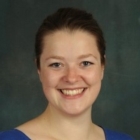
Dr. Charlotte Kirchhelle
University of Oxford
Charlotte Kirchhelle completed undergraduate and Master’s degrees at the Technical University Munich before moving to the University of Oxford for her DPhil with Ian Moore. She is currently a Leverhulme Early Career Fellow based in the Departments of Plant Sciences and Engineering Science at Oxford. Her research focusses on plant morphogenesis, and she is particularly interested in the role of cell geometric features like edges (where two cell faces meet), whose role in morphogenesis was recently identified. She uses an interdisciplinary approach combining classic molecular biology with state-of-the-art quantitative imaging, computational modelling, and mechanical measurements.
Delegate Information and Bursaries
Registration for this event has now CLOSED.
- Standard Registration (including accommodation) - £750
- Member Registration (including accommodation) - £690
- Student Registration (including accommodation) - £550
- Standard Registration (NO accommodation) - £470
- Member Registration (NO accommodation) - £410
- Student Registration (NO accommodation) - £290
GARNet are a BBSRC-funded community network that supports the research of discovery-led plant scientists in the UK and beyond (www.garnetcommunity.org.uk).
We are delighted to be able to provide ten £150 grants to assist early career researchers to attend the meeting. Please download the application form and return to Geraint Parry (geraint@garnetcommunity.org.uk) by 5pm on March 1st 2019.
 Download the GARNet grant form here
RMS Bursaries are also available for early career researchers who have been a member of the Royal Microscopical Society for more than 12 months at the time of application. Find out if you are eligible and apply here.
Admittance to this event is for registered and authorised attendees. Unfortunately we cannot permit access to visitors or allow non-registered persons to enter the meeting or exhibition areas. If you have any questions, please contact the RMS contact for this event.
Four night's of accommodation is included in the registration fee. The accommodation will be at Queens College, High Street, Oxford, OX1 4AW.
The conference will be taking place at Oxford Brookes University, Headington Campus, Headington Road, Oxford (please see map below).
Supporting Companies
The RMS welcomes sponsors and exhibitors for this event. If you are interested, please contact Kate Jermey for further details.


-

Hitachi High-Technologies
At Hitachi High-Technologies our primary goal is to provide customers with powerful, dependable and easy-to-use microscope solutions for the advancement of science & engineering. Our technologically advanced solutions in SEM, TEM and FIB are developed through a long-term commitment to research and development, drawing upon the resources of the whole Hitachi group.
By employing recognised pioneers and developing long term partnerships with world-renowned authorities in electron microscopy, we are able to provide unique technologies which push the boundaries of science. Our Tabletop Microscope is making electron microscope capabilities accessible to all, whilst key technologies such as cold field emission and Cs-correction are making ultra-low voltage imaging in SEM and atomically resolved imaging and analysis in TEM/STEM a practical reality.
Find out more about Hitachi High-Technologies
www.hitachi-hightech.com/eu/
-

Lambda Photometrics Ltd.
Lambda Photometrics Ltd. is a UK distributor specialising in systems and components for Characterisation, Measurement & Analysis. We offer a wide range of products from Fibre Optics, Instrumentation, Metrology, Photonics, Spectroscopy, Machine Vision suppliers as well as Microscopy products. We have experienced and knowledgeable sales and service engineers to support our customers.
Microscopy systems we supply include desktop scanning electron microscopes with EDX from Thermo Scientific, Scanning White Light Microscopes from Zygo, hand-held digital microscopes from Scalar, and other visible microscopes.
Microscope components and accessories include confocal microscopy lenses, configurable and zoom systems from Navitar, light sources and illumination from Schott, electro-optic devices from Conoptics, system design from Zygo, cameras from Baumer and Ximea, Software from Norpix and various optical, lighting and image capture products.
Find out more about Lambda Photometrics Ltd.
www.lambdaphoto.co.uk
-

Oxford Instruments (UK) Ltd
Oxford Instruments celebrates over 60 years which have seen a number of “world’s firsts”, technology breakthroughs and innovative new products.
Innovation has always been at the heart of Oxford Instruments and is the driving force behind its growth and success. There is now a continuous flow of new ideas driven by the demands of the markets and the focus on developing commercially successful products.
Find out more about Oxford Instruments (UK) Ltd.
www.oxinst.com
-

Society for Experimental Biology
Find out more about the Society for Experimental Biology
www.sebiology.org
-

ZEISS
Carl Zeiss is an innovative technology leader in the fields of optics, precision engineering and electronic visualisation. Time and time again, we set new, pioneering standards in sophisticated technology for recognising, experiencing, measuring, analysing, structuring and processing a wide spectrum of objects. With professional optics we meet the expectations of even our most critical customers - not only in the fields of research, medicine, industry, but also for use in leisure activities.
Find out more about ZEISS
www.zeiss.com