
Cryo EM Course 2016
Cryo EM Course 2016
The popular course in Cryo Electron Microscopy has returned for 2016. Using both lectures and practical demonstrations, this residential course is ideal for anyone new to Cryo EM or just needing to brush up on their existing skills.
This intensive five day course covers sample preparation and cryo-microscopy techniques for both scanning and transmission electron microscopy, and is comprised of tutorials, demonstrations and hands on practical sessions. The course is aimed at life sciences however the techniques can be applied to other fields so participants from any area of academia or industry who are interested in learning cryo-microscopy skills or updating their knowledge are invited to attend.
Speakers
Scientific Organsier
-

Dr Rebecca Lauder
Rothamsted Research
Rebecca Lauder is the electron microscopist in Rothamsted Research Bioimaging. She obtained her PhD in 2011 from the University of Glasgow under the supervision of Dr David Bhella. Following her PhD she joined Dr Frazer Rixon’s group at the MRC-University of Glasgow Centre for Virus Research as a post doc working on characterising the structure and interactions of Herpes Simplex Virus 1 inside whole cells. This involved a variety of techniques including cryoEM, cryo tomography, HVEM, and correlative light-electron microscopy. In 2015 she started at Rothamsted where she provides EM imaging for a variety of projects as well as training users in EM and sample preparation techniques
Speakers
-
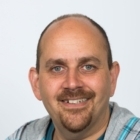
Dr Dave Bhella
University of Glasgow
David Bhella is a programme-leader in the MRC – University of Glasgow Centre for Virus Research (CVR). Research in his laboratory focusses on the characterisation of viruses and virus-host interactions at the structural and molecular level. This is achieved primarily through the technique of cryogenic electron microscopy (cryoEM) and computational three-dimensional image reconstruction.Viruses under investigation within the Bhella group include influenza A virus, respiratory syncytial virus, human rhinovirus and feline calicivirus (a tractable surrogate for the investigation of human norovirus attachment and entry).
David obtained his PhD from Birkbeck college, University of London under the supervision of Professor Helen Saibil FRS in 1998. He then took up a research associate position at the MRC Virology Unit at the University of Glasgow (now the CVR) to establish a cryoEM research programme. He attained Programme Leader status in 2011.
In 2013 David was awarded the Peter Wildy prize for Microbiology Education by the Society for General Microbiology (now the Microbiology Society).
-

Ms Kim Findlay, FRMS
John Innes Centre
Kim is head of Bioimaging at the John Innes Centre, Norwich. Her degree was in Biology and Physics at King’s College, London. With over 34 years' experience in light and electron microscopy and more than 90 publications involving the use of TEM, SEM or confocal microscopy, in 2015 she was awarded the RMS Vice Presidents Medal for microscopy research and laboratory support. Her early focus on the plant cytoskeleton developed into a wider interest in plant and microbial sciences. She has made particularly important and long-standing contributions to Streptomyces research. Kim teaches cryo-SEM at the RMS EM school and taught on the RMS cryo-EM course in the past. She is regularly involved in Outreach activities, running tours and demonstrations for the public and young students. Kim won an award from the University of East Anglia, where she is an honorary lecturer, for her outstanding contribution to public and community engagement. -
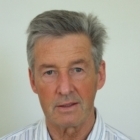
Mr Helmut Gnaegi
Diatome
Helmut Gnaegi is a mechanical engineer, helped to establish Diatome company in 1970, developed the technique for making diamond knives, had the first knives ready in 1975. Over the years we developed knives for optical microscopy, cryo ultramicrotomy, materials research knives, knives for cutting in the SEM, accessories such as an antistatic device for cryo ultramicrotomy, lately a manipulator system for cryo ultramicrotomy.Helmut has specialised over the years on the application of the diamond knives in biology and materials research. He acts as an instructor in courses and seminars.
-

Mr Gareth Jackson
Leica Microsystems
Gareth started his career in a clinical EM department in the early nineties. Since then he has worked for Olympus Microscopes and Leica Microsystems. Gareth is an active member of the EM committee and has been involved in many RMS courses over the years including the EM Summer School, Rothamsted Research Cryo Course and the Cell Imaging Techniques course at Oxford Brookes University. -
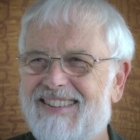
Dr Kent McDonald
University of California, Berkeley
Kent McDonald received his Ph.D. in Botany from the University of California, Berkeley in 1972. Following a year of teaching at UCLA, he took a Post-doctoral position with J.D. Pickett-Heaps at the University of Colorado, Boulder to study the ultrastructure of mitosis in algae. In 1975, he joined the laboratory of J.R. McIntosh in Boulder to re-focus his research on the cell biology of mitosis. This led him back to Berkeley in 1979 to work on correlative light and electron microscopy of PtK cells and diatoms in the lab of W.Zacheus Cande. In 1987 he returned to Boulder to join the High Voltage EM Lab begun by Keith Porter and subsequently run by J.R. McIntosh. It was at this time that the importance of cryofixation by high pressure freezing became a compelling interest that persists to this day. In 1993 he moved back to Berkeley to assume the Directorship of the campus Electron Microscope Laboratory, a teaching and research resource for UC Berkeley and other Bay Area institutions. Kent retired from UC Berkeley in 2017. His current research interest is improving the procedures for biological specimen preparation. Starting with high pressure frozen material he has recently developed methods for freeze substitution and subsequent resin embedding that takes only 6 hours or less to complete using simple, inexpensive equipment. Work to improve on-section immunolabeling efficiency is another recent activity. -
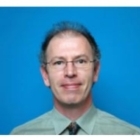
Mr Andy Yarwood
JEOL
Further Information
Venue for the course
The Cryo Electron Microscopy Course takes place at Rothamsted Research. The full address is West Common, Harpenden, AL5 2JQ. For more information about Rothamsted Research, please visit www.rothamsted.ac.uk.
Transport to the venue and accommodation
If you are flying to the UK, we recommend that you travel to Luton Airport. Luton Airport is a short journey to the Aubrey Park Hotel by taxi.
Hemel Hempstead Railway Station is the closest station to the provided accommodation (Aubrey Park Hotel). The Hotel is a 10 minute taxi journey from the station.
Accommodation package
The accommodation package includes 5 nights’ en-suite, bed and breakfast accommodation at the Aubrey Park Hotel, Hemel Hempstead Road, Redbourn, St Albans, Hertfordshire, AL3 7AF. Delegates will be able to check-in on Sunday 17 April and will be departing on Friday 22 April (unless otherwise arranged with the RMS office).
Meals
Breakfast will be provided as part of the accommodation package, including on the morning of check out. This will be provided at the Aubrey Park Hotel.
All buffet lunches, tea / coffee and biscuits are included in your registration fee. The evening meals will be held in the following locations:
- Sunday’s evening meal will be held at Strada Italian Restaurant in Harpenden (for delegates that have selected the accommodation package).
- Monday’s evening meal will be a fish and chip supper, followed by a pub quiz at the Pavilion at Rothamsted Research (all delegates and speakers are invited to attend).
- Tuesday there is no evening meal provided, delegates have a free evening.
- Wednesday there is no evening meal provided, delegates have a free evening.
- Thursday’s evening meal will be held at the Luton Hoo Hotel and Golf Club (all delegates and speakers are invited to attend).
Please note that Tuesday and Wednesday are free evenings, where no evening meals are provided.
Registration
Registration will be taking place on Monday 18 April from 09.00 – 09.15 in the foyer of Rothamsted Research.
Dietary and Access requirements
The RMS is committed to our delegate’s health and wellbeing. Therefore if you have any dietary or access requirements or questions please contact Karina Lang.
CPD Points and certificates of attendance
In previous years this course has been awarded IBMS Continuing Professional Development (CPD) Points. You will be able to collect a CPD Certifcate and also a certificate of attendance at the course should you require them.
Sponsors
-

Gatan
Gatan is the industry leader in the research, development and manufacturing of SEM and TEM products.
For TEM, Gatan provides an unrivalled range of high performance digital imaging and analytical systems, especially EELS spectrometers and energy filters (EFTEM). For SEM, Gatan are world leaders in cathodoluminescence (CL) technology and complement this with cooling stages and EBIC products.
Gatan is striving for continuous product innovations to increase users' productivity and make electron microscopes more effective and powerful tools. Visit the website for complete information on Gatan's extensive range of products for electron microscopy.
Find out more about Gatan
www.gatan.com -

JEOL UK Ltd
JEOL is proud to be celebrating over 60 years of high end instrument sales and support worldwide.
JEOL UK offer sales, support and applications training from our office in Welwyn Garden City, Hertfordshire.
Our instrumentation includes scanning electron microscopes (SEM), scanning probe microscopes, & transmission electron microscopes (TEM). As one of the world’s leading suppliers of scientific equipment, we are proud to offer our customers the highest level of sales and technical support maximising their investment in JEOL products.
Find out more about JEOL UK
www.jeoluk.com -

Leica Microsystems
Leica Microsystems develops and manufactures microscopes and scientific instruments for the analysis of microstructures and nanostructures. Ever since the company started as a family business in the nineteenth century, its instruments have been widely recognized for their optical precision and innovative technology. It is one of the market leaders in compound and stereo microscopy, digital microscopy, confocal laser scanning microscopy with related imaging systems, electron microscopy sample preparation, and surgical microscopes.
Leica Microsystems has seven major plants and product development sites around the world. The company is represented in over 100 countries, has sales and service organizations in 20 countries, and an international network of distribution partners. Its headquarters are located in Wetzlar, Germany.
Find out more about Leica Microsystems
www.leica-microsystems.com -

Quorum Technologies
Quorum Technologies are global leaders in electron microscopy (EM) coating and cryogenic preparation providing high performance sample preparation equipment worldwide.
Driven by the demands of the market Quorum specialises in innovating new technology to develop instruments and techniques which have a positive impact on its customers’ lives. Key products in Quorum’s portfolio include the market leading Q Series of vacuum coaters and PP3010T cryo preparation system for SEM and FIB/SEM – market-led genuine ground-up designs that have earned Quorum the respect of the industry and truly set the standard within the specimen preparation field.
Find out more about Quorum Technologies
www.quorumtech.com