
EBSD 2017
EBSD 2017
Scientific Organiser: Angus Wilkinson, University of Oxford
The annual EBSD meeting offers an opportunity for users and developers of EBSD and related techniques to meet and discuss their work. The main conference will run over two days with a series of technical talks, a lively poster session, an exhibition and ‘techno-bite’ updates on innovations from the EBSD systems suppliers. Similar to 2016, there will be the option of joining an afternoon of tutorial sessions, offering Beginner and Advanced streams, ahead of the conference.
The meeting has been running for over twenty years and we regularly welcome top academics from the UK, European and global research community. This meeting will include talks that focus not only on technique development but also include applications to real engineering problems and scientific questions, as well as approaches to combine data obtained using EBSD with other techniques. EBSD is widely used to develop further understanding in the fields of earth & planetary science, materials science, engineering and physics.
We hope you'll take the opportunity to join us in Oxford and spark a lively debate on current approaches and future developments in this exciting and evolving research field.
Registration is now closed
If you have any queries, please contact Kate Wooding
Provisional Programme
Pre-Meeting Workshop
On Monday 3 April there will be a tutorial workshop with two parallel streams.
One stream is for beginners and the other stream for advanced, when you register online you will need to select which stream you want to attend. Numbers to the workshop will be limited. The EBSD workshop is only available for those attending the two day EBSD meeting, it is not possible to register for the workshop alone.
The workshop will be taking place at the Department of Earth Sciences, University of Oxford, South Parks Road, Oxford OX1 3AN.
Stream 1 - First Steps with EBSD
Stream 2 - Advanced EBSD Topics
Stream 1
Stream 2
Invited Speakers
- Felix Hofmann, University of Oxford - X-ray micro-diffraction and imaging: Probing lattice strain at the nano-scale
- Natasha Stephen, Plymouth University - Extra-terrestrial EBSD; using EBSD to explore the Solar System
- McLean Echlin, UC Santa Barbara - TriBeam Tomography for 3-D EBSD Analysis at the Mesoscale
- Patrick Villechaise, ENSMA - From localized plasticity to crack initiation in metals and alloys: the use of EBSD Data
-
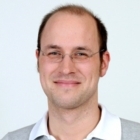
Prof Felix Hofmann
University of Oxford
Felix is an Associate Professor in the Department of Engineering Science at the University of Oxford. He completed his D.Phil. in the same department in 2011 under the supervision of Prof. Alexander Korsunsky. Following this he spent a year as a Postdoctoral Research Associate working in the group of Prof. Keith Nelson at MIT. He returned to Oxford to take up his present faculty position in January 2013. His research concentrates on understanding the link between atomic scale crystal defects and macroscopic material properties in engineering materials using a wide range of microscopy and modelling techniques. Felix is a member of the Solid Mechanics and Materials Engineering group in the Department of Engineering Science and also a college lecturer at Trinity College. -

Dr McLean Echlin
UC Santa Barbara
McLean is a research scientist in the Materials Department at University California Santa Barbara. He received his graduate degrees from the Materials Science Engineering department at the University of Michigan working on statistical approaches for modeling fracture toughness in steels. His recent work focusing on ultrashort pulse laser-materials interactions has led to the development of tomography techniques, such as the TriBeam microscope, for the acquisition of large multimodal 3-D datasets. Tomographic EBSD data has been critical for understanding the failure mechanisms in structural materials, such as nickel base superalloys, and for improving thermoelectric performance in thermoelectric materials. He also has interest in the merging of imaging modalities, such as measurements of strain and microstructure, to determine structure-property relations.
-
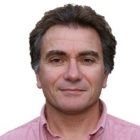
Dr Patrick Villechaise
CNRS (National Center for Scientific Research)
Permanent position at the Institut Pprime in the DPMM (Department of Physics and Mechanics of Materials) - Futuroscope-Poitiers - France
Co-Head of a SAFRAN-Chair in the field of Ni-based superalloys
Supervision of more than 20 PhDs + scientific and collaborative programs with industrial partners (aeronautic and energy industry); 70 peer reviewed papers.
Co-chair of the International Fatigue Congress (2018 – Poitiers – France)
Chairman of the International Conference on Titanium (2019 - France)Main scientific topics
Cyclic deformation mechanisms in relation with the microstructure at different scales (dislocations structures, grains, precipitations, crystallographic parameters, aggregates, textures). Experimental studies (mechanical testing, SEM, EBSD analyses, in situ tests) + simulation (crystal plasticity, aggregates). Crack initiation and growth in structural materials (titanium alloys, nickel base superalloys, stainless steels). Creep-fatigue-oxydation interactions. Aging effects (influence of precipitation characteristics and evolution). Influence of surface properties (surface treatments, thin films) on fatigue resistance.
Sponsors
-

Acutance Scientific - BLG Vantage - TSL Solutions kk
HR EBSD offers 80 times higher sensitivity than traditional EBSD analysis, enabling high resolution strain and stress mapping at the sub-micron scale. Crosscourt software offers the most advanced capabilities including remapping and GND analysis. Visit us for a demo at our booth.
Crosscourt is written by BLG-Vantage and represented across Europe by Acutance Scientific Ltd..
See also in situ tensile and heating stages from Acutance Scientific/TSL Solutions KK at our booth.
-

Bruker
For almost 50 years Bruker has been driven by a single goal: to provide the best technological solution for each analytical task. Today, worldwide, more than 4,000 employees in over 90 locations on all continents work towards this enduring vision.
Bruker’s drive to develop state-of-the-art technologies and innovative solutions for today’s analytical questions remains constant, evidenced by the many product lines that lead their respective markets. With one of the world’s most comprehensive ranges of scientific instrumentation available under one brand, the Bruker name is synonymous with excellence, innovation and quality.Find out more about Bruker
www.bruker.com -

ZEISS
Carl Zeiss is an innovative technology leader in the fields of optics, precision engineering and electronic visualisation. Time and time again, we set new, pioneering standards in sophisticated technology for recognising, experiencing, measuring, analysing, structuring and processing a wide spectrum of objects. With professional optics we meet the expectations of even our most critical customers - not only in the fields of research, medicine, industry, but also for use in leisure activities.
Find out more about ZEISS
www.zeiss.com -
EDAX
EDAX is a leading provider of innovative materials characterization systems encompassing Energy Dispersive Spectrometry (EDS), Wavelength Dispersive Spectrometry (WDS), Electron Backscatter Diffraction (EBSD) and Micro X-ray Fluorescence (XRF).
EDAX products include standalone tools for EDS, EBSD and WDS, integrated tools for EDS/EBSD, EDS/WDS, and EDS/EBSD/WDS, and a free-standing micro-XRF bench-top elemental analyzer providing small and micro-spot x-ray analysis and mapping.
EDAX develops the best solutions for micro- and nano-characterization, where elemental and/or structural information is required, making analysis easier and more accurate.
EDAX designs, manufactures, distributes and services products for a broad range of industries, educational institutions and research organisations.
Find out more about EDAX
www.edax.com -

Gatan
Gatan is the industry leader in the research, development and manufacturing of SEM and TEM products.
For TEM, Gatan provides an unrivalled range of high performance digital imaging and analytical systems, especially EELS spectrometers and energy filters (EFTEM). For SEM, Gatan are world leaders in cathodoluminescence (CL) technology and complement this with cooling stages and EBIC products.
Gatan is striving for continuous product innovations to increase users' productivity and make electron microscopes more effective and powerful tools. Visit the website for complete information on Gatan's extensive range of products for electron microscopy.
Find out more about Gatan
www.gatan.com -

Hitachi High-Technologies
At Hitachi High-Technologies our primary goal is to provide customers with powerful, dependable and easy-to-use microscope solutions for the advancement of science & engineering. Our technologically advanced solutions in SEM, TEM and FIB are developed through a long-term commitment to research and development, drawing upon the resources of the whole Hitachi group.
By employing recognised pioneers and developing long term partnerships with world-renowned authorities in electron microscopy, we are able to provide unique technologies which push the boundaries of science. Our Tabletop Microscope is making electron microscope capabilities accessible to all, whilst key technologies such as cold field emission and Cs-correction are making ultra-low voltage imaging in SEM and atomically resolved imaging and analysis in TEM/STEM a practical reality.
Find out more about Hitachi High-Technologies
www.hitachi-hightech.com/eu/ -

Oxford Instruments (UK) Ltd
Oxford Instruments celebrates over 60 years which have seen a number of “world’s firsts”, technology breakthroughs and innovative new products.
Innovation has always been at the heart of Oxford Instruments and is the driving force behind its growth and success. There is now a continuous flow of new ideas driven by the demands of the markets and the focus on developing commercially successful products.
Find out more about Oxford Instruments (UK) Ltd.
www.oxinst.com
Further Information
Registration
Registration is now closed. If you have any queries, please contact Kate Wooding
Registration fees
RMS Member £300
Non-member £330
Student £205
RMS Member incl. Workshop £340
Non-member incl. Workshop £370
Student incl. Workshop £245
Conference Dinner
On Tuesday 4 April there will be a conference dinner at Lady Margaret Hall. The dinner is included in the registration fee for the Meeting.
An email will be sent to you three weeks before the event with final details.
Accommodation
We would recommend for your convenience you staying at the venue where the meeting is taking place. The cost for EBSD delegates is a preferential rate of £75 a night for a single room with en suite facilities. Accommodation is only available to delegates that are attending the EBSD Meeting.
To book your accommodation for one or two nights, please visit http://www.universityrooms.com/en/city/oxford/home and use the promotional code EBSD2017. Please note that the promotional code should be entered, in order for the available rooms to be seen.
Venue
Lady Margaret Hall, University of Oxford, Norham Gardens, Oxford, OX2 6QA