
EBSD 2019
EBSD 2019
Scientific Organisers: Dr Ben Britton, Imperial College London & Dr Ken Mingard, NPL
The 2019 EBSD meeting will take place at NPL, Teddington, Greater London. The annual meeting draws together leading research scientists and engineers from the global community to highlight the latest developments in Electron Backscatter Diffraction (EBSD), including both applications and technique developments.
We are anticipating contributions that range in scope spanning the geo-science, materials science & engineering, and mechanical engineering disciplines, as well as emerging applications from the biological communities. Talks will likely include state-of-the-art developments in instrumentation and new software algorithms, as well as the application of EBSD, transmission Kikuchi diffraction, electron channelling contrast imaging (ECCI) and related microscopy modalities. Additionally, we anticipate hearing applications driven talks which engage these approaches to reveal new insight into the microstructure of materials systems in emerging scientific applications and industrial challenges.
This year’s meeting will be proceeded by an optional workshop focussed on data analysis with EBSD, including pattern and orientation analysis using open-source tools implemented in Matlab. The workshop is now fully booked and so we have closed registration for the workshop.
Registration has now closed for this meeting.
Provisional Programme and Poster List
We are proud to announce the EBSD 2019 Poster Prize Winners...
- WINNER - Cyril Langlois, University of Lyon, "Low kV eCHORD orientation mapping on 304L steel"
- RUNNER UP - Alex Foden, Imperial College London, "Phase Clarification Using a Library Based Indexing Method"
Poster List
| Session One: Tuesday 2 April: 15.35 - 16.05 | |
| 1 | Advanced processing and visualization of 3D EBSD/EDS data with ESPRIT QUBE Laurie Palasse (Bruker Nano) |
| 2 | Low kV eCHORD orientation mapping on 304L steel Cyril Langlois (University of Lyon) |
| 3 | Microstructural Characterization of Silicon Carbide Fiber Composites Using On-Axis Transmission Kikuchi Diffraction Yevhen Zayachuk (University of Oxford) |
| 4 | Investigating crack propagation using high speed and high resolution EBSD Patrick Trimby (Oxford Instruments NanoAnalysis) |
| 5 | Characterisation of texture fibres in rolled Ti-6AI-4V Simon Wyatt (Imperial College London) |
| 6 | Microstructural Sensitivity of Stress Relaxation Cracking Dafni Daskalaki-Mountanou (Imperial College London) |
| 7 | EBSD characterization and mechanical properties of the powder metallurgy (PM) aluminum joined by friction stir welding (FSW) Ľubomír Orovčík (Slovak Academy of Sciences) |
| 8 | The effect of residual stress relaxation on the microstructure of ductile cast iron, using vibratory and thermal stress-relieving techniques Maryam Zolbin (Aarhus University) |
| Session Two: Tuesday 2 April: 16.05 - 16.35 | |
| 1 | Using 3D EBSD to Visualise the Grain Structure of Electroplated Tin and its Intermetallic Compounds, Relating to Tin Whisker Growth Dan Haspel (Plymouth Electron Microscopy Centre) |
| 2 | Using on-axis TKD to characterize beam sensitive nanostructures obtained with non-traditional nanofabrication techniques Daniel Goran (Bruker) |
| 3 | The Evaluation of Grain Reconstruction Algorithms using Synthetic Datasets Andrew Marshall (University of Surrey) |
| 4 | Non-destructive 3D Grain Mapping by Laboratory X-ray Diffraction Contrast Tomography Jun Sun (Xnovo Technology) |
| 5 | The influence of boundary precipitate variants and frequency on the high temperature ductility of novel Co/Ni-base polycrystalline superalloys Tom McAuliffe (Imperial College London) |
| 6 | EBSD-based multi-scale study of microstructural evolutions in lath-bainitic steels under isothermal conditions Meriem Ben Haj Slama (Université de Lorraine – CNRS) |
| 7 | The effect of shot-peening on the strain localisation in a RR1000 nickel-based superalloy David Lunt (University of Manchester) |
| 8 | High-resolution characterization of deformed low and high-angle olivine grain boundaries Diana Avadanii (University of Oxford) |
| Session Three: Tuesday 2 April: 17.45 - 18.15 | |
| 1 | Using ECCI and EBSD to study the propagation of dislocations in indented tungsten carbide-cobalt hard metals Matat Jablon (University of Strathclyde) |
| 2 | Characterization of dislocation evolution in bulk Ti2IS specimen coupled with in situ macroscopic tensile testing in SEM Meriem Ban Haj Slama (Université de Lorraine – CNRS) |
| 3 | Phase Classification Using a Library Based Indexing Method Alex Foden (Imperial College London) |
| 4 | Resolving pseudosymmetry via EBSD in polycrystalline BaTiO3 Tamsin O'Reilly (Queen's University Belfast) |
| 5 | The effect of δ-hydride on the micromechanical deformation of Zircaloy-4 studied by high angular resolution electron backscatter diffraction Siyang Wang (Imperial College London) |
| 6 | EBSD studies on growth twinning in intermetallic solidification Jingwei Xian (Imperial College London) |
| 7 | Microstructure of FeAl20Si20 (wt. %) spark plasma sintered samples Jaromír Kopeček (Institute of Physics of the CAS) |
| 8 | Microstructure and mechanical properties of selective laser melted AlSi10Mg parts: continuous vs pulsed wave laser emission effects Paola Bassani (CNR) |
Pre-Meeting Workshop
Workshop registration has now closed as we are fully booked
Our one day pre-meeting workshop takes place on Monday 1 April and is targeted towards getting the most from your EBSD data. The workshop will start at 10 am and consist of a hands-on morning session where we get to grips with MTEX and explore importing, manipulating, and plotting of EBSD data. The afternoon session will provide a hand-on approach to direct analysis and interpretation of diffraction patterns, including pattern indexing, background correction, virtual imaging, and other modes of higher resolution EBSD analysis. We will also include several ‘short talks’ where leading experts will outline case studies drawn from their work to highlight how we can get even more from our EBSD data. This workshop is principally aimed at researchers towards the start of the studies with EBSD (e.g. students and early career researchers). There are a limited number of places available on this workshop. You will need to bring your laptop to this workshop with MATLAB already loaded on your laptop.
The workshop is only open to those attending the two day EBSD meeting.
Introduction to MTEX
-

Dr Rüdiger Kilian
University of Basel
Rüdiger Kilian has worked as a structural geologist, focussed on microstructures and texture characteristics during his PhD in Basel (Switzerland) and has become an expert in texture analysis of geo-materials, studying and linking quantitative measures with deformation processes in nature and experiments. Rüdiger has been holding a research assistant position at Uni Basel for the last 7 years, and was lecturing in various international microstructure and texture workshops. In recent years, he has become strongly involved in developing and co-supporting the Mtex open source texture analysis toolbox (http://mtex-toolbox.github.io/).
Slip trace analysis with MTEX
Multivariant statistical analysis of EBSD patterns
-

Prof Angus Wilkinson
University of Oxford
Angus Wilkinson is a Professor of Materials at the University of Oxford, where he leads the Oxford Micromechanics Group (http://users.ox.ac.uk/~ajw/) whose research focuses on fundamental aspects of materials deformation. He has a longstanding interest in the use SEM techniques to image and quantify material microstructures. His research centres mostly on structural metallic systems (Ti-, Ni- alloys and steels), but he also has interests in defects in semiconductors and deformation processes in minerals.A particular research highlight includes development of the HR-EBSD method for mapping elastic strain and dislocation density at high spatial resolution but he has also worked on electron channelling contrast imaging (ECCI) of lattice defects. Most recently he has been exploring the use of multivariate statistics for analysis of EBSD datasets.
Analysis of geological materials, including pattern matching approaches
-

Dr Katharina Marquardt
Imperial College London
Katharina Marquardt is a Lecturer in Ceramics at Imperial College London (London, UK). Katharina previously worked at the BGI, Bayreuth, Germany, and the GFZ, Potsdam, Germany and was a visiting scientist at NCEM Berkeley, USA, at the SuperSTEM in Daresbury, UK and at the Carnegie Mellon University of Pittsburgh, USA.
Her research is marked by a strong cross-disciplinary character and focuses on the structural and chemical characterization of defects in ceramics/minerals and their relation to their materials macroscopic properties, such as element transport, storage and mechanics, which is equally relevant to Earth and Materials sciences.
Pattern indexing and analysis with AstroEBSD
-

Dr Ben Britton
University of British Columbia, Canada/Imperial College London, UK
Dr Ben Britton is an Associate Professor at the University of British Columbia (Vancouver, Canada) and a Visiting Reader at Imperial College London (London, UK). He has worked with EBSD for the past 13 years, with work spanning metals, ceramics and geological materials. Together with colleagues, he has led technique developments including correlative microscopy, strain analysis, pattern matching and the release of open source software tools such as AstroEBSD.
Scientific Organisers and Invited Speakers
Scientific Organisers
-
Dr Ben Britton
University of British Columbia, Canada/Imperial College London, UK
Dr Ben Britton is an Associate Professor at the University of British Columbia (Vancouver, Canada) and a Visiting Reader at Imperial College London (London, UK). He has worked with EBSD for the past 13 years, with work spanning metals, ceramics and geological materials. Together with colleagues, he has led technique developments including correlative microscopy, strain analysis, pattern matching and the release of open source software tools such as AstroEBSD. -

Dr Ken Mingard
National Physical Laboratory
Dr Ken Mingard is a Senior Research Scientist within the Materials Characterisation Group at the National Physical Laboratory. His interest in applying EBSD in materials research started when he joined NPL after 15 years in the powder metallurgy industry. The use of EBSD for studying the structure and properties of hardmetals/ cemented carbides has formed a core part of his work with these materials, in both 2D and 3D. He has contributed to the development of international standards for EBSD and in particular grain size measurement.
Invited Speakers
On going developments in TKD
-

Dr Alice Bastos de Silva Fanta
Center for Electron Nanoscopy, DTU Danchip, Technical University of Denmark
Alice Bastos da Silva Fanta was introduced to the science of metallurgy in her native Brazil at the Federal University of Minas Gerais (UFMG). She moved to Europe in 1998 and studied for a degree in materials science, specialising in metallic materials, at the Techenische Universität Berlin, Germany. After transferring to the Max-Planck-Institute für Eisenforschung GmbH (MPIE) in Düsseldorf to pursue a PhD degree she was introduced to EBSD by Dr. Stefan Zaefferer. Following a successful defence of her thesis on “Characterization of nanocrystalline electrodeposited CoNi by EBSD”, she joined the newly created Centre for electron nanoscopy (Cen) at the Technical University of Denmark in 2008 to carry out EBSD studies on a variety of material systems. More recently, now as a Senior Researcher, she has concentrated on utilising EBSD’s sister technique in the SEM, namely Transmission Kikuchi Diffraction, TKD. Her recent research focuses on characterizing nanocrystalline low dimensional materials using TKD and on further developing the technique.
A practical methodology to determine the complete orientation of intragranular boundaries in polycrystalline samples
-

Dr Geoffrey Lloyd
University of Leeds
Geoffrey Lloyd has a BSc in Geology and Geography (Nottingham, 1975), MPhil. in Structural and Numerical Geology (Nottingham, 1979) and PhD in Structural Geology (Birmingham, 1984). Following post-doctoral research positions at Birmingham, Leeds and Montpellier, he was appointed in 1990 to manage the SEM facility in the then School of Earth Sciences, University of Leeds, and subsequently to a Lectureship in Structural Geology. He is currently a Reader in Microgeodynamics in the School of Earth and Environment at Leeds. Whilst overtly a Structural Geologist with field interests in NW Scotland, Anglesey, SW England, The Alps and Himalaya, from where most of his SEM samples originate, he is particularly interested in microstructural evolution and its use in constraining large scale tectonics and geodynamics. His SEM career began with electron channelling (EC) under the tutelage of Malcolm Hall at Birmingham but subsequently migrated to electron backscattered diffraction (EBSD) as that technique superseded EC. He has applied EBSD to not only investigate crystallographic constraints, including development of crystallographic preferred orientations (CPO), during natural deformations but also to derive petrophysical (e.g. seismic) properties to interpret remotely the deep structure of The Earth. He is a Fellow of the Geological and Royal Microscopical Societies and has served on the Electron Microscopy Committee of the latter.
Grain boundaries role in plastic deformation of olivine
-
Dr Katharina Marquardt
Imperial College London
Katharina Marquardt is a Lecturer in Ceramics at Imperial College London (London, UK). Katharina previously worked at the BGI, Bayreuth, Germany, and the GFZ, Potsdam, Germany and was a visiting scientist at NCEM Berkeley, USA, at the SuperSTEM in Daresbury, UK and at the Carnegie Mellon University of Pittsburgh, USA.
Her research is marked by a strong cross-disciplinary character and focuses on the structural and chemical characterization of defects in ceramics/minerals and their relation to their materials macroscopic properties, such as element transport, storage and mechanics, which is equally relevant to Earth and Materials sciences.
Using Serial Sectioning with EBSD to Analyze Large 3D Datasets
-

Dr David Rowenhorst
United States Naval Research Laboratory
Dr. Rowenhorst received his Bachelors Materials Science and Engineering from the University of Minnesota in 1999, and his Ph.D. from Northwestern University in 2004 in Materials Science and Engineering, where his doctoral work concentrated on the three-dimensional analysis of microstructures, specifically using 3D reconstruction to analyze particle coarsening (or Ostwald ripening) in Pb-Sn systems in microgravity environments. After graduation in 2004, Dr. Rowenhorst joined NRL as a NRC Postdoctoral Associateship and in 2006, continued on a staff scientist in the Phase Transformations and Joining Section. His work continues to concentrate on the 3D characterization of materials, specifically analyzing grain growth in polycrystalline materials, phase transformations in high strength steels and the microstructure property relationships in Additively Manufactured materials.
Visualization and investigation of defects using electron channelling (electron diffraction) in the scanning electron microscope
-
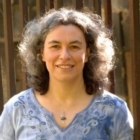
Dr Carol Trager-Cowan
University of Strathclyde
Carol Trager-Cowan graduated with a degree in Natural Philosophy from Glasgow University in 1983, and then went east for a year to St Andrews University where her MSc studies found her studying 'hot' electrons in GaAs in the laboratory of Tony Stradling. Her travels then took her south to the laboratory of Doug Heddle at Royal Holloway and Bedford New College, University of London where she spent two and half years constructing, measuring and modelling the properties of electrostatic electron lenses. On completing her PhD studies in 1987, she returned to Glasgow to work with Brian Henderson and Kevin O'Donnell in the Department of Physics, University of Strathclyde where she studied the luminescence properties of garnets, diamonds and II-VI semiconductors.In 1990 she was awarded a Fellowship to use electron beams to excite light emission from solids. On April 1st, 1992, she joined the lecturing staff at Strathclyde (promoted to Senior Lecturer in June 1998 and Reader in 2009) and now uses electron beams to interrogate the structure, defects and light emission from solids. Together with her research team and with collaborators from across the world, she works on new developments and novel applications of the scanning electron microscopy techniques of electron backscatter diffraction, electron channelling contrast imaging and cathodoluminescence imaging. In particular, she and her team combine these techniques to, rapidly and non-destructively, analyse defects and their effect on light emission from nitride semiconductors.
Kikuchi Diffraction Simulations: Physics, Applications, Limits
-

Dr Aimo Winkelmann
Photonic Materials Group, Laser Zentrum Hannover
Aimo Winkelmann works in the Photonic Materials Group, Laser Zentrum Hannover, Germany. From 2013 to 2018 he worked at Bruker Nano, Berlin and from 2004 to 2013 he worked at Max-Planck-Institute of Microstructure Physics, Halle. He was awarded his PhD in Physics from the University of Jena in 2003.
Delegate Information
Registration Fees
RMS Member £255
Non-member £285
Student £160
RMS Member incl Workshop £325 - workshop is no longer available as fully booked
Non-member incl Workshop £355
Student incl Workshop £230
Any registrations made on Friday 8 March and after will incur a £50 late registration fee.
Registration closes on Friday 15 March.
We anticipate that we will reach maximum capacity for this event and will need to close registration before this date. Therefore, please book as soon as possible to avoid disappointment.
Conference Dinner
On Tuesday 2 April there will be a conference dinner at The King's Head, Teddington. The dinner is included in the registration fee for the meeting.
An email will be sent to you two to three weeks before the event with final details.
Accommodation
We would recommend for your convenience staying at Travelodge Teddington, Park House, Station Rd, Teddington TW11 9AD which is walking distance to Teddington station and NPL.
Venue
EBSD 2019 will take place at the National Physical Laboratory (NPL), Hampton Road, Teddington, TW11 0LW.
Exhibition and Sponsorship
There will be an exhibition at this two day meeting. If you are interested in exhibiting or sponsoring this event please contact Hallie Martin.
-

Acutance Scientific - BLG Vantage - TSL Solutions kk
HR EBSD offers 80 times higher sensitivity than traditional EBSD analysis, enabling high resolution strain and stress mapping at the sub-micron scale. Crosscourt software offers the most advanced capabilities including remapping and GND analysis. Visit us for a demo at our booth.
Crosscourt is written by BLG-Vantage and represented across Europe by Acutance Scientific Ltd..
See also in situ tensile and heating stages from Acutance Scientific/TSL Solutions KK at our booth.
-

Bruker
For almost 50 years Bruker has been driven by a single goal: to provide the best technological solution for each analytical task. Today, worldwide, more than 4,000 employees in over 90 locations on all continents work towards this enduring vision.
Bruker’s drive to develop state-of-the-art technologies and innovative solutions for today’s analytical questions remains constant, evidenced by the many product lines that lead their respective markets. With one of the world’s most comprehensive ranges of scientific instrumentation available under one brand, the Bruker name is synonymous with excellence, innovation and quality.Find out more about Bruker
www.bruker.com -

CN Technical Services Ltd
CN Tech specialises in all areas of materials testing for research and industry. We provide sales and support across a diverse product range, which includes instrumentation for surface analysis, materials testing, and microscopy. We also provide environmental isolation solutions, and a range of laboratory supplies. Founded in 2009, our focused and experienced team is dedicated to finding the right solution for you.
Find out more about CN Tech
www.cntech.co.uk -

EDAX
EDAX is a leading provider of innovative materials characterization systems encompassing Energy Dispersive Spectrometry (EDS), Wavelength Dispersive Spectrometry (WDS), Electron Backscatter Diffraction (EBSD) and Micro X-ray Fluorescence (XRF).
EDAX products include standalone tools for EDS, EBSD and WDS, integrated tools for EDS/EBSD, EDS/WDS, and EDS/EBSD/WDS, and a free-standing micro-XRF bench-top elemental analyzer providing small and micro-spot x-ray analysis and mapping.
EDAX develops the best solutions for micro- and nano-characterization, where elemental and/or structural information is required, making analysis easier and more accurate.
EDAX designs, manufactures, distributes and services products for a broad range of industries, educational institutions and research organisations.
Find out more about EDAX
www.edax.com -

Oxford Instruments (UK) Ltd
Oxford Instruments celebrates over 60 years which have seen a number of “world’s firsts”, technology breakthroughs and innovative new products.
Innovation has always been at the heart of Oxford Instruments and is the driving force behind its growth and success. There is now a continuous flow of new ideas driven by the demands of the markets and the focus on developing commercially successful products.
Find out more about Oxford Instruments (UK) Ltd.
www.oxinst.com -

Thermo Fisher Scientific
Thermo Fisher Scientific, the world leader in serving science, supplies innovative solutions for microscopy and microanalysis. We provide SEMs, TEMs, microCTs and DualBeam™ FIB-SEMs combined with advanced software suites to take customers from questions to usable data by combining high-resolution imaging with physical, elemental, chemical, and electrical analysis across scales and modes—through the broadest sample types.
-

ZEISS
Carl Zeiss is an innovative technology leader in the fields of optics, precision engineering and electronic visualisation. Time and time again, we set new, pioneering standards in sophisticated technology for recognising, experiencing, measuring, analysing, structuring and processing a wide spectrum of objects. With professional optics we meet the expectations of even our most critical customers - not only in the fields of research, medicine, industry, but also for use in leisure activities.
Find out more about ZEISS
www.zeiss.com