
Electron Microscopy Summer School
Electron Microscopy Summer School
Online registration for the EM Summer School has now closed. If you would like to be added to the waiting list in case any places become available, please email Karina@rms.org.uk
The EM Summer School aims to provide a basic training in both the theory and practice of scanning electron microscopy (SEM) and transmission electron microscopy (TEM). The course covers imaging, diffraction and chemical microanalysis as well as the highly important area of sample preparation.
Provisional Programme - Biological Sciences: SEM and TEM
Provisional Programme - Physical Sciences: SEM and TEM
Provisional Programme - Physical Sciences: Advanced TEM
Speakers
Scientific Organiser
-
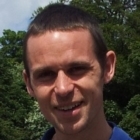
Dr. Mike Ward
University of Leeds
After completing my PhD at the Institute for Materials Research, University of Leeds, I took the role of TEM Experimental Officer in the Electron Microscopy unit (the Leeds Electron Microscopy and Spectroscopy Centre – LEMAS). I look after two TEM instruments in the unit, providing training and support for users within the University but also from other institutes around the country. Although the research I am involved in varies greatly, my primary interests are in microscopy of Biomaterials, Minerals and Oxide Materials. -

Professor Rik Brydson
RMS Honorary Secretary Physical Science
University of Leeds
Rik holds a chair in the Institute for Materials Research (IMR) in the School of Process Environmental and Materials Engineering at the University of Leeds. He heads the NanoCharacterisation group based around the Leeds Electron Microscopy and Spectroscopy (LEMAS) centre which is shared between Materials and Earth Sciences and also acts as an EPSRC facility for external UK researchers. He has a general research interest in high spatial resolution chemical analysis in nanostructured materials, and has a current research h index of 32 with over 25 years research experience in nanomaterials characterisation. He has managed extensive national and international collaborations including being current consortium leader for the UK National Facility for Aberration corrected Electron Microscopy, SuperSTEM at Daresbury.Rik is also on the Management Board of the European Microscopy Society. He has written an RMS Handbook on Electron Energy Loss Spectroscopy (Bios /Taylor and Francis 2001), has co-written a book on “Nanoscale Science and Technology" (Wiley 2005), edited a recent RMS book on Analytical Aberration-corrected Transmission Electron Microscopy with Wiley and has contributed a number of other chapters in specialist books on electron microscopy by other professional bodies covering Physics, Chemistry and Engineering. In recent years his research interests have focused on applying high spatial resolution characterisation methods (particularly TEM and EELS) to the nanochemical analysis of softer, more radiation sensitive materials.
-

Dr Rebecca Thompson
Electron Microscopy Deputy Chair
University of Leeds
Rebecca is Facility Manager and senior cryo-electron microscopy (EM) support scientist at the Astbury Biostructure Laboratory, University of Leeds. Her research interests include imaging a broad range of biological specimens, from whole cells to macromolecular complexes, to high resolution using cryo-EM, and integrating data from EM with other microscopy techniques.
Invited Speakers
-
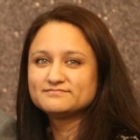
Zabeada Aslam
University of Leeds
After completing my PhD in 2006 investigating the growth mechanisms of carbon nanotubes, I worked as a Research Fellow on the IMPRESS Project at Leeds University investigating the solidification of intermetallic materials for advanced catalysts. I then moved to Oxford University as an ERC post-doctoral research fellow investigating the mechanical and electrical properties of doped multi-walled carbon nanotubes using an in-situ TEM holder. I am currently providing TEM support to students and researchers at LEMAS, University of Leeds. -

Jemima Burden
University College London
Jemima is Head of Electron Microscopy at the MRC Laboratory for Molecular Cell Biology at University College London. She received her BSc from University of Bath and her PhD from Imperial College London, where her fascination for microscopy began. Her main interests are Correlative Light and Electron Microscopy and using EM to investigate cell biological processes - from viruses to whole organisms. -
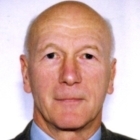
Steve Chapman
Protrain
Steve Chapman was a former Hitachi service technician and product specialist, co-designed the EMscope Sputter Cryo system. He has been a product specialist at JEOL and ISI, the latter being deeply involved with the design of SEM and TEM. Steve formed Protrain in 1982 working around the world in 32 countries as a consultant in electron microscopy. -

Dr Michael Dixon
Hitachi High Technologies
Mike is EM Section Manager at Hitachi High-Technologies. After studying Physics at university he started his career in microscopy at Philips Research before joining Hitachi in 1997. Mike has worked in sales, service and applications development roles in the US and Europe, covering Hitachi's preparation systems, benchtop SEM, field emission SEM, automated SEM and TEM/STEM. He is currently responsible for Hitachi's EM sales activity in the UK, but continues to work in applications development and training. He is a member of the RMS Engineering & Physical Sciences Committee and the Institute of Physics EMAG committee. -

Ms Kim Findlay, FRMS
John Innes Centre
Kim is head of Bioimaging at the John Innes Centre, Norwich. Her degree was in Biology and Physics at King’s College, London. With over 34 years' experience in light and electron microscopy and more than 90 publications involving the use of TEM, SEM or confocal microscopy, in 2015 she was awarded the RMS Vice Presidents Medal for microscopy research and laboratory support. Her early focus on the plant cytoskeleton developed into a wider interest in plant and microbial sciences. She has made particularly important and long-standing contributions to Streptomyces research. Kim teaches cryo-SEM at the RMS EM school and taught on the RMS cryo-EM course in the past. She is regularly involved in Outreach activities, running tours and demonstrations for the public and young students. Kim won an award from the University of East Anglia, where she is an honorary lecturer, for her outstanding contribution to public and community engagement. -

Martin Fuller
University of Leeds
-
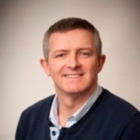
John Harrington
University of Leeds
John Harrington is the Facility Manager of the Leeds Electron Microscopy And Spectroscopy centre (LEMAS) in the faculty of Engineering. He has taught on the EM school for many years, firstly as a technician and then as an Experimental Officer. He has over 30 years of EM experience and expertise particularly in SEM, EDX and FIB-SEM dual beam technologies
-

Professor Pippa Hawes, FRMS
The Pirbright Institute
Pippa is the Head of Bioimaging at The Pirbright Institute based in Surrey. Projects centre around investigating the interactions between animal pathogens and host cells. Bioimaging is dedicated to using and developing confocal and electron microscopy techniques to study viruses exotic to the UK that infect farm animals. Pippa has extensive experience in the field of electron microscopy and is an active member of the RMS EM section committee. She believes the RMS has an important role to play in the promotion and teaching of microscopy and is consequently a lecturer at the RMS EM School. -

Dr Nicole Hondow
University of Leeds
Nicole is a University Academic Fellow in the area of Materials Characterisation at the University of Leeds. Prior to this she completed undergraduate and postgraduate studies in Chemistry at The University of Western Australia, and undertook postdoctoral research University of Leeds in the electron microscopy of materials relevant to catalysis and toxicology. Nicole’s current research uses analytical electron microscopy in the examination and quantification of nanomaterials in complex matrices. -

Mr Gareth Jackson
Leica Microsystems
Gareth started his career in a clinical EM department in the early nineties. Since then he has worked for Olympus Microscopes and Leica Microsystems. Gareth is an active member of the EM committee and has been involved in many RMS courses over the years including the EM Summer School, Rothamsted Research Cryo Course and the Cell Imaging Techniques course at Oxford Brookes University. -
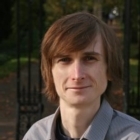
Rowan Leary
University of Cambridge
Rowan Leary obtained his MEng/BEng in Materials Science and Engineering at the University of Leeds, and his PhD from the University of Cambridge. He is currently a Junior Research Fellow at Clare College and the Department of Materials Science and Metallurgy, University of Cambridge. His research involves the development of a variety of multi-dimensional electron microscopy techniques, and their application in the context of materials chemistry and catalysis in particular. -
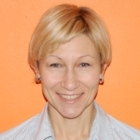
Dr Natasha Lukoyanova
Birkbeck College
Dr. Natalya Lukoyanova is EM facility coordinator in ISMB Birkbeck, London. She is interested in the application of electron microscopy and computational image processing to study the structure and function of macromolecular assemblies. Her current research focuses on the mechanism of pore formation by MACPF/CDC proteins, which is a continuation of her work at ISMB in Prof. H. Saibil’s group. Previously, she studied structure of actin and actin binding proteins during her postdoctoral training under the Prof. E. Egelman (University of Virginia) and structure of septin filaments under Prof. J. Trinick (University of Leeds). -
Stuart Micklethwaite
University of Leeds
-
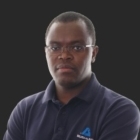
Evans Mogire
University of Warwick
I work as Technical and Laboratory Manager for UK and Ireland. Prior to this I worked as a metallurgist for an OEM manufacturer in the energy sector after completed my doctoral studies on high temperature materials at Loughborough University. In my present role, I am actively involved in providing solutions in materials sample preparation (metallic and non-metallic) for both optical and electron microscopy to various industry sectors, research facilities and academic institutions. I am also a visiting academic at University of Warwick supporting the advanced steel research center -

Dr Stephen Muench
University of Leeds
Dr Stephen Muench is a lecturer in membrane proteins at the Univeristy of Leeds. Having trained in X-ray crystallography, he moved to the field of electron microscopy in 2006. His main interests are in using electron microscopy, primarily single particle cryo-EM, to resolve the structure and mechanism of membrane proteins and to use this to underpin inhibitor design -

Prof Quentin Ramasse
SuperSTEM
Quentin Ramasse is the Director of the SuperSTEM Laboratory, the EPSRC UK National Facility for Aberration-Corrected STEM, and holds a visiting associate Professorship at the University of Leeds, U.K. He obtained his Ph.D. in Physics from the University of Cambridge as a member of the Microstructural Physics Group working on optical aberration measurements methodologies for aberration-corrected STEM. Before taking up his post at SuperSTEM he held a Staff Scientist position at the National Center for Electron Microscopy (NCEM) in Berkeley, a U.S. Department of Energy-funded user facility where he took part in the TEAM project which saw development of the world's first 0.5A electron microscope. Quentin Ramasse has published extensively in the field of STEM-EELS, with a dual focus on STEM technique development and on applications to a wide range of energy harvesting materials, from 2-dimensional materials such as graphene and MoS2 nano-catalysts to complex oxides. -
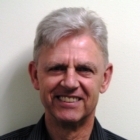
Neil Rowlands
Scientific Consultant, AEM Associates
Neil has spent his working life in the development of analytical electron microscopy with special reference to EDS analysis at in TEM and SEM. He has been involved with product development in an industrial environment at Oxford Instruments and JEOL. He also held a faculty position at McGill University, Montreal for 20 years and was a Research Manager at MIT, Boston. Neil has recently been involved in courses and workshops at RMS, Microscopical Society of Canada, Chinese Academy of Sciences and Nation Institute of Nanotechnology, Canada and University of Manchester.
-
Richard Walshaw
University of Leeds
-
Peiyi Wang
University of Leeds
-
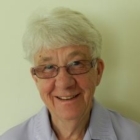
Alice Warley
KCL, London
Dr Alice Warley is a former director of the Centre for Ultrastructural Imaging and Emeritus Professor of Ultrastructural Imaging at King's College London. She has a long term interest in the application of electron probe X-ray microanalysis to biological specimens and has published widely in this field.
-
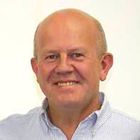
Mr Steve Cham
Labtech
Steve is business development manager in the electron microscopy division at Labtech. After studying for a BSc in Biological Sciences he started his career in light and electron microscopy at Rothamsted Research Centre. He then worked as product manager for EM and cryo preparation products for Cambridge Instruments, later to become Leica Microsystems. Steve then took the role of sales manager for northern Europe responsible for EM preparation and Histology sales. Following a period at Agar Scientific and EM Resolutions he joined Labtech to setup their EM division supplying a range of consumables, accessories and instrumentation for Electron Microscopy
Delegate Information
Course Fees
Please note that any registrations taken after the 1 June 2016, will incur a £100 late registration fee. The below prices have been ajusted to reflect this.
The course fees are as follows:
RMS Member rate: £1175
Non-Member rate: £1295
Accommodation Package: £320 including 5 nights’ accommodation
Venue for the course
The Electron Microscopy Summer School takes place within the Houldsworth Building, Department of Engineering Materials, at the University of Leeds, Clarendon Road, Leeds, LS2 9DT. For more information on the University, please visit the www.leeds.ac.uk.
Travelling to the venue
Leeds is served by two major airports: Leeds Bradford and Manchester Airport. Regular flights are available from a huge number of European and International cities. Leeds Bradford airport is approximately seven miles away from the University, so easily commutable by taxi.
Leeds Railway Station is the closest station to the Leeds campus where the course and accommodation venue. The campus is a 30 minute walk or 10 minute taxi ride from from the station.
Parking is available on the Leeds Campus. If you are planning on driving to the course, please contact Karina Lang, as you will need a parking permit.
Accommodation package
The package includes 5 nights’ en-suite, bed and breakfast accommodation in the University Halls on Campus. Delegates will be able to check-in on Sunday 10 July and will be departing on Friday 15 July.
Meals
For those who have selected the accommodation package, breakfast will be provided on Monday, Tuesday, Wednesday, Thursday and Friday morning. These will be provided on the campus.
Buffet lunches, tea / coffee and biscuits are included in your registration fee. The evening meals will be in the following locations:
- Monday’s evening meal will be held at Aagrah Indian Restaurant in Leeds City Centre. (All delegates)
- Tuesday's evening meal will be held on campus (Accomdation package only)
- Wednesday's evening meal will be held on campus (Accomdation package only)
- Thursday’s evening meal will be held at Piccolino’s Italian Restaurant in Leeds City Centre.
Transportation to and from the dinners will be provided from outside the campus accommodation.
Please note that Tuesday and Wednesday night does not have any arranged meals (unless bought as part the accommodation package).
Every care will be taken to cater for any special dietary requirements but delegates must make the RMS aware of these requirements prior to attending, please contact Karina Lang.
Registration
Registration will be taking place on Monday morning from 08.30 – 09.00 at the Houldsworth Building Foyer.
At registration you will receive the following:
- a name badge
- a course pack including programme, notes and delegate list
- a pack of RMS information
You will be requested to wear your badge at all times during the course.
Dress code
The dress code for the course is smart/casual. The course takes place within the Houldsworth Building, which is a temperature controlled building.
Wi-fi
The University has a campus wide Wi-Fi. Your user name and password will be available upon registration. To access this network simply enter these details when prompted.
Dietary and Access requirements
The RMS is committed to our delegate’s health and wellbeing. Therefore if you have any dietary or access requirements please contact Karina Lang.
CPD Points and certificates of attendance
In previous years this course has been awarded IBMS Continuing Professional Development (CPD) Points. You will be able to collect a CPD Certificate and also a certificate of attendance at the course should you require them.
Your feedback
After the course has finished, the RMS will contact you in order to obtain feedback about the course. This survey should not take more than 7 minutes to complete and all feedback is greatly appreciated.