
Scanning Probe Microscopy Meeting
Scanning Probe Microscopy Meeting
Scientific Organiser: Neil Wilson, University of Warwick
This meeting covers a wide range of topics associated with Scanning Probe Microscopy including main techniques such as atomic force microscopy and scanning tunnelling microscopy as well as more specialised versions.
The SPM Meeting is held annually and provides an excellent forum for the community to meet and discuss the latest advances in the field. With an exhibition alongside and social activities organised, it is one of the best events for 2016 for scanning probe microscopy users, for PhD students and well-seasoned microscopists alike!
Abstracts are still being accepted for late breaking posters.
Further information on invited speakers and proposed sessions can be seen below.
We are accepting abstracts for late breaking posters at this meeting.
The deadline for late breaking posters is 28 June 2016.
Please take the following points into consideration when submitting your abstract.
- Please ensure you submit it as a Microsoft Word document and not a PDF.
- Please ensure that you indicate your preference for a submitted talk or poster presentation.
- Abstracts should be approximately 300-500 words in length.
- Please include the title, all authors and their affiliations and indicate the presenting author.
- You are encouraged to include an image or diagram where appropriate (total abstract length no more than 1 page).
- You should include references and keywords.
Abstracts are welcomed in all areas of SPM research, including SPM development and application. If you wish, you may indicate which of the proposed sessions is the most relevant to your work.
- in-situ and in-operando SPM
- Forces and mechanics of biological systems with AFM
- Molecular systems
- Functional property measurements by SPM
- Technology and instrumentation development
Abstracts should be emailed as an attachment to Victoria Masters.
All poster presenters will be required to register to attend the meeting.
There will be best poster prizes and certificates handed out at the dinner.
Scientific Programme
Provisional Poster List - Please note that poster numbers may be subject to change.
Poster No. |
Poster Details |
1 |
Candida albicans adhesion onto poly-methyl meta-acrylate (PMMA) surfaces at the nanoscale
|
2 |
Investigation into the mechanical properties of ageing of in vitro glycated tissue models at the nanoscale
|
3 |
Atomic Force Microscopy for the Visualization of DNA Topology on Cationic Lipid Membranes
|
4 |
Analysis of adhered Staphylococcus epidermidis to model surfaces by AFM and XPS
|
5 |
The adsorption structure of TCNQ on Ag(111)
|
6 |
AFM based viscoelastic measurements for the quantitative design of hydrogel based scaffolds for Tissue Engineering
|
7 |
Impact of buffer layer structure on the vertical leakage current in nitride HEMT devices
|
8 |
Imaging and Electrochemical Investigation of Biological Molecules Using Scanning Probe Microscopy
|
9 |
Microchanneled AFM cantilevers for electrochemical 3D microprinting
|
10 |
PTCDI Thin Films on Hexagonal Boron Nitride
|
11 |
Direct imaging of a highly curved vesicular photosynthetic membrane, chromatophores, using tapping mode Atomic Force Microscopy (AFM)
|
12 |
Monolayer-to-thin-film transition in supramolecular assemblies on graphene
|
13 |
Self-Assembly and On-Surface Reactions of Binol Molecules on Copper Surfaces
|
14 |
Development and Integration of an Universal SPM head: Design Criteria and Challenges
|
15 |
Effects of Intense Pulsed Light on the Structure of Collagen
|
16 |
An AFM Study Investigating Polymers on Surfaces
|
17 |
Molecular architecture of bacterial exosporium
|
18 |
A study of the mechanical properties of Staphylococcus aureus
|
19 |
The Mechanical and Adhesive Heterogeneity of Oral Biofilms at the Nano-scale: An AFM Force-Volume Investigation
|
20 |
Ultrasonic Non-Destructive Testing by AFM
|
21 |
Investigation of plant cell wall mechanics using Atomic Force Microscopy
|
22 |
Using STORM Force microscopy for understanding how bacteria grow and die
|
23 |
AFM of 2 dimensional heterostructures
|
24 |
Development of a high intensity electrospray source for UHV deposition of large functional molecules for in-situ STM studies
|
25 |
Nanoscale non-contact electrical measurements of organic photovoltaics
|
26 |
Photo-assisted Nanoscale Characterization of Electronic Properties in BiFeO3 Films without Conductive Bottom Electrode
|
27 |
Park SmartScan Automatized atomic force microscopy for simple point-and-click imaging, producing expert level quality AFM images at high speed
|
Organisers & Speakers
Scientific Organising Committee
Neil Wilson, University of Warwick
Gavin Bell, University of Warwick
Sonia Contera, University of Oxford
Giovanni Costantini, University of Warwick
Pat Unwin, University of Warwick
Plenary Speakers
Leo Gross, IBM Zurich, Switzerland - Atomic Force Microscopy for Molecular Structure Elucidation
Giovanni Dietler, EPFL, Switzerland - DNA, the molecule of Life: how the Atomic Force Microscope has contributed to the investigation of this important biomolecule
Plenary & Invited Speakers
-

Giovanni Dietler
EPFL, Switzerland
Giovanni Dietler has graduated from the ETH Zurich in physics with a thesis on the physics of blood coagulation. He then continued with a PhD on the same subject also at the ETHZ. During this period he used mostly light scattering techniques to investigate the aggregation of fibrinogen, one of the main protein involved in blood coagulation. He continued his academic path with a post-doctoral stay at UC Santa Barbara where he investigated second-order phase transitions and gels. Back to Switzerland at the University of Fribourg, he developed Atomic Force Microscopy to study the surface of polymers and their treatment to enhance adhesion. In 1996 he was nominated as physics professor at the University of Lausanne and then in 2003 at the EPFL Lausanne. Since 1996 he employs AFM to study proteins, cells and DNA from the physics point of view.
-
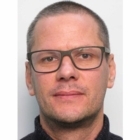
Leo Gross
IBM Zurich, Switzerland
Leo Gross works since 2005 at IBM Research – Zurich together with Dr. Gerhard Meyer on atomic and molecular manipulation by scanning tunneling microscopy (STM) and atomic force microscopy (AFM), and on nanostencil lithography. Leo Gross received his PhD in Physics in 2005 in the group of Prof. Karl-Heinz Rieder at the Free University of Berlin. Before that he worked in the group of Prof. Harald Fuchs at the University of Münster and in the group of Prof. Ulrike Diebold at Tulane University, New Orleans.
Leo Gross’ main research interest is the investigation of atomic and molecular adsorbates using low temperature STM and AFM. In 2009 he and his coworkers pioneered atomic resolution on molecules by AFM using functionalized tips.
-
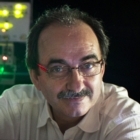
Marin Alexe
University of Warwick
-
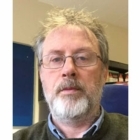
Peter Beton
University of Nottingham
Prof. Peter H. Beton has used scanning probes for over 20 years to study the adsorption and manipulation of organic molecules on surfaces, nanofabrication and organic devices. This work includes the demonstration of hydrogen-bonded templates, random molecular tilings, guest-induced supramolecular networks and the adsorption and supramolecular organisation of polymer nanorings. In recent work he has also investigated layered semiconductors and insulators which can be readily prepared by exfoliation and large area growth. This work includes the fabrication of III-VI light emitting devices and photoconductors formed from III- VI compounds combined with graphene and molecular adsorption on graphene, hexagonal boron nitride (hBN) and hBN/graphene heterostructures. He was awarded the 2013 Tabor Medal and Prize by the Institute of Physics in recognition of his contribution to surface and interface physics.
-

Professor Lorna Dougan
University of Leeds
Lorna is an Associate Professor in the Molecular and Nanoscale Physics group in the School of Physics and Astronomy at the University of Leeds. Before joining in 2009, Lorna held a postdoctoral researcher position in the Biological Sciences department at Columbia University in New York. Lorna is a physicist by training (MPhys and PhD) and during this time held a Winston Churchill Memorial Trust Fellowship. More recently she was awarded the Royal Society of Chemistry MacroGroup UK Young Researchers Medal in 2013 and the Medical Research Council and Royal Society Suffrage Science Award in 2015. Lorna's research interests span biophysics and soft matter physics. -
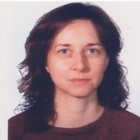
Dr Laura Fumagalli
AFM & SPM Representative infocus Editorial Board
University of Manchester
Laura graduated in electronic engineering in 2002 and obtained her PhD in 2006 at Polytechnic University of Milan (Italy) with a doctoral thesis on low-noise amplifiers. She then joined the Electronic Department of the University of Barcelona and the Institute of Bioengineering of Catalonia (Spain), where she developed novel instrumentation and techniques for scanning probe microscopy to probe electrical properties at the nanoscale, in particular capacitance and dielectric properties of nano-materials and biomolecules. From 2015, she is lecturer in Condensed Matter Physics at the School of Physics and Astronomy of the University of Manchester (UK) and researcher of the National Graphene Institute - University of Manchester. -

David Klenerman
University of Cambridge
-

Christine Kranz
University of Ulm
Dr. Christine Kranz received her M.S. and Ph.D. degrees in Chemistry from Ludwig-Maximilians University in Munich (1992) and Technical University of Munich (1996), Munich, Germany, respectively. After spending a year as a postdoctoral fellow at Vienna University of Technology, Institute of Analytical Chemistry (Austria), she was senior research scientist at the School of Chemistry and Biochemistry, Georgia Institute of Technology, Atlanta, GA. Since 2008, she works at the University of Ulm, Institute of Analytical and Bioanalytical Chemistry (IABC), Ulm, Germany, where she is heading the surface sciences group and coordinates the biosensing research activities.
-
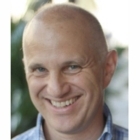
Marco Lazzarino
IOM-CNR Trieste, Italy
arco Lazzarino got the degree in Physics from the University of Genoa (IT) and the PhD from the University of Groningen (NL). From 1992 to 1998 he worked on the electronic properties of semiconductor devices, including heterostructures, Schottky barriers, hybrid superconductor-semiconductor and 2D electron gas with INFM in Trieste and with SNS in Pisa, Italy.
Since 1999 he is a scientist with CNR-IOM laboratorio TASC, Trieste where he started his experinces in the field of scanning probe microscopy, in particular on AFM nano-lithography and low temperature SNOM.
In 2003 a visiting period at Princeton University (NJ) triggered a new interest in the application of probe microscopy to life science and the development of micro and nanoelectromechanical systems for the detection and manipulation of biological molecules. Nanobiomechanics is now his main current scientific interst.
Since 2007 he is the scientific coordinator of a the Nano-Bio-Analysis Laboratory of the Center for BioMedicine (CBM S.c.r.l. - Trieste) dedicated to the application of scanning probe microscopy to biology.
Since 2014 he is adjunct professor of nanobiotechnology at the University of Trieste.
-

Charles Smith
University of Cambridge
Charles G. Smith has worked on nano-electrical and nano-mechanical devices since 1985. He pioneered electrical transport work on GaAs quantum dots and techniques for measuring single electron charge movement in those dots, initially at low frequencies and more recently high frequencies for quantum computing applications. He has developed a number of low temperature scanning probe techniques for measuring nano-devices. Recently he has been working on carbon based devices. He is also the founder of two spin out companies Cavendish-Kinetics Ltd which makes nano-mechanical RF tuneable capacitors for mobile phone and Cambridge Lab on Chip Ltd, and he has helped raise venture capital to develop new technologies.
Sponsors
The RMS would like to thank all of the below sponsors of the SPM event.
There will be an exhibtion during the meeting giving delegates a great opportuntity to network along side tea/coffee and lunch. Stand space is now full at this event. There are still many ways of getting involved through sponsorship opportunities, such as; advertising or promotonal items in the delegate bags. If this could be of interest to you please contact Chloe Goode for more information.
-

University of Warwick
-

Agar Scientific
Agar Scientific. Microscopy, Lab and Medical supplies at your fingertips
A leading international supplier of scientific instruments and accessories for over 40 years, Agar Scientific specialises in consumables and equipment supporting all forms of microscopy. Agar Scientific provides a fast, efficient online and offline ordering service, allowing customers to purchase with ease from our extensive range of laboratory and medical supplies and equipment. Our technical support staff has a wealth of experience in specimen preparation and microscopy techniques.
Our online catalogue of microscopy products includes:
TEM Grids - Apertures - Calibration standards - SEM stubs - Specimen preparation equipment - Filaments - Tweezers - Slides & cover glasses - Vacuum coating - Fixatives and resins - EM support films - Magnifiers - Specimen storageWe welcome enquiries regarding the use of any of our products, along with any suggestions for additions to our range. Orders ship from our UK headquarters in Stansted, Essex, and through our established network of agents and distributors who provide technical and applications support worldwide.
ISO9001:2008
Agar Scientific maintains a documented quality plan specifying our manufacturing and distribution processes and is approved by SGS to ISO9001:2008.Find out more about Agar Scientific
Web: www.agarscientific.com LinkedIn: Agar Scientific Twitter: @agarscientific -

Asylum Research, an Oxford Instruments Company
Find out more about Asylum Research, an Oxford Instruments Company
www.asylumresearch.co.uk -

Bruker
For almost 50 years Bruker has been driven by a single goal: to provide the best technological solution for each analytical task. Today, worldwide, more than 4,000 employees in over 90 locations on all continents work towards this enduring vision.
Bruker’s drive to develop state-of-the-art technologies and innovative solutions for today’s analytical questions remains constant, evidenced by the many product lines that lead their respective markets. With one of the world’s most comprehensive ranges of scientific instrumentation available under one brand, the Bruker name is synonymous with excellence, innovation and quality.Find out more about Bruker
www.bruker.com -

JPK Instruments
-

Keysight Technologies
Keysight Technologies (formerly Agilent Technologies) will Introduce the 9500 AFM, a state-of-the-art atomic force microscope that seamlessly integrates Keysight’s powerful new NanoNavigator software with QuickScan enabling scan rates of up to 2 seconds per frame and automatically sets all parameters within seconds. It has industry-leading environmental & temperature control for Electrochemistry, Life Sciences and Material Sciences applications.
-

Quantum Design UK and Ireland
Quantum Design UK and Ireland (QDUKI) are a leading distributor of high-tech instrumentation and consumables for scientific, academic and industrial research. QDUKI are part of the Quantum Design International Group. Our success in distributing scientific products comes from more than 30 years’ experience in manufacturing and distributing our own industry-leading materials characterisation systems.
Please visit our website www.qd-uki.co.uk to see the Electron Microscopy instrumentation range we can offer which includes Nanomegas Electron Precession Diffraction, GETec Microscopy In-Situ AFM in SEM and SCL Self Sensing Cantilevers.






Venue