
Super-Resolution Workshop 2019
Super-Resolution Workshop 2019
Scientific Organiser: Prof. Michelle Peckham (University of Leeds), Susan Cox (King's College London)
Designed to talk about the current challenges in developing and using super-resolution microscopy with lots of time for discussion, this year the workshop will focus on the topic of labelling. Thoughts and ideas are encouraged to help define what is good/best practice around these challenging techniques, and give an insight into future potential developments.
Confirmed Speakers
-

Dr Susan Cox
King's College London
Susan works at the Randall Centre for Cell and Molecular Biophysics, developing fluorescence microscopy techniques and applying them to discover new cell biology at the nanoscale. In 2011 she was awarded a Royal Society University Research Fellowship, which she used to develop a substantial research program based around localisation microscopy, and methods to extract more information from super-resolution image data. SC is best known as the developer of Bayesian analysis of blinking and bleaching (3B), a method for analysing extremely dense localisation microscopy image series. Its importance has been recognised with the award of the Royal Microscopical Society light microscopy medal and the Society of Experimental Biology Presidents Medal. More recently, she has explored the limits of localisation in terms of speed and accuracy. She mathematically described the role of the size of the point spread function size in limiting information transmission speed and developed a machine learning based approach to remove poor fits from the super resolution image. Since it is obviously more desirable to avoid poor fits in the first place, she developed Haar Wavelet Kernel analysis (HAWK), an approach to localisation microscopy data analysis which avoids artifacts and ensures the results reflect the underlying structure of the sample. -
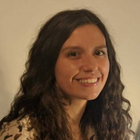
Dr Siân Culley
King’s College London
Siân is a Royal Society University Research Fellow at King’s College London, working on developing new image analysis methods driven by real biological questions. Previously she was a postdoctoral research in Ricardo Henriques’ lab at the MRC Laboratory for Molecular Cell Biology, UCL, working on analytical methods for improving super-resolution fluorescence microscopy. Prior to joining Ricardo’s group, she did a PhD in Optical Microscopy and an undergraduate degree in Natural Sciences, both at UCL. In addition to research, Siân is also passionate about creating open source teaching material, outreach work, and driving towards better diversity and representation in the microscopy community. -
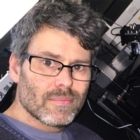
Professor Ian Dobbie
Light Microscopy Section Deputy Chair
Johns Hopkins University.
Ian recently moved to Johns Hopkins as Research Professor and Director of the Integrated Imaging Center at the Hopkins Homewood Campus. Previously he was Technical Director at Micron Oxford, a multidisciplinary BioImaging Unit working with biomedical researchers in the Oxford area and beyond. Ian has over 15 years’ experience in biological imaging gained in a range of leading academic institutes. He gained a degree in physics and a masters in computer modelling before moving on to do a PhD in muscle mechanics at the Randall Division of Cell and Molecular Biophysics at Kings College London. Since then he has been working in imaging with a range of biological systems at number of world class research centres including, Cancer Research UK, Kings College London, the University of Oxford and Johns Hopkins University. Over the last 15 years he has specialised in building and using advanced fluorescence microscopy, especially novel super resolution imaging systems. -
Ulrike Endesfelder
MPI, Marburg
-
Marisa Martin-Fernandez
UK Research and Innovation
Marisa Martin-Fernandez was trained as an undergraduate in Physics in Madrid after which she received an international award to do her PhD in the UK. She subsequently won an SERC Post-Doctoral fellowship with Prof. Joan Bordas and a BBRC Post-Doctoral fellowship with Prof. Gareth Jones to develop microscopy techniques to investigate cellular signal transduction mechanisms relevant to cancer. Marisa has run an independent research group since 2003 with a continuous focus in developing novel instrumentation and methods to improve our understanding of cancer at the molecular level and to exploit these instruments to derive models of anti-cancer drug-induced behaviour. Marisa Martin-Fernandez has been recognised with a Research Councils Individual Merit award and a fellowship of the Science and Technology Research Council. She currently heads the Functional Biosystems Imaging group within the Central Laser Facility at the Research Complex at Harwell, which is situated at the Harwell-Oxford Campus, the locus of the large scale scientific infrastructure in the UK. -
Brian Patton
University of Strathclyde
-
Sebastian Van de Linde
University of Strathclyde
Sebastian van de Linde finished his PhD at the Department of Applied Laser Physics & Laser Spectroscopy, Bielefeld University, Germany, and worked with Markus Sauer as a postdoctoral researcher at the University of Würzburg. He worked as a Junior Group Leader at the Department of Biotechnology & Biophysics at the University of Würzburg before moving to The University of Strathclyde, Glasgow in 2016. Sebastian’s research interests are the development of new imaging tools and the implementation of super-resolution imaging methods in biology and medicine such as of neurobiology.
Delegate Information
Registration
Standard Rate = £35.00
Admittance to this event is for registered and authorised attendees. If you have any questions, please contact the RMS contact for this event.
Dietary and Access Requirements
The RMS is committed to our delegate's health and wellbeing. Therefore, if you have any dietary or access requirements, please contact the RMS Event Contact.
Certificates of Attendance
The RMS can provide Certificates of Attendance if required.