ToScA 2018
ToScA 2018
This will be the 6th annual Tomography for Scientific Advancement (ToScA) symposium addressing hard and soft tissue imaging, understanding materials in 3D, recent advances in hardware and software, and a broad range of applications in tomography. This international symposium will consist of keynote speakers, student talks, student poster presentations and an image competition. The symposium provides opportunity for open discussions, networking with researchers and commercial industry as well as a platform to engage in collaborations.
Workshops will be taking place on 10 September and the symposium begins on 11 September.
Symposium Chair: Dr Farah Ahmed (Exponent International)
Symposium Co-Chairs: Dr Jay Warnett and Professor Mark Williams (WMG, University of Warwick)
Registration has now closed.
Programme and Poster List
Provisional Poster List
| Dose distribution from Micro-CT in bone: a case study on the Mary Rose remains – Sarah Aldridge, University of Lincoln |
| Using Micro Computed Tomography to Improve the Diagnosis of Strangulation Deaths - Validation and Initial Case Data – Waltraud Baier, University of Warwick |
| Correlative Imaging Techniques for Nanomechanical Testing Areas of Interest in Biomaterials – Rachel Board, Swansea University |
| Rediscovering the museum’s treasures: µCT digitisation of the type collection – Jonathan Brecko, Royal Belgian Institute of Natural Sciences |
| Evaluating 3D Printing Software Using X-Ray Microtomography – Alexander Cresswell-Boyes, Queen Mary University of London |
| X-ray Nano-CT System with Nano-focus X-ray Tube and Hybrid-Photon-Counting Pixel Detector for Lifescience Applications – Tilman Donath, Dectris |
| Multi-channel and advanced reconstruction methods of the CCPi Core Imaging Library: An open-source Python framework for tomographic reconstruction and analysis - Jakob Jorgensen, University of Manchester |
| Structural and functional characterisation of 3D printed pharmaceutical dosage forms by means of high-resolution X-ray computed tomography – Orestes Katsamenis, University of Southampton |
| Nanoscale Imaging of Gecko skin: Translation to biomedical materials with cell control – Stephen Kelly, Carl Zeiss X-ray Microscopy |
| Non-destructive micrometer-scale 3D imaging of intact fossil specimens - Stephen Kelly, Carl Zeiss X-ray Microscopy |
| XCT inspection of lattice structure of acetabular hip prosthesis cups – Nadia Kourra, University of Warwick |
| 3D quantification of laminar layup in a bird feather shaft – Christian Laurent, University of Southampton |
| Correlative imaging of plant-soil interactions: a novel multi-modal and multi-scale approach for identifying and interpreting biologically-mediated weathering – Ria Mitchell, Swansea University |
| Preservation of bone tissue with temperature control for in situ SR-microCT experiments – Marta Peña Fernández, University of Portsmouth |
| Study on inclusions causing clean steel defects – Akalya Raviraj, University of Warwick |
| A new approach of analysis on underperforming battery using Micro Computed Tomography (µCT) technology – Guillaume Remy, University of Warwick |
| Image Optimisation in Micro Computed Tomography for feline hearts – Ian Simcock, Great Ormond Street Hospital |
| Bioinspired lightweight vehicle design through advanced correlative microscopy – Nicola Thomas, Swansea University |
| Quantifying intracortical bone microstructure in birds: an assessment of two-dimensional and three-dimensional methods for characterising bone histology – Katherine Williams, University of Southampton |
Workshops
Workshops will take place on Monday 10 September. Delegates will be invited to register for workshops via the online regsitration form. Workshop places will be available on a first come first served basis. In order to attend the workshop you need to be registered to attend the two day meeting taking place on Tuesday 11 and Wednesday 12 September.
CONFIRMED WORKSHOPS:
VGSTUDIO MAX Introductory Workshop (morning session)
This workshop will introduce you to CT data analysis and visualization using VGSTUDIO MAX. Volume Graphics will present typical workflows which are of special interest for the scientific community for the fast and precise analysis of voxel data: you will accomplish the first steps of quantitative analysis options, segmentation, and visualization techniques. Use VGSTUDIO MAX to easily get the information contained in your data sets, whether acquired by laboratory X-ray CT, a synchrotron, with neutrons, or with another source. Use this special opportunity to speak personally with Volume Graphics experts!
Please note this workshop is limited to 16 places, available on a first come first served basis.
VGSTUDIO MAX Segmentation & Analysis Workshop (afternoon session)
This workshop will cover image segmentation and selected analyses available in VGSTUDIO MAX. Participants should be familiar with the basic operations of the software or have attended the VGSTUDIO MAX Introductory Workshop the same day. Volume Graphics will present typical segmentation tasks and solutions and give you tips and tricks for challenging multimaterial datasets. The second part of the workshop will be dedicated to selected quantitative analysis options. Take the chance to speak personally with Volume Graphics experts!
Please note this workshop is limited to 16 places, available on a first come first served basis.
Amira-Avizo Software - Introductory Workshop - (morning session)
This workshop is an introductory course focusing on the advanced 3D visualization and analysis capabilities of Amira and Avizo software for exploring and understanding scientific and industrial CT data. Participants will be offered an overview to data visualization, image processing and segmentation, measurements and statistics, and other advanced set of functionalities.
Attendees will have the opportunity to use the software through a hands-on session, accessible to first-time users of Amira and Avizo.
Please note this workshop is limited to 16 places, available on a first come first served basis.
Amira-Avizo Software - Automation of Analysis Workflows Workshop - (afternoon session)
Participants will be offered the chance to try some of the latest features of Amira and Avizo Software.
Amira and Avizo Software are well known software platforms for visualizing, inspecting, measuring and analyzing scientific and industrial CT data.
All the powerful features provided by Amira and Avizo Software can be customized and automated to perfectly fit with your research needs and to increase your productivity.
The workshop will focus on automation of analysis workflows in Amira and Avizo Software using for instance Python as well as recipe mechanism.
Please note this workshop is limited to 16 places, available on a first come first served basis.
Laser Scanning Workshop (morning and afternoon session)
This workshop will be run twice, a session in the morning and then repeated in the afternoon.
This hands-on workshop will provide participants a basic working knowledge of 3D laser scanning using a manual measurement arm. An introduction to how the technology works, advantages and limitations will be given – particularly in a measurement/accuracy context. This will be followed by small group projects using a manual measurement arm to capture 3D data of an object and convert it to a usable mesh format for 3D printing or importing into other software. Registration of multiple scans and other more advanced techniques will be discussed/demonstrated with an opportunity to implement if time allows.
Please note this workshop is limited to 10 places, available on a first come first served basis.
Invited Speakers
Invited Speakers
Manufacturing and Industry Applications
"Metrology of Biofilms in Extreme Environments"
-
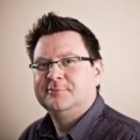
Dr Paul Bills
University of Huddersfield
Paul is the Director of Graduate Education within the School of Computing and Engineering at the University of Huddersfield and is a key member and co-investigator in the EPSRC Future Metrology Hub with responsibility as research lead in area of metrology for medical and biological applications as head of the Bio-Metrology Research Group. This remit bridges aspects of implant technology to characterisation of bio-active films and biological structures and Paul has several doctoral students and funded projects within this area with a large number of external collaborating organisations. Paul was also a key member of the EPSRC Centre for Innovative Manufacturing in Advanced Metrology from 2011-2017, a role in which he developed a reputation as a world renowned expert on the subject of orthopaedic wear measurement.
Cultural Heritage
"Experiencing the world beyond our senses"
-
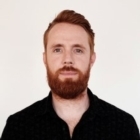
Mr Barnaby Churchill Steel
Marshmallow Laser Feast
Barnaby Churchill Steel is a visual artist whose work bridges experimental genres and unfamiliar mediums, forging artistry, science and technology to sculpt the malleable texture of perception. He founded the creative studio ‘Marshmallow Laser Feast’ (MLF) with Robin McNicholas and Memo Akten back in 2010. MLF's glittering hoard of sensory nuggets includes music videos for U2; light painting machines for McLaren; and ‘In The Eyes Of The Animal’, which won the Audi Innovation Award. Most recently, he and the team at MLF won the Tribeca Film Festival Storyscapes Award for Innovation in Storytelling for ‘Tree Hugger, Wawona’. Exploring the potential of new technologies to expand the senses and deepen our connection to reality. www.marshmallowlaserfeast.com
Correlative CT and new/complimentary modalities
"Correlative soft-X ray cryo-tomography and super resolution fluorescence microscopy imaging for the life sciences at Diamond Light Source beamline B24"
-

Dr Maria Harkiolaki
Diamond Light Source
Maria is the acting Principle Beamline Scientist for beamline B24. Previously she was a group leader at the Structural biology laboratory at the Nuffield department of Medicine of the University of Oxford. Maria undertook her graduate studies at YSBL, York, and was awarded her PhD in 2002.
Quantification
"Traceability in industrial X-ray computed tomography: the story so far"
-

Prof Richard Leach
University of Nottingham
Richard is currently a professor in metrology at the University of Nottingham and prior to this spent 25 years at the National Physical Laboratory. Richard's research is dominated by what he calls "information-rich metrology": the enhancement of manufacturing metrology through the use of a priori information, often utilising concepts from artificial intelligence. His current interests are the dimensional measurement of precision and additive manufactured structures. Richard is on the Council of the European Society of Precision Engineering and Nanotechnology, the International Committee on Measurements and Instrumentation and several international standards committees. He is the European Editor-in-Chief for Precision Engineering. He has over 360 publications including five textbooks. He is a Fellow of the Institute of Physics, the Institution of Engineering & Technology, the International Society of Nanomanufacturing, the Institute of Measurement and Control and a Sustaining Member of the American Society of Precision Engineering. He is a visiting professor at Loughborough University and the Harbin Institute of Technology.
Understanding Materials
"In situ and operando synchrotron tomographic characterisation of semi-solid processing"
-
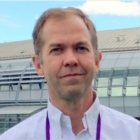
Prof Peter Lee
University College London
Peter is Professor of Materials Science in the Department of Mechanical Engineering, with his group part based at the Research Complex at Harwell, where he is Assistant Director, Physical Sciences. His research focusses on the computational simulation and x-ray imaging of materials at a microstructural level. He is the primary author of the open-source software, uMatIC, which simulates three phase flow to predict solidification microstructures. Peter is also an avid experimentalist, developing nano-precision rigs that simulate the processing of materials on a synchrotron beamline, enabling us to see inside materials in 3D as they change in time (termed 4D imaging). His work is revealing how microstructures evolve in aerospace and automotive materials, as well as biological and geological systems. His results and open-source codes have been exploited internationally by aerospace, automotive, energy and biomedical companies to solve important engineering challenges – from developing additive manufactured human joint replacements to light weight automotive components.
Manufacturing and Industry Applications
"Practical Applications of CT for Product Failure Analysis"
-

Dr Jeremy Opperer
Exponent International
Dr. Opperer has extensive experience in product hazard and risk assessment which he has gained while helping a variety of brands representing the consumer products, food and beverage, pharmaceutical, and baby products sectors. For more than 14 years, he has applied his knowledge of engineering design, manufacturing, and quality control process to help his clients to develop, manufacture, and distribute safe and quality products in the consumer goods market. He supports his clients in three main areas: proactive assessment, reactive incident investigations, and by reviewing and improving the “concept to consumer” product development process. He has a strong focus on the “consumer experience” and the human factor of product interaction.
Medical and Forensics
"How Engineers helped solve the body in a suitcase"
-
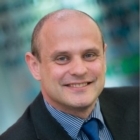
Prof Mark Williams
University of Warwick
Mark is a Professor at WMG and leader of the Product Evaluation Technology research group and head of the Centre for imaging, Metrology, and Additive Technology (CiMAT). His role involves the delivery of Metrology, Additive Manufacturing and Visualisation research projects within Automotive, Aerospace, Medical and Law Enforcement sectors. Recent expansion of research interests into Industrial and Criminal Forensics has seen his group provide evidence in over 80 Homicide cases for Police Forces across the country resulting in an individual Chief Constable Award and IET Outstanding Achievement medal in 2016. Mark is also a Chartered Engineer and Fellow of the IMechE.
Prize Winners and Delegate Information
Prize Winners
Poster Prize
1st Prize Poster Winner: Marta Peña Fernández, University of Portsmouth - 'Preservation of bone tissue with temperature control for in situ SR-microCT experiments'
Poster Winner Runner Up: Ian Simcock, Great Ormond Street Hospital - 'Image Optimisation in Micro Computed Tomography for Feline Hearts'
Image Competition
1st Prize Image Competition Winner: Sarah Aldridge, Swansea University - 'Method in the Madness'
Image Competition Winner Runner Up: Ria Mitchell, AIM Facility, Swansea University - 'Nature's Underground'
Best Lightning Talk
The best lightning talk was awarded to Orestis Katsamenis, University of Southampton, for their talk titled 'Structural and functional characterisation of 3D printed pharmaceutical dosage forms by means of high-resolution X-ray computed tomography'
Student Bursary Awards
Four Student Bursaries were awarded to the following:
- Marta Peña Fernández, University of Portsmouth
- Patricia Goggin, University of Southampton
- Alberto Sensini, University of Bologna
- Ian Simcock, Great Ormond Street Hospital
Registration
Registration has now closed.
Registration for the 2 day symposium includes attendance on 11 & 12 September, lunches and refreshments on 11 & 12 September and the Symposium dinner on 11 September at Warwick Castle.
If you opt to take ToScA membership with your registration to the symposium, registration will then include the above plus the workshops on 10 September and ToScA membership for 1 year, including an annual newsletter.
Student (2 day symposium only) £160
Standard (2 day symposium only) £200
Student with ToScA membership (2 day symposium plus free workshops on 10 September) £195
Standard with ToScA membership (2 day symposium plus free workshops on 10 September) £295
Additional Registration Options
If you do not wish to take up ToScA membership you can add workshops to the student or standard membership rate for £60. This rate covers a full day attendance to worshops. You cannot opt to register for the workshops without attending the symposium. Please note if you wish to attend for only half a day the rate will remain £60.
You can also opt to bring a guest to the symposium dinner at Warwick Castle for £85.
ToScA Student Bursaries - now closed
Four student buraries will be awarded a maximum of £350 for registration and travel. Bursaries will be awarded to full time students and priority will be made to those who have submitted an abstract and/or image. If you are awarded a student bursary you will be reimbursed after the symposium, therefore you will still need to register and pay in advance.
Travel
The symposium will take place at the University of Warwick, the nearest train station is Coventry.
Accommodation
We would recommend you stay at one of the following hotels, which will enable you to use public transport rather than taxis. After the symposium dinner a coach will drop you near you one of these hotels.
Premier Inn Coventry City Centre (Earlsdon Park), Earlsdon Park, 53-55 Butts Road, Coventry CV1 3BH
Ramada Hotel and Suites Coventry The Butts, Coventry CV1 3GG
Hotel Ibis Coventry City Centre Mile Ln, Coventry CV1 2LN
Accommodation near Coventry train station would also be advisable.
Symposium Dinner
On Tuesday 11 September the symposium dinner will take place at Warwick Castle. A coach will take delegates to Warwick Castle and on the return journey will drop delegates at Holiday Inn Kenilworth and then near hotels near Coventry train station.
Exhibition and Sponsorship
If you are interested in sponsoring this event please contact Chloe Goode.
-

ZEISS
Carl Zeiss is an innovative technology leader in the fields of optics, precision engineering and electronic visualisation. Time and time again, we set new, pioneering standards in sophisticated technology for recognising, experiencing, measuring, analysing, structuring and processing a wide spectrum of objects. With professional optics we meet the expectations of even our most critical customers - not only in the fields of research, medicine, industry, but also for use in leisure activities.
Find out more about ZEISS
www.zeiss.com -

DEBEN UK Ltd
Deben are a UK precision engineering company specialising in the field of in-situ tensile testing, motion control and specimen cooling for microscopy applications. Established in 1986 and named after a Suffolk river, Deben now operate from a large, modern business unit in Woolpit near Bury St. Edmunds in Suffolk. The product groups are motor control systems, in-situ micro-tensile stages, Peltier heating & cooling stages, detectors for SEMs and electro-static beam blankers. The company also makes custom and OEM versions of these products to specifically meet customer requirements.
Deben provide consultancy, design and prototype manufacturing services. In house facilities include SolidWorks and SolidEdge 3D CAD and COSMOS finite element analysis software, CNC machining, electronics design and manufacture and software design using Visual C++, Microsoft.net and DirectX. Utilising these resources and experience, Deben manufacture products for OEMs and end users in the UK and overseas.
Deben UK Ltd. is a subsidiary company of UK based Judges Scientific plc. For details on Deben and all its products & solutions, visit www.deben.co.uk.
-

TESCAN-UK Ltd
Formed in the autumn of 2013, is a subsidiary company of TESCAN ORSAY HOLDING, the global supplier of scanning microscopes and focused ion beam systems. TESCAN-UK Managing Director, Ray Codd established the sales, service and applications facility in the UK in order to bring the TESCAN range of high quality and reliable products to customers across the UK and Ireland. TESCAN Products include, Scanning Electron Microscopes, Focused Ion Beam systems, Holographic Miscroscopes, accessories and software for Materials, Life Science, Semiconductor, Research, Medical and Industrial applications.
Find out more about TESCAN-UK Ltd
www.tescan-uk.com -

Thermo Fisher Scientific
At Thermo Fisher Scientific, we are committed to accelerating your science by providing a comprehensive suite of solutions for the analysis of cells and their function. Behind this commitment is an incredible team of scientists developing and supporting our innovative instrumentation and products such as the Invitrogen™ Attune™ NxT Flow Cytometer, Invitrogen™ eBioscience™ flow cytometry antibodies, and Invitrogen™ functional reagents. Our flagship products are designed to deliver high-performance results and save you time in the lab. From our extensive flow cytometry cell health reagent portfolio and everyday standards and controls to our Invitrogen™ eBioscience™ Super Bright antibody conjugates, let us help you find unique ways to support discovery of new biological insights.
Find out more about Thermo Fisher Scientific
www.thermofisher.com