ToScA North America 2019
ToScA North America 2019
We are delighted to announce that the second ToScA North America Symposium is to be held at the University of Florida. Following on from the success of the 2017 symposium, held at The University of Texas at Austin, we once again will provide an opportunity for open discussions, networking with researchers and commercial industry representatives, and a platform to engage in collaborations.
The symposium will include pre-conference hands-on software workshops, keynote speakers, student talks and poster presentations, and an image competition.

Registration has now closed. It is no longer possible to register for this event.
Provisional Programme and Poster List
| Poster List |
| Recycled Blessings: A comparative study of X-ray and neutron micro-CT of a re-wrapped Egyptian votive Joseph Bevitt, Australian Nuclear Science and Technology Organisation |
| Revealing porosity in plant propagation substrates using X-ray Computed Tomography, Ana C. Bohórquez, Herbert Wertheim College of Engineering’s Research Service Centers (RSC), |
| Interactive digital video animation promotes accessibility of complex insect anatomy to cytological and molecular audiences in pursuit of solving the citrus greening problem in Florida Joe Cicero, University of Florida |
| Dynamic imaging using high-resolution X-ray CT at pore-scale to determine how wettability controls gravity-induced drainage imbibition in bead-pack porous media Dave Edey, University of Texas |
| Using Micro-CT for Quantitative Analysis of Polymeric Foams Thomas Fitzgibbons, The Dow Chemical Company |
| Anomalous incisor morphology suggests tissue-specific roles for tfap2a/b in mouse dental development Galaxy Gutierrez, University of Florida |
| Digitally Unraveling Coiled Museum Specimens Alexander Hall, Thermo Fisher Scientific |
| Development of armored skin in the genus Gekko (Squamata: Gekkonidae) using a CT-Scan approach Cristian Hernandez, Sam Houston State University |
| Novel methodology for determining clinical wear in ceramic crowns and opposing enamel ShuMin Hsu, University of Florida |
| Using micro-CT to investigate microanatomy of the giant Triassic ichthyosaur Shonisaurus popularis Neil Kelley, Vanderbilt University |
| Digital Cranial endocasts of FOSSIL and modern ARMADILLOs (Mammalia, XENARTHRA, CINGULATA) Rachel Narducci, Florida Museum of Natural History |
| How does Orcaella brevirostris bony labyrinth morphology compare to other odontocetes (Cetacea: Odontoceti) and what are the implications for the evolution of high-frequency hearing in whales? Eve Preucil, Pitzer College |
| Micro-computed tomography unveils Triassic stereospondyls encased within their burrows Calvin So, University of Wisconsin-Madison |
| Walking towards rapid phenotyping: A semiautomated workflow for the multimodal quantification, visualization, and statistical comparison of osteological variation using high resolution-CT data of the human calcaneus Nick Stephens, Pennsylvania State University |
| Inside the head of the smallest lizards in the world, a gecko and a chameleon Maria Vallejo-Pareja, University of Florida |
| A new look at aubrites: investigating 3D modal mineralogy with x-ray computed tomography Zoe Wilbur, University of Nevada |
Workshops
Workshops will be held on Wednesday 6 March, prior to the meeting starting on Thursday 7 March.
Confirmed Workshops
Wednesday 6 March - Morning Workshops
Drishti, Drishti Prayog and Drishti VR
Drishti is a free volumetric data exploration and presentation tool developed at National Computational Infrastructure, Australia. Drishti Prayog is a free user-friendly presentation tool designed for users to visualise and explore the 3D datasets on a touch screen. Drishti VR is a free volume visualisation tool for virtual reality environments.
The workshop will give an overview of all these three softwares.
VGSTUDIO MAX Introductory Workshop
This workshop will introduce you to CT data analysis and visualization using VGSTUDIO MAX. Volume Graphics will present typical workflows which are of special interest for the scientific community for the fast and precise analysis of voxel data: you will accomplish the first steps of quantitative analysis options, segmentation, and visualization techniques. Use VGSTUDIO MAX to easily get the information contained in your data sets, whether acquired by laboratory X-ray CT, a synchrotron, with neutrons, or with another source. Use this special opportunity to speak personally with Volume Graphics experts!
HeliScan micro CT Workflow – Acquisition/Reconstruction/Visualization & Analysis with Amira-Avizo Software
This workshop is an introductory course focusing on the capabilities of the combination HeliScan micro CT and the advanced 3D visualization and analysis capabilities of Amira-Avizo Software for exploring and understanding micro CT data. Participants will be offered a complete overview starting from sample mounting, acquisition strategy including trajectories and filtering, reconstruction methods to data visualization, image processing and segmentation, measurements and statistics, and other advanced set of functionalities.
Attendees will have the opportunity to see all steps of the workflow from data collection to the use the software through a hands-on session. Accessible to first-time users.
Wednesday 6 March - Lunchtime Workshop
A 'Best Practices in X-ray CT' working lunch will take place between the morning and afternoon workshops. Ed Stanley and Gary Scheiffele (University of Florida) and Jessie Maisano (University of Texas) will lead a Q&A discussion on topics such as:
- What criteria should I use when selecting a specimen for scanning?
- What is the best way to mount my specimen?
- What scanning parameters should I use?
Wednesday 6 March - Afternoon Workshops
VGSTUDIO MAX Segmentation & Analysis Workshop
This workshop will cover image segmentation and selected analyses available in VGSTUDIO MAX. Participants should be familiar with the basic operations of the software or have attended the VGSTUDIO MAX Introductory Workshop the same day. Volume Graphics will present typical segmentation tasks and solutions and give you tips and tricks for challenging multimaterial datasets. The second part of the workshop will be dedicated to selected quantitative analysis options. Take the chance to speak personally with Volume Graphics experts!
Amira-Avizo Software - Automation of Analysis Workflows
Building on a HeliScan dataset participants will be offered the chance to try some of the latest features of Amira-Avizo Software.
Amira and Avizo Software are well known software platforms for visualizing, inspecting, measuring and analyzing scientific and industrial data.
All the powerful features provided by Amira and Avizo Software can be customized and automated to perfectly fit with your research needs and to increase your productivity.
The workshop will focus on automation of analysis workflows in Amira and Avizo Software.
Half-day Workshop on Dragonfly
In the workshop, students will learn the basics of image import, image segmentation, and movie making for tomographic datasets. Students will also learn how to train and apply neural networks for Dragonfly's Deep Learning image segmentation engine. The course will introduce students to the Macro recording and playback tools for batch-processing of datasets.
Invited Speakers and Organisers
Invited Speakers
Organismal Biology - X-ray and synchrotron tomography and volumetric light microscopy as complementary tools for understanding the evolutionary and embryonic genesis of animal form
-
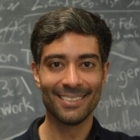
Dr Bhart-Anjan Bhullar
Yale University
Bhart-Anjan Bhullar is a vertebrate paleontologist and comparative anatomist at Yale University, where he is Assistant Professor of Geology & Geophysics and Assistant Curator of Vertebrate Paleontology and Vertebrate Zoology. He and his lab seek to understand major anatomical transitions at the origin of major vertebrate clades, especially reptiles (including birds). He specializes in the use of 3D and 4D CT and confocal imaging to visualize morphological transitions as preserved in the fossil record and developmental transformations as manifested in normal and experimentally altered embryos. He received a B.S. in Biology from Yale University, an M.S. in Geology from The University of Texas at Austin, and a Ph.D. in Organismic and Evolutionary Biology from Harvard University. He was a postdoctoral fellow at the University of Chicago before returning to Yale.
Medicine and Veterinary Sciences - Magnetic Resonance Imaging and Microscopy at the National High Magnetic Field Laboratory
-
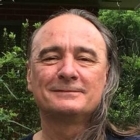
Prof Stephen Blackband
National High Magnetic Field Laboratory, University of Florida
Dr Blackband obtained his PhD under Sir Peter Mansfield at the University of Nottingham in 1984. After studies at Johns Hopkins, Baltimore and Hull University, England, for the last 20 years he has been faculty at the University of Florida and part of the National High Magnetic Field Laboratory (NHMFL), an NSF national user facility that is a partnership between Florida State University, the University of Florida and the Los Alamos National Laboratory. His studies have involved the development of high field MRI and MRS on samples ranging from humans through animal models, excised tissues and sub millimeter samples. He is primarily know for the development and application of MR microscopy which included the first ever MR image of a single cell (frog ova), Aplysia neurons, and more recently the first images of individual mammalian cells (neurons). His present work involves the development and application of high magnetic field MRI.
Data Solutions - Preserving 3D data of Physical Objects: Standards, Discoverability, Value, and Sustainability
-
Dr Doug Boyer
Duke University
Doug Boyer is an associate professor in the Department of Evolutionary Anthropology at Duke University where his research focuses on early primate evolution and he teaches courses in human evolution, human gross anatomy, comparative methods, and more. He is Director and founder of MorphoSource a web archive for 3D data representing museum objects with a primary focus on natural history collections. The background that led him to start MorphoSource includes 6 years of work on the collection staff at the University of Michigan Museum of Paleontology while an undergraduate, extensive experience using a broad range 3D scanners for making digital models of specimens, postdoctoral work in bioinformatics designing databases for archiving and sharing 3D models, and setting up and directing Duke’s open-use microCT facility for two years. MorphoSource has existed since 2013, is supported by 4 NSF grants as well as long term commitments from the University and aims to stimulate the development of a reliable infrastructure for archiving and finding 3D data on natural history and cultural heritage objects.
Earth and Space - Meteorites in 3D: 2002 to 2022
-
Dr Denton Ebel
American Museum of Natural History
Dr. Ebel is a geologist specializing in meteorites: pieces of planets and "left-overs" from the formation of the solar system. The distant, resource-rich asteroid belt is his field area. He develops thermodynamic models describing the outcomes of condensation, evaporation, and crystallization processes. Dr. Ebel is a leader in combining electron beam image analysis of surface chemistry (2D) with x-ray CAT-scan 3-dimensional imaging to obtain comprehensive information about extraterrestrial samples that yield clues to the origin of the solar system. His group analyzes data from the MESSENGER mission to Mercury, comet samples from the Stardust mission, and the geochemistry of samples from the Cretaceous/Paleogene boundary.
Organisers
-
Dr Farah Ahmed
ToScA Chair
Exponent
Dr Farah Ahmed is the founder and President of ToScA International. Farah holds the position of Senior consultant at Exponent International, and Scientific Associate at the Natural History Museum, London UK. After completing her PhD from the school of Engineering and Materials Science, Queen Mary University of London, Farah established a consultancy specialising in data analysis. Farah went on to join the Natural History Museum, where she progressed to Head of Imaging. More recently, Farah joined Exponent International as a senior consultant, focusing on Non-destructive Imaging techniques relevant to the industry sector. -
Dr Ana C. Bohórquez
University of Florida
Ana C. Bohórquez is a Chemical and Biomedical engineer with expertise in colloid chemistry and its applications to nanoscience and nanotechnology, particularly in the development, characterization and testing of nanoparticles for biomedical applications. Currently, she is a Postdoctoral Associate at the Herbert Wertheim College of Engineering’s Research Service Centers (RSC). At the RSC, she is using CT scanning to characterize a diverse range of systems, such as plant root architecture, porous materials, and consumer goods products. She obtained her undergraduate degree in Chemical Engineering from the Universidad Central de Venezuela in 2009. She attended the University of Puerto Rico - Mayagüez where she completed an MS in Chemical Engineering in 2012. She earned her Ph.D. in Biomedical Engineering from the University of Florida in 2017. -
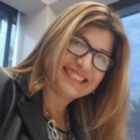
Dr Luisa Amelia Dempere
University of Florida
Luisa Amelia Dempere is the director of the Herbert Wertheim College of Engineering Research Service Centers (RSC) at the University of Florida. She is also an adjunct faculty member of the Materials Science and Engineering and Environmental Engineering departments at UF. Her current research activities focus on the development of methodologies for characterization and analysis of complex materials systems. She received her Licentiate in Chemistry in her home country, Venezuela, and her M.S. and Ph.D. degrees in the Materials Science and Engineering department at UF. After completing her Ph.D., she was appointed as the director of the Major Analytical Instrumentation Center (MAIC) at UF. Years later, she was also appointed as the director of the Particle Analysis Instrumentation Center (PAIC). Three years ago, MAIC and PAIC merged with the Nanoscale Research Facility (NRF), the main nanofabrication clean room facility at UF, as a single operations unit called RSC of which Amelia is the current director. -
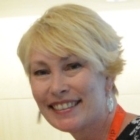
Dr Jessie Maisano
ToScA North America Chair
University of Texas
Dr. Jessie Maisano is a research scientist at the University of Texas High-Resolution X-ray CT Facility (UTCT) in Austin. She received her BA in geology at Kent State University in 1994 and her PhD in vertebrate paleontology at Yale University in 2000. She then moved to the University of Texas as a postdoc on the then-nascent Digital Library of Morphology (DigiMorph.org). Jessie held a subsequent postdoctoral position on the Deep Scaly project (Assembling the Tree of Life) before being hired as full-time staff by UTCT, where she is now facility manager. She is also the primary operator of UTCT’s Zeiss MicroXCT-400 and caretaker of DigiMorph.org. Jessie’s main research interests lie in squamate (lizards, snakes, amphisbaenians) osteology as revealed by CT, especially cranial anatomy and ‘extraskeletal’ systems such as osteoderms. However, her collaborations via UTCT have resulted in publications on topics as diverse as carbon sequestration, diamond formation, and Ediacaran fauna. -
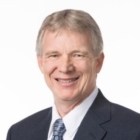
Mr Gary Scheiffele
University of Florida
Gary Scheiffele oversees the CT facility at the Herbert Wertheim College of Engineering’s Research Service Centers. Since early 2016 that facility has gained over 55 trained users from over five colleges and over 13 departments. He firmly believes that understanding how an instrument works will lead to better results from that instrument.
His career started in materials science working on technical ceramic processing; relating microstructure development from the original particles and suspensions to the final sintered ceramic. Other major topics included binder burnout and producing high purity silicon carbide fibers. In 1998, he joined UF’s Particle Engineering Research Center where he worked until 2012 supporting industry/academic research in a wide variety of particulate systems (from mining to nano particle toxicity). His first experience with CT was during analysis of lunar dust simulants in the late 2000’s. He is co-author on over 20 publications and has two patents.
-
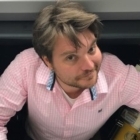
Dr Ed Stanley
University of Florida
Edward Stanley is a herpetologist and evolutionary biologist and heads up the Florida Museum of Natural History's digital imaging laboratory. His research interests include the evolution of armor systems in vertebrates, African biogeography and developing methods of digitizing and disseminating natural history collections. He received his a B.Sc. Hons. in Zoology from the University of St Andrews, a M.S. in Biology from Villanova University and his Ph.D. in Comparative Biology in 2013 from the Richard Gilder Graduate School at the American Museum of Natural History.
Prize Winners and Delegate Information
Prize Winners
Poster Prize
1st Prize Poster Winner - Nick Stephens, Penn State University - 'Walking towards rapid phenotyping: A semiautomated workflow for the multimodal quantification, visualization, and statistical comparison of osteological variation using high resolution-CT data of the human calcaneus'
Poster Winner Runner Up - Eve Preucil, Pitzer College - 'How does Orcaella brevirostris bony labyrinth morphology compare to other odontocetes (Cetacea: Odontoceti) and what are the implications for the evolution of high-frequency hearing in whales?'
Image Competition
1st Prize Image Competition Winner - Michala Stock, High Point University
Image Competition Winner Runner Up - Zachary Randall, Florida Museum of Natural History
Best Lightning Talk
The best lightning talk was awarded to Neil Kelley, Vanderbilt University.
Student Bursary Awards
Three Student Bursaries were awarded to the following:
- Adam Fitch, University of Wisconsin-Madison
- Supuni Silva, University of North Texas
- Andrew Shum, Tufts University
Registration fees
Registration has now closed.
Student Registration $180
Standard Registration $250
Workshops $75
Standard Registration + ToScA Membership (incl. free workshops) $330
Student Registration + ToScA Membership (incl. free workshops) $230
ToScA Student Bursaries - Now Closed
Three student bursaries will be awarded a maximum of $350 for registration and travel. Bursaries will be awarded to students and priority will be made to those who have submitted an abstract and/or image . If you are awarded a student bursary you will be reimbursed after the symposium, therefore you will still need to register and pay in advance.
Venue Information
The symposium will be taking place at the New Engineering Building, University of Florida and the symposium dinner at the The Florida Museum of Natural History, University of Florida Cultural Plaza.
You are welcome to bring an additional guest to the symposium dinner at a charge of $70.
We have organised a block booking with the Hilton University of Florida Conference Center where we have negotiated a rate of $139 plus tax a night. We expect there to be a hotel shuttle bus from the hotel to near the conference venue. The Hilton hotel is also close to where the symposium dinner is taking place. Take advantage of the special rate at the Hilton Hotel.
Gainesville does have a regional airport, with direct flights to Atlanta (Delta) as well as Charlotte NC or Miami (American Airlines).
Gainesville is an easy drive from several other airports:
- Jacksonville International Airport (JAX), ~1.5 h drive
- Sanford International Airport (SFB), ~2 h drive, north east of Orlando
- Orlando International Airport (MCO), ~2 h, main attraction airport
- Tampa International Airport (TPA), ~2 h, Gulf of Mexico beaches, attractions as well
University of Florida, Gainesville, FL 32611, USA
Sponsorship
If you are interested in exhibiting at or sponsoring this popular event, please contact Victoria Masters.
Confirmed Sponsors
Platinum Sponsors
-

Thermo Fisher Scientific
Thermo Fisher Scientific, the world leader in serving science, supplies innovative solutions for microscopy and microanalysis. We provide SEMs, TEMs, microCTs and DualBeam™ FIB-SEMs combined with advanced software suites to take customers from questions to usable data by combining high-resolution imaging with physical, elemental, chemical, and electrical analysis across scales and modes—through the broadest sample types.

Gold Sponsors
Silver Sponsors