
IMC21 Preview: Pre-congress Workshops
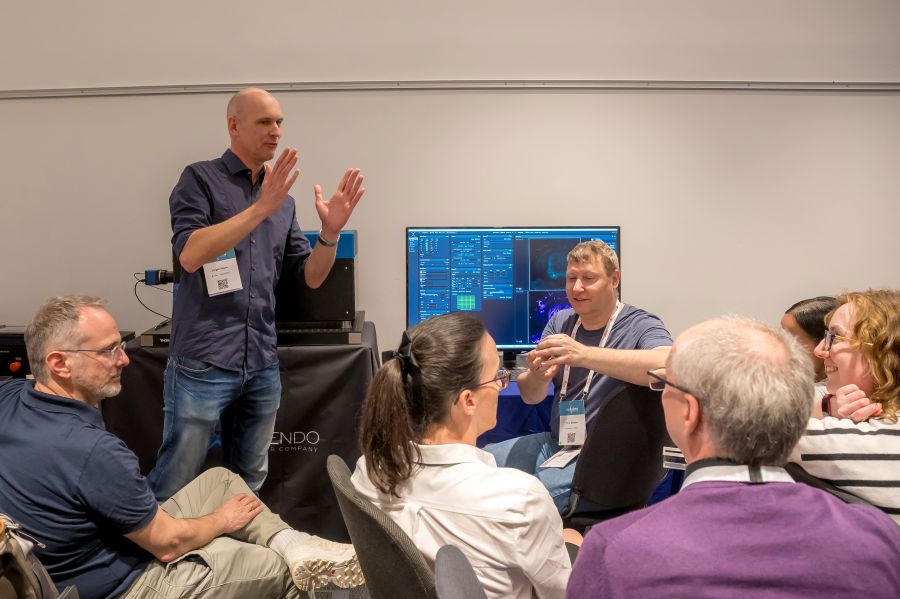
Covering a host of exciting topics and techniques across the sciences, this is a great way to begin your IMC21 experience in Liverpool - so be sure to book your place alongside your congress ticket. If you have already registered, you can add a pre-congress workshop to your existing booking by logging back into your online account.
Life Sciences workshops
Overview by Kerry Thompson
The Life Sciences pre-congress workshops at IMC21 are, for me, one of the most exciting parts of the entire programme. It is also a real privilege to see so many excellent colleagues from across the community leading these sessions, bringing both depth of expertise and a genuine commitment to sharing knowledge. They set the tone for the meeting in a very real way: They are bringing people together early, creating space for discussion, and grounding the congress in the practical realities of how we design, acquire, and interpret imaging data. What stands out is the breadth of topics, but also the deliberate focus on connecting technology to biological insight. These are not passive sessions; they are designed to encourage people to engage critically with both methods and data from the outset.
A number of workshops really highlight where the field is heading. The session on artefacts in electron microscopy for the life sciences is particularly important, not just from a technical perspective, but in terms of scientific rigour and reproducibility. Understanding what we are looking at, and just as importantly what we are not looking at, is fundamental. Alongside this, the workshops focused on volume electron microscopy and X-ray imaging reflect the continued move towards multiscale, multimodal approaches that are reshaping how we interrogate biological systems. These are complemented by sessions on digital pathology and multiplexed analysis, which speak to the growing importance of data-rich imaging and the need for robust, scalable analytical frameworks. Equally, the pedagogy workshop is a real highlight: recognising that how we train, teach, and support the next generation of microscopists is just as critical as the technologies themselves.
More broadly, these workshops are about building confidence and capability across the community. They provide an invaluable opportunity for early career researchers, in particular, to develop practical skills, ask questions in a supportive environment, and begin to establish networks that will carry through the rest of the congress and beyond. At the same time, they create space for more experienced researchers and facility scientists to reflect on best practice, share expertise, and engage in the kinds of conversations that ultimately drive the field forward.
For me, the Life Sciences pre-congress workshops really capture the spirit of IMC21, collaborative, forward-looking, and grounded in both technical excellence and biological relevance. They are an opportunity not just to learn new approaches, but to challenge assumptions, refine how we work, and set the agenda for the days that follow.
Physical Sciences Workshops
With no fewer than 12 different Physical Science Workshops to choose from, there’s sure to be something to interest all our attendees.
All the latest developments in the field are represented here, with a diverse range of microscopy techniques covered - from time-resolved electron microscopy, cryo-electron microscopy and EBSD, to Electron Holography, atom probe tomography and artificial intelligence analysis methods.
The full list of workshops is as follows:
- From nanobeam to ptychography: 4D-STEM data acquisition, processing, and interpretation
- Time-resolved Electron Microscopy
- Electron Energy Loss Spectroscopy: Learning Past, Present and Future Applications
- The Fundamentals of Quantitative In-Situ liquid and In-situ Gas EM
- Advances in Cryo-Electron Microscopy: Quantum Materials and Energy Storage
- How EBSD can help to solve real-world problems and accelerate developments by Oxford Instruments
- Electron Holography
- Artificial Intelligence Methods for Microscopy Analysis and Knowledge Extraction
- Atom Probe Tomography
- In-Situ Electrical Characterization in the TEM: Techniques and Applications
- EMAG Workshop - Introduction to Python for electron microscopists
- In-situ liquid electrochemical TEM