
Introduction to Image Analysis 2026
Recent advancements in microscopy technology have revolutionized our ability to routinely acquire large, multi-dimensional image datasets. However, gaps remain in the effective analysis of this data, primarily due to a lack of computational skills among researchers. This often results in a reliance on qualitative, manual image assessments, which lack the precision, reproducibility, and scalability that automated, quantitative analysis can provide.
To bridge this gap, this three-day workshop is designed to empower microscopists and researchers with the necessary skills and tools to confidently analyse their data. Under the instruction of experienced core facility staff from the Francis Crick Institute and Cardiff University, participants will be introduced to open-source tools such as FIJI and napari, and will be introduced to methodologies for automating their image analyses, thus enhancing research precision, efficiency, and reproducibility.
This workshop is suitable for any researchers, from early career researchers to experienced group leaders, engaged in the acquisition of significant amounts of microscopy image data. No prior experience in image analysis or coding is required, although a basic understanding of microscopy and image acquisition will be beneficial. Attendees will leave the workshop equipped with a knowledge of the tools needed to design and execute automated, unbiased, reproducible image analysis workflows.
The workshop will be taking place at Cardiff University, Wales. External organisations such as The Company of Biologists and Global Bioimaging offer travel grants that can be applied to for this workshop. Please click on the links below to know more. Also note that visa applications might take time to be processed: if you require one, please act immediately upon receiving confirmation of your successful application.
https://www.biologists.com/grants/jcs-focalplane-training-grants/
https://globalbioimaging.org/i4a/news/i4a
NB: The workshop is limited to a maximum of 30 participants and is suitable for individuals in Life Sciences, Materials Science, or any related background.
Scientific Organiser:

David Barry
Dave is a bioimage analyst with over 15 years’ experience of developing algorithms and open-source software in life science research. After completing his undergraduate studies in Electronic Engineering at University College Dublin (2004), Dave did his PhD at the Dublin Institute of Technology (now TU Dublin) with Dr Gwilym Williams, using image analysis to relate the morphology of filamentous microbes to their metabolite yield in fermentations (2010). He then spent six years as a post-doc in the lab of Dr Michael Way at the Cancer Research UK London Research Institute (which became part of the Francis Crick Institute in 2015), where he used live cell imaging and developed software to analyse cellular and sub-cellular processes. Since 2017, Dave has worked as a dedicated image analyst at the Francis Crick Institute and is now Deputy Head of the Crick Advanced Light Microscopy Science Technology Platform.

Martin Jones
Martin is currently Deputy Head of Microscopy Prototyping in the Electron Microscopy Science Technology Platform at the Francis Crick Institute. His work focuses on developing new software and hardware tools for dealing with the deluge of data coming from modern microscopes. His background is in experimental quantum optics from the University of Sussex. After postdoctoral research and teaching fellowships in physics, he moved to the Vascular Biology Lab led by Holger Gerhardt at Cancer Research UK’s London Research Institute to work on microscope development and image analysis. From there he moved to the LRI’s Electron Microscopy core facility, led by Lucy Collinson, which subsequently moved to its current home at the Francis Crick Institute. Martin now works closely with the Crick’s Scientific Computing Science Technology Platform to work on methods for analysing large complex imaging datasets and has a strong interest in training.
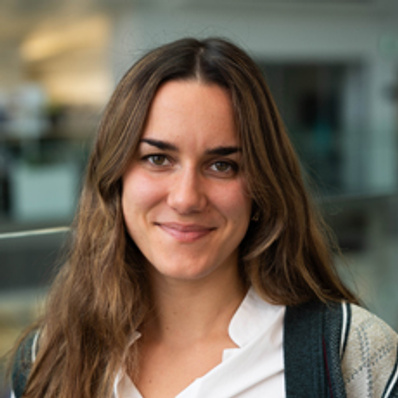
Sara Salgueiro Torres
Sara is part of the Image Analysis team at the Francis Crick Institute, where she supports researchers with their bioimage analysis needs. She graduated from Cell Biology in UCL, where she gained hands-on experience in labs at the Institute of Healthy Ageing, followed by research in Ivana Bjedov’s lab at the UCL Cancer Institute to understand mechanisms of ageing and cancer, using models from flies and yeast to organoids. Her wet-lab background and growing fascination with the imaging world highlighted the critical need for accessible and reproducible analysis skills in biology. Driven to address this, Sara built her dry-lab skillset enrolling in Python and image analysis courses and workshops, experience she translated into teaching a year later. This led her to the Crick in October 2024. She now applies these skills to bridge the gap between bench science and data analysis, helping researchers translate their imaging data into reliable scientific insights.
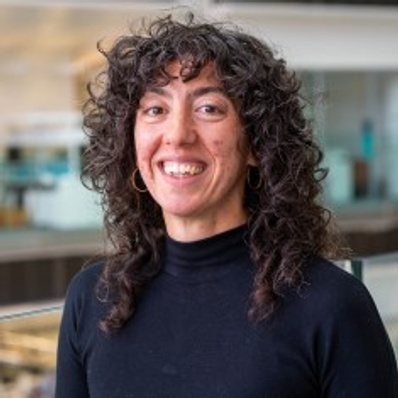
Stefania Marcotti
Stefania works as the Bioimage Analysis Trainer in the Image Analysis Team at the Francis Crick Institue. After a BSc and an MSc in biomechanical engineering in Milan, she obtained a PhD at the University of Sheffield focused on the mechanical characterisation of bone cells with atomic force microscopy and finite element modelling. Thanks to the possibility of combining both experimental and computational approaches in all of her projects, she developed an interest in data and image quantitative analysis. In 2018 she joined Brian Stramer's group at King's College London (KCL) for her postdoc where she developed and automated analysis pipelines for biological applications. From 2023 to 2025, she has also offered image analysis support to the Nikon Imaging Centre and Microscopy Innovation Centre users at KCL.

Thomas Slater
Tom is a Lecturer in Electron Microscopy in the School of Chemistry at Cardiff University. His research primarily focuses on electron microscopy of nanoparticle catalysts, particularly understanding their three-dimensional structure and monitoring their evolution in reaction conditions. He has developed python packages for analysing nanoparticles from electron microscopy images and for elemental analysis using energy dispersive X-ray spectroscopy.
He obtained an MPhys (2011) and PhD (2015) from the University of Manchester, where his PhD was supervised by Sarah Haigh. He subsequently worked as a postdoc in the group of Phil Withers at Manchester, linking X-ray tomography to 3D electron microscopy by developing correlative workflows. From 2018 – 2022, he was an Electron Microscopy Scientist at the ePSIC facility at Diamond Light Source, before taking up his current position at Cardiff University.
RMS Contact:

Alessandra Reni
alessandra@rms.org.uk
+44 (0) 1865 254779
Contact Alessandra for RMS Event enquiries.
Thank you to Nikon for their generous sponsorship of this workshop.
