Flow Cytometry Facilities Meeting 2018
Flow Cytometry Facilities Meeting 2018
Organisers: Fredrik Wallberg (ICR) and Ian Titley (ICR)
This inaugural flow cytometry facilities meeting is aimed at those managing or working in flow cytometry facilities. The meeting will be held in University of York. The sessions will be varied and based around ideas such as how core facilities interact with their institution, high-throughput and high dimensional techniques for data production, software approaches to deal with high dimensional data. Presentations will be given from those working in or using core facilities and our industry colleagues. There will be ample time in the programme for discussion and networking with participants.
Provisional Programme
Invited Speakers
-
Dr Lucas Black
Imperial College London
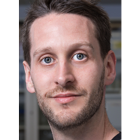
Lucas completed his PhD in Biophysics and high-pressure microscopy from the university of Edinburgh in 2011. He then went onto do postdoc in Montpellier, France using 2-photon microscopy to measure gene expression at the single molecule level. In 2012 Lucas moved to his country of birth, South Africa to work on a biodiscovery project, where he got to play with an Aria II for the first time. Finding that sun, sand and sea are not all they are cracked up to be, Lucas took up a core facility position within the Anatomical Neuropharmacology Unit (now BNDU) at Oxford university. In 2015 Lucas took over managing the BRC flow cytometry and imaging facility for Imperial College at Hammersmith until it was merged with the MRC facility in 2017.
Since then, Lucas has been the cytometry specialist at the International AIDS Vaccine Initiative in London. The majority of his time is taken up with running clinical trials, complying to GCLP standards and filling out lots of paperwork. When not signing documents he is getting to validate and test a BD FACSymphony for clinical research with the aim of building 28-colour panels. These panels aim to identify correlates of disease progression in the early stages of HIV infection. These markers of disease progression will then be used to target vaccine research.
-

Mr Derek Davies
Flow Cytometry Section Vice Chair
The Francis Crick Institute
Derek is the National Science Technology Platform (STP) Training Lead at the Francis Crick Institute in London where his role is to develop Educational and Training courses to support Biomedical Research in the UK and beyond. He co-organises the section’s annual flow cytometry course at the University of York and is active in promotion of cytometry via focussed meetings and other courses. He is one of the principal organisers of the flowcytometryUK biennial meeting and also the Advances in Cytometry Meeting. Derek is particularly keen to promote cytometry education within the UK and beyond. -

Dr Andrew Filby
Newcastle University
Dr Filby is currently head of the Flow Cytometry Core Facility at Newcastle University. He leads a dedicated team of flow cytometry specialists/researchers with the sole aim of providing a comprehensive, cutting edge cytometry resource to the wider research community at Newcastle University and beyond. A significant part of his focus is the development of novel cytometry-based techniques that have underpinned several high profile publications in journals including Science (2012/2017) and Cell (2013. He also received the Cytometry Part A paper of the year accolade in 2011 for developing an unbiased approach for assessing if asymmetric division plays a role in the immune system. He specialises in Imaging Flow Cytometry and the use of fluorescence dyes to track cell proliferation, with a particular interest in machine and deep learning approaches for cytometry data analysis. Dr Filby is also an International Society for the Advancement of Cytometry (ISAC) Shared Resource Laboratory Emerging Leader (SRL-EL) and is heavily involved in a number of educational initiatives for cytometry at both national and international levels. -
Stefan Frishbutter
German Rheumatism Research Council
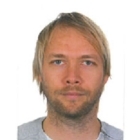
2004 Diploma in Biochemistry from the Free University of Berlin and Robert Koch Institute Berlin
2011 PhD in Biochemistry, Lab of Ria Baumgrass (Signal Transduction Group, German Rheumatism Research Center Berlin)
2011 Research fellow, Lab of Thomas F. Meyer (Department of Molecular Biology, Max Planck Institute for Infection Biology Berlin)
2011-present PostDoc and technical head of ImmuDrug screening facility, Lab of Alf Hamann (Experimental Rheumatology Group, German Rheumatism Research Center Berlin)
-

Mr Richard Grenfell
Cancer Research UK
After studying Chemistry at Salford University, Richard worked in the oligonucleotide synthesis group at the MRC’s Laboratory of Molecular Biology, before changing direction and running the flow cytometry equipment for the LMB for 8 years. Moving to Cancer Research UK, Richard runs the Flow Cytometry core facility at the Cancer Research UK, Cambridge Institute, at Cambridge University. Richard is involved with local, national and international cytometry groups. -

Dr Karen Hogg
Flow Cytometry Section Chair
University of York
Karen is currently a Senior Experimental Officer at the University of York, Bioscience Technology Facility. Karen underpins the scientific service within the Imaging and Cytometry Laboratory and takes a lead role in the research, operation and method development of cell sorting and analysis. As such, Karen’s expertise is utilized for a wide range of diverse applications both within and external to the Department of Biology. Karen is also a co-organizer and tutor on multiple flow cytometry courses throughout the UK. She got her BSc, Joint Honours in Biology and Biochemistry at Keele University, U.K. 1991-1995; then obtained her MSc in Applied Parasitology & Medical Entomology from the University of Liverpool, U.K. 1995-1996; then proceeded to obtain her Phd. from the School of Biology, University of Leeds, U.K. 1996-1999 -
Dr Robert Jepras
GlaxoSmithKline
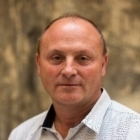
Rob has worked in and led several research teams in both industry and public health. He has spent over 20 years at GSK in the UK working in both Drug Development and Drug Discovery supporting both product development and drug research. Rob currently works in Drug Discovery Sciences at GSK, leading drug discovery and capability projects and supporting pre- candidate drug discovery. Recent work focuses on using high content multi parametric microscopic technologies for phenotyic screening using human disease relevant systems, and the develpoment of microscale technologies (microfluidics/nanowells) to enhance drug discovery efforts. -

Dr Peter O'Toole
RMS Vice President
University of York
Peter heads the Imaging and Cytometry Labs within the Technology Facility at the University of York which includes an array of confocal microscopes, flow cytometers and electron microscopes. Peter gained his PhD in the Cell Biophysics Laboratory at the University of Essex and has been involved in many aspects of fluorescence imaging. Research is currently focused on both technology and method development of novel probes and imaging modalities.Peter has ongoing collaborations with many leading microscopy and cytometry companies and his group also provides research support to many academics and commercial organisations. Peter is also heavily involved with teaching microscopy and flow cytometry which includes organising and teaching on both the RMS Light Microscopy Summer School and the RMS Practical Flow Cytometry courses.
-

Dr Anna Petrunkina Harrison
University of Cambridge
After graduating in Quantum Mechanics, Anna worked as research scientist in Germany conducting research in cell physiology using reproductive cell models. Her research interests included homeostasis, ion channels and cell volume regulation. She received her PhD in 1999, followed by her Habilitation (DSc and HE teaching qualification) in 2005. Since 2007 Anna has dedicated her career to the delivery of flow cytometry services to researchers, and she is currently Director of Operations in the Cambridge Biomedical Research Centre Phenotyping Hub. In 2011 she has been conferred a personal Professorship at Veterinary School in Hanover. Anna is teaching reproductive biology, flow cytometry, cryobiology and biotechnology to undergraduate and graduate students and conducting research on cytometry applications and on operational models. Anna is on Editorial Boards of Journals ‘Reproduction, Fertility, Development’ and ‘PLOS One’. She is currently studying for a Cambridge Executive MBA degree which is a source of inspiration for integrating useful insights into harmonising the operations of shared laboratory resources and core facilities.
-

Dr Fredrik Wallberg DipRMS
Institute of Cancer Research
Fredrik runs the flow Cytometry Facility at the Chelsea campus of Institute of Cancer Research. He has been the manager since 2006. He is also involved in time lapse microscopy, confocal microscopy and high content microscopy. Before he joined the Institute of cancer research he worked both in Sweden and the Netherlands with flow Cytometry. He has succesfully completed the RMS Diploma in which his project focussed on cell death and time lapse microscopy. -
Ailidh Woodcock
Biotechnology and Biological Sciences Research Council (BBSRC)
Ailidh is currently a Strategy and Policy Manager in the Science Strategy Team at BBSRC, working on a range of areas including technology development, infrastructure and data. Ailidh gained her PhD in Plant Molecular Biology from the University of Warwick in 2013 and from there joined BBSRC as a Strategy and Policy Officer, working on a number of areas including technology development and imaging, along with managing the TRDF and BBR calls. Ailidh was then seconded from BBSRC to the UK Research Office (UKRO) in Brussels for 18 months, during which time she worked on a range of EU research and innovation funding programmes, with focus on Horizon 2020, and policy areas including security, defence and research infrastructures. She was also UK National Contact Point for the European Research Council (ERC) during her secondment. Ailidh recently returned to BBSRC to take up her current role.
Further Information and Venue
Registration
Please note that registration for Academic attendees is closed. If you would like to be added to a waiting list, please email Dawn Hopkins.
Accommodation and travel
Accomodation is not included in your registration fee. The Premier Inn Blossom Street is located near to the railway station and within walking distance of the University of York (20 minutes). Rooms are £45. An alternative is the York Pavilion Hotel. Rooms are £68. The easiest route from Leeds Bradford Airport to York is to transfer to Leeds city rail station either by taxi or bus (Flying Tiger bus 757) and then get the train (running every 30 mins or so) to York from there (about 30-40 mins). The meeting will take place at the University but the Conference Dinner will be at ASK, Blake Street, York, Y01 8QG.
Car parking is limited on campus. If you do wish to make use of this faciility please click here to find out more information.
Dietary and Access Requirements
The RMS is committed to our delegates' health and wellbeing. Therefore, if you have any dietary or access requirements please contact Dawn Hopkins.
Sponsorship
Registration is now open for companies interested in sponsoring the event. Technobites are available on a first come, first served basis. Please contact Dawn Hopkins if you are interested in booking a slot.
Commercial registration is £250+VAT (£300 as shown on the registration page.)
Please note that registration for Commercial attendees will close on Thursday 21 December.
-

BD Biosciences
BD Biosciences is a world leader in bringing innovative diagnostic and research tools to life science researchers, clinical researchers, laboratory professionals and clinicians who are involved in basic research, drug discovery and development, biopharmaceutical production and disease management. The BD Biosciences segment is focused on continually advancing the science and applications associated with cellular analysis.
Find out more about BD Biosciences
www.bdbiosciences.com -

Sony Biotechnology
Sony Europe BV is dedicated to helping the scientific community, researchers, laboratory professionals, and institutions achieve the best scientific results possible. By leveraging Sony’s comprehensive expertise in electronics innovation and design and with our technological assets we are accelerating development of next-generation cell analysis systems. We bring a unique perspective to science’s high-level instrumentation and are creating innovative products to address our customer’s challenges.
Find out more about Sony Biotechnology
www.sonybiotechnology.com -

Thermo Fisher Scientific
At Thermo Fisher Scientific, we are committed to accelerating your science by providing a comprehensive suite of solutions for the analysis of cells and their function. Behind this commitment is an incredible team of scientists developing and supporting our innovative instrumentation and products such as the Invitrogen™ Attune™ NxT Flow Cytometer, Invitrogen™ eBioscience™ flow cytometry antibodies, and Invitrogen™ functional reagents. Our flagship products are designed to deliver high-performance results and save you time in the lab. From our extensive flow cytometry cell health reagent portfolio and everyday standards and controls to our Invitrogen™ eBioscience™ Super Bright antibody conjugates, let us help you find unique ways to support discovery of new biological insights.
Find out more about Thermo Fisher Scientific
www.thermofisher.com