UK LM Facility Managers Meeting (UKLMF) 2019
UK LM Facility Managers Meeting (UKLMF) 2019
The next Facility Managers Meeting aimed at people running or working in light microscopy facilities will be held at the University of Liverpool.
From very humble beginnings, we have grown to a much more significant and influential community of facility managers. Numbers of attendees have grown 10 fold since the first meeting in 2006 as more and more facilities have opened. We now represent one of the best organised facility groupings in the UK if not indeed the world.
Following on from previous years, you can expect to find out more on the latest developments in UK Bioimaging and how we can feed in to wider international groups that are starting up. We will also discuss some of the basic elements (funding, impact measures) of running a core facility as well as the latest technological and application developments that effect ourselves and our users.
Provisional Programme
Please note this is a provisional programme and it may be subject to change.
Confirmed Speakers
Scientific Organiser: Marco Marcello, University of Liverpool
-

Marco Marcello
University of Liverpool
I am managing the Centre for Cell Imaging in the University of Liverpool. After the PhD in the University of Heidelberg (Germany), I was a postdoc at EMBL Heidelberg in the laboratory of Prof. Ernst Stelzer where I contributed to the development of the light sheet microscope. I joined Liverpool University in 2008. My current research interests include light sheet fluorescence microscopy (LSFM), tissue clearing, development of innovative hydrogels/matrices for 3D cell culture/volumetric imaging.
"The Image Data Resource: platform for publishing, integrating and mining biological imaging data at scale"
-
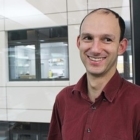
Sébastien Besson
University of Dundee
Sebastien Besson joined the OME team as a developer in march 2012. Originally trained as a physicist, he received his PhD from the Unversite Pierre at Marie Curie in Paris. He then carried out postdoctoral research at the interface between physics and biology at Harvard University. In 2011, Sebastien joined the Danuser lab to convert in-house image analysis into turn-key software packages for the cell biology community. He became part of the main Dundee team in 2015.
"Ethics of Publication"
-

Dr Joelle Goulding
University of Nottingham
Joëlle is a research fellow in advanced microscopy at the University of Nottingham within the Centre of Membrane Proteins and Receptors (COMPARE). COMPARE is a unique collaboration between the Universities of Birmingham and Nottingham. Following a PhD in Genetics at the University of Nottingham, she moved into the field of G protein-coupled receptor (GPCR) pharmacology within the group of Professor Stephen Hill specialising in the development of imaging technologies to study the pharmacology of Class A GPCRs utilising fluorescent ligands and bioluminescent fusion proteins. This work has harboured an interest in studying endogenous receptor function and translating techniques for use within stem cell derived model systems. In 2017 Joëlle joined COMPARE and is working on the development of Fluorescent Correlation Spectroscopy (FCS) methodologies alongside Bioluminescence Resonance Energy Transfer (BRET) imaging for GPCRs and tyrosine kinases.
"Adaptive Optics, from Astronomy to Microscopy"
-

Sebastian Kamann
Liverpool John Moores University
Since 2017, Sebastian has been a research assistant in the Astrophysics Research Institute at Liverpool John Morres University. The main topics of his research are the dynamics of stellar populations in star clusters. From 2013-2017, Sebastian completed a PostDoc at Georgs-August University in Goettingen, Germany - involvement in the commisioning of the MUSE integral-field spectograph and its adaptive optics system. From 2009-2012, He completed his PhD, thesis on "Crowded field 3D spectroscopy and the search for intermediate-mass black holes in global clusters" at the Leibniz-Institute for Astrophysics, Potsdam, Germany.
"Supporting a Core Facility with Image Analysis and Infrastructure"
-
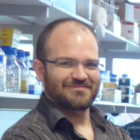
Dr Dave Mason
University of Liverpool
Dave is a member of the Liverpool Centre for Cell Imaging, supporting users as a Technical Specialist in Image Analysis. He is trained in Cell Biology, Microbiology, and a range of light microscopy techniques. He provides help with experimental design, software and equipment training, as well as managing the facility's IT infrastructure and application servers.
"UK BioImaging Talk"
-

Prof Jason Swedlow
University of Dundee
Jason Swedlow earned a BA in Chemistry from Brandeis University in 1982 and PhD in Biophysics from UCSF in 1994. After a postdoctoral fellowship with Dr T.J. Mitchison at UCSF and then Harvard Medical School, Dr Swedlow established his own laboratory in 1998 at the Wellcome Trust Biocentre, University of Dundee, as a Wellcome Trust Career Development Fellow. He was awarded a Wellcome Trust Senior Research Fellowship in 2002 and named Professor of Quantitative Cell Biology in 2007. His lab focuses on studies of mitotic chromosome structure and dynamics and has published numerous leading papers in the field. He is co-founder of the Open Microscopy Environment (OME), a community-led open source software project that develops specifications and tools for biological imaging. In 2005, he founded Glencoe
Software, Inc., a commercial start-up that provides commercial licenses and customization for OME software. In 2011, Prof Swedlow and the OME Consortium were named BBSRC's Social Innovator of the Year and Overall Innovator of the Year. In 2012, he was named Fellow of the Royal Society of Edinburgh. Prof Swedlow has organized or directed several courses in quantitative microscopy at the Marine Biological Laboratory, Woods Hole, USA, Cold Spring Harbor Laboratory, USA and the National Centre for Biological Science, Bangalore. India.
"An application of adaptive optics to microscopy"
-

Rolly Wiegand
University of Edinburgh
Registration and Venue Information
Registration Details
Registration has now closed. If you would like to be added to a waiting list, please contact Kate Jermey.
This event is free for Academic delegates to attend.
Accommodation for Academic delegates = £65
Price for Commercial Attendees = £275 (£330 inc. VAT)
Price for Commercial Attendees with accommodation = £340 (£408 inc. VAT)
Venue
The meeting will be taking place in the Central Teaching Hub at The University of Liverpool.
The evening meal on Thursday 3 January, and all accommodation booked through the RMS directly, will be at The Liner Hotel.
Sponsors
-

Abbelight
-

Andor Technology, an Oxford Instruments Company
Andor Technology plc is a global leader in the pioneering and manufacturing high performance scientific imaging cameras, spectroscopy solutions and microscopy systems for research and OEM markets. Andor has been innovating the photonics industry for over 20 years and aims to continue to set the standard for high performance light measuring solutions that allow consumers to perform light measurements previously considered impossible. Through continuous dialogue with customers and strong teamwork, Andor continues to innovate ground-breaking products that improve the world in which we live.
Find out more about Andor Technology
www.andor.com -

Argolight
-

Cairn Research
Cairn is an Independent research-orientated company specialising in microscopy solutions for the life sciences. From our origins as a provider of turnkey optical systems for fast intracellular ion measurements we have maintained close links with our academic customer base enabling us to develop a broad range of products and solutions to meet their expanding needs. Our strength lies in our understanding of both the requirements of the research microscopy community and of the advances in technology from which they can benefit. We have a “can do”, informal, and friendly attitude and are always willing to give advice. The company has evolved organically to encompass four distinct, but interrelated areas.
We are instrument designers, manufacturers and vendors of both Illumination and Detection products. Our illumination products encompass a wide range of light sources, adapters and specialist launch systems; typically used in conjunction with a third-party, or Cairn-built, microscope or macrosope. On the detection side our primary focus is on multi-channel imaging using one or more third-party cameras. These products are largely based around optical techniques, most importantly, fluorescence, optogenetics, photolysis and transmitted light imaging. Although fully independent we are closely allied with Chroma Technology and a large number of our illumination and detection products make use of their high performance interference filters.
Find out more about Cairn Research
www.cairn-research.co.uk -

CoolLED
CoolLED designs and manufactures cutting edge LED illumination systems for researchers and clinicians using the latest LED technology. The company has specialised in fluorescence microscopy since it introduced the first commercially available LED illumination system in 2004. LEDs are now the system of choice because they are more stable, longer lasting, and energy efficient than traditional mercury based illuminators as well as offering superior safety and environmental features.
CoolLED offers a comprehensive range of LED illumination systems for bioscience and clinical microscopy including:
• pE-100 range of compact, simple-to-use, single wavelength illumination systems for screening fluorescence.
• pE-300white range that offers intense, broad spectrum illumination covering the excitation bands of common fluorescent stains for regular fluorescence work.
• pE- 4000 – the universal LED illumination system for research fluorescence, with the broadest spectrum of illumination available from 16 selectable wavelengths, and extensive functionality that sets a new standard for the industry.
CoolLED technology is also available in OEM and tailor made configurations. We can meet the needs of manufacturers who wish to integrate stable, controllable LED illumination into their products.
Find out more about CoolLED
www.coolled.com -

DGM Ltd
DGM Limited is the representative for FlowVIEW Tek in the UK and looks forward to being an active member of The Royal Microscopical Society.
Passionate about UK research and development, DGM Limited’s mission is to help the UK kick start a new era in the amazing world of Fluid Microscopy. The ease of set up and use, brought to imaging by the FlowVIEW solution is truly cross platform compliant enabling transfer easily between optical, electron and X-ray machines
The award winning FlowVIEW System is aimed at use by materials scientists, physicists, biologists and microscopists both for R&D activities as well as industrial and inspection processes
Find out more about DGM Ltd
www.DGM-Ltd.co.uk -

Exprodo Software
Exprodo Software produces Calpendo which is an intelligent booking system designed to manage bookings and projects for shared equipment. It can be configured with rules which allow you to control who can book what and when. Highly flexible reporting reduces administrative time spent managing projects, budgets and invoicing.
Find out more about Exprodo Software
www.exprodo.com -

Hamamatsu Photonics
Hamamatsu Photonics is a world-leading manufacturer of opto-electronic components and systems and employs over 3000 staff worldwide. The corporate headquarters are based in Hamamatsu City, Japan along with various manufacturing plants and central research laboratories. Since its inception in 1953, Hamamatsu Photonics has expanded to now enjoy a global presence throughout Asia, Europe and North America.
Hamamatsu Photonics’ corporate philosophy stresses the advancement of Photonics through extensive research and development. Hundreds of new opto-electronic products are introduced to the market each year and many Hamamatsu products are regarded as state-of-the-art. Hamamatsu sources, detectors and imaging products are designed to cover the entire optical spectrum, from nuclear radiation, x-ray, Ultraviolet (UV), Visible and Infrared radiation. Hamamatsu devices provide solutions for a wide variety of applications including analytical, industrial and medical instrumentation.
Find out more about Hamamatsu
www.hamamatsu.com -

Keyence
KEYENCE is a leading developer of light microscopy. Established in 1974 we now operate in 44 countries worldwide and have featured in Forbes 100 most innovative companies list since 2011. Since releasing our VH optical microscope in 1990, KEYENCE has endeavoured to keep at the forefront of microscope technology. Widely used in research facilities for life science, medical and basic clinical research, our latest VHX digital microscope supports bright and dark field, transmitted, polarised and differential interference observation.
-

Leica Microsystems
Leica Microsystems develops and manufactures microscopes and scientific instruments for the analysis of microstructures and nanostructures. Ever since the company started as a family business in the nineteenth century, its instruments have been widely recognized for their optical precision and innovative technology. It is one of the market leaders in compound and stereo microscopy, digital microscopy, confocal laser scanning microscopy with related imaging systems, electron microscopy sample preparation, and surgical microscopes.
Leica Microsystems has seven major plants and product development sites around the world. The company is represented in over 100 countries, has sales and service organizations in 20 countries, and an international network of distribution partners. Its headquarters are located in Wetzlar, Germany.
Find out more about Leica Microsystems
www.leica-microsystems.com -

Nikon UK Ltd
Nikon Instruments is a leading manufacturer in light microscopy and metrology solutions. With over 100 years’ experience in optical design and a strong core technology group, Nikon has become a truly iconic brand for all types of imaging.
Nikon’s philosophy is to meet needs and exceed expectations. We specialise in the development of optical products, building an unbeatable reputation for lens technology and precision optics. We pride ourselves on providing high contrast, high definition, and aberration free images.
Find out more about Nikon UK Ltd
www.nikon.co.uk and www.microscope.healthcare.nikon.com -

Olympus
Olympus supplies a complete range of microscopy instrumentation and related software including upright, inverted and stereo microscopes. From teaching laboratories to national research establishments, all types of users are catered for - with everything from lens tissues to specialised imaging systems and advanced microscopy techniques.
Olympus microscopes are recognised for their world leading optics, ensuring unbeatable image quality from standard techniques to laser confocal microscopy, TIRF and live cell imaging. While some Olympus products focus on configurability to specific applications, others aim to maximise simplicity and relisability in multi-user environments.
The product range also covers digital microscope cameras and virtual slide systems, together with imaging equipment and software for general and specialist applications across Life Science and Industry.
Find out more about Olympus
www.olympus.co.uk -

Oxford Nanoimaging Limited
Oxford Nanoimaging Limited is a company originating in the Clarendon Laboratory, Department of Physics at the University of Oxford. Professor Achillefs Kapanidis and PhD student, Bo Jing, lead a collaborative, inter-disciplinary team that has pioneered innovative technologies to produce an elegant benchtop super-resolution microscope. The Nanoimager has a footprint of just 21 cm x 21 cm yet packs the capability of a much larger, conventional microscopy platform delivering super-resolution and single-molecule performance. With a significantly lower cost of entry, researchers will now be able to obtain benchtop nanoscale imaging at a fraction of the price of earlier systems without the need for a large laboratory and skilled operators. As Professor Kapanidis says, “I wish I had this when I was a graduate student.”
Find out more about Oxford Nanoimaging Limited
oni.bio -

Phasefocus
Phasefocus is changing what is possible to measure using live cell assays; uncover the subtle differences in cell behaviour that were previously hidden.
Livecyte, our flagship product, delivers an unprecedented level of single-cell data from live cells. High-contrast label-free videos, correlative fluorescence and powerful image analysis algorithms result in high-content timelapse outputs from standard 96-well plate assays.
Phasefocus' products are based on patented and award-winning computational imaging technology, called ptychography. From automated characterisation of live cell behaviour, to world-record-setting electron microscopy, Phasefocus is enabling advances in many diverse areas of scientific research.
Find out more about Phase Focus
www.phasefocus.com -

Teledyne Photometrics
Founded as Photometrics in 1978, Teledyne Photometrics is part of the Teledyne Imaging Group. Teledyne Photometrics is the world’s premier designer and manufacturer of high-performance CMOS, EMCCD and CCD cameras for life science research. The original architect of the world’s first scientific-grade microscopy EMCCD camera and developer of the popular CoolSNAP CCD cameras, Teledyne Photometrics maintains its leadership role with the release of Prime, the first sCMOS camera with built-in computational intelligence for image restoration, and Prime 95B, the first sCMOS camera with 95% quantum efficiency. Teledyne Photometrics also offers comprehensive OEM support, including fully characterized, cost-efficient imaging systems and components. Teledyne Photometrics is headquartered in Tucson, Arizona.
Find out more about Teledyne Photometrics
www.photometrics.com -

Photon Lines
Photon Lines supplies a range of scientific cameras (including CCD cameras, CMOS and sCMOS), lasers and laser components which are optimised for Lightsheet microscopy. We also supply advanced scientific imaging solutions primarily into the area of biophotonics, such as Label-Free Live Cell Imaging Systems and fluorescence microscopy equipment including the products of PhaseView, who have engineered unique 3D imaging technologies for life science microscopy applications. Based on a novel remote focusing principle, PhaseView imaging products allow for high speed 3D imaging which is only limited by camera frame rate, while keeping bio-specimens in a stable position without moving the objective or stage. Using this acquisition principle, PhaseView’s Alpha3 light sheet fluorescence microscope addresses the issue of high temporal resolution along with spatial high-resolution, to achieve 3D imaging of dynamic biological processes.
Find out more about Photon Lines
photonlines.co.uk -

Prior Scientific
From our UK headquarters, Prior designs and manufactures a wide range of scientfic instrumentation, specialising in microscope automation and optical microscopy. This has been the core of our business since 1919. Our experience is unrivalled and our commitment to engineering excellemve is reflected in the performance and quality of our broad product portfolio. Although we offer a range of standard products. Prior also offers OEM and customised solutions tailored to your individual requirements. Many of the world's leading scientific instrumentation companies already benefit from Prior's expertise.
Find out more about Prior Scientific Instruments
www.prior.com -

Quantum Design UK and Ireland
Quantum Design UK and Ireland (QDUKI) are a leading distributor of high-tech instrumentation and consumables for scientific, academic and industrial research. QDUKI are part of the Quantum Design International Group. Our success in distributing scientific products comes from more than 30 years’ experience in manufacturing and distributing our own industry-leading materials characterisation systems.
Please visit our website www.qd-uki.co.uk to see the Electron Microscopy instrumentation range we can offer which includes Nanomegas Electron Precession Diffraction, GETec Microscopy In-Situ AFM in SEM and SCL Self Sensing Cantilevers.
-
Vector Laboratories
-

ZEISS
Carl Zeiss is an innovative technology leader in the fields of optics, precision engineering and electronic visualisation. Time and time again, we set new, pioneering standards in sophisticated technology for recognising, experiencing, measuring, analysing, structuring and processing a wide spectrum of objects. With professional optics we meet the expectations of even our most critical customers - not only in the fields of research, medicine, industry, but also for use in leisure activities.
Find out more about ZEISS
www.zeiss.com