
Single Cell Data Analysis: Current Approaches and Challenges
Single Cell Data Analysis: Current Approaches and Challenges
Scientific Organisers: Derek Davies (The Francis Crick Institute), Gareth Howell (University of Manchester)
As the number of parameters measured in biological experiments increases, the need for a robust data analytical approach is vital. In single cell analyses – which will include flow, imaging and mass cytometry, single cell sequencing, and microscopy – this leads to complex datasets. There are a number of analysis approaches, but which is best for your data and why? This meeting will introduce delegates to the concepts of high-dimensional analysis and will help determine what resources need to be provided to the community.
Scientific Organisers and Invited Speakers
Scientific Organisers
-

Mr Derek Davies
Flow Cytometry Section Vice Chair
The Francis Crick Institute
Derek is the National Science Technology Platform (STP) Training Lead at the Francis Crick Institute in London where his role is to develop Educational and Training courses to support Biomedical Research in the UK and beyond. He co-organises the section’s annual flow cytometry course at the University of York and is active in promotion of cytometry via focussed meetings and other courses. He is one of the principal organisers of the flowcytometryUK biennial meeting and also the Advances in Cytometry Meeting. Derek is particularly keen to promote cytometry education within the UK and beyond. -
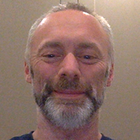
Dr Gareth Howell
Flow Cytometry Section Deputy Chair
University of Manchester
Gareth is the Flow Cytometry Facility Manager at the Manchester Collaborative Centre for Inflammation Research at the University of Manchester.
Invited Speakers (Academic)
"Computational Flow Cytometry"
-

Annelies Emmaneel
VIB, Ghent, Belgium
"Lost in parameter space: a hitchhikers guide to the multidimensional galaxy"
-

Dr Andy Filby
Newcastle University Centre for Life
Dr Filby obtained his PhD from the National Institute for Medical Research (NIMR) in Mill Hill, London where he studied the role of the Src family kinases Lck and Fyn in T cell function. He is currently head of the Flow Cytometry Core Facilit (FCCF) at Newcastle University leading a dedicated team of flow cytometry specialists with the sole aim of providing a comprehensive, cutting edge cytometry resource to the wider research community at Newcastle University and beyond. A significant part of his focus is the development of novel cytometry-based techniques that have underpinned several high profile publications in journals including Science and Cell. He also received the Cytometry Part A paper of the year accolade in 2011. He specialises in Imaging Flow Cytometry and the use of fluorescence dyes to track cell proliferation. Dr Filby is also an International Society for the Advancement of Cytometry (ISAC) Shared Resource Laboratory Emerging Leader (SRL-EL) and is heavily involved in a number of educational initiatives for cytometry at both national and international levels.
"Building blocks of analysis”
-
Christopher Hall
The Sanger Institute, Cambridge
A senior research assistant at the Wellcome Sanger Institute near Cambridge, UK and an ISAC emerging leader for 2019-2023. He specialises in single cell sorting, experiment design, and data analysis. Chris’s current work in R and Python are directed towards streamlining facility operations and making data analysis in programming languages more accessible to non-programmers.
"Imaging Mass Cytometry: trying to make sense from the wealth of data"
-
Philip Hobson
The Francis Crick Institute London
Dr Philip Hobson graduated with a PhD in Immunology from King's College London in 2003. He then had post-doctoral positions in Imperial College London followed by King's College London. In 2014, he joined the Flow Cytometry facility at the National Institute for Medical Research, London, where he had a keen interest in high dimensional data collection and analysis. He currently works at the Francis Crick Institute, London, where he is a Deputy Head of the Flow Cytometry Science and Technology Platform. With the purchase of the Helios/Hyperion systems in late 2017, he is responsible for setting up and running the service and is currently working on projects in collaboration with the users of these systems.
“Methods for pseudotime estimation and differential expression across pseudotime”
-
Magnus Rattray
University of Manchester
"Methods, tools, and resources for differential discovery in high-dimensional cytometry data"
-
Lukas Weber
University of Zurich
PhD student in biostatistics at the University of Zurich, Switzerland. Currently working on statistical and computational method development and benchmarking for analysis of high-dimensional cytometry data, with a focus on implementing methods and other resources as R/Bioconductor packages.
Invited Speakers (Commercial)
"Introducing Reproducible Cluster Analysis"
-
Tony Burpeee
Applied Cytometry Systems
“Advanced analysis tools and plugins for discovery with FlowJo”
-
Serena Di Cecilia
FlowJo
PhD and Postdoc in Oncology, at Icahn School of Medicine at Mount Sinai, where she managed and carried out several projects on cancer stem cells and non-coding RNAs. Flow cytometry and molecular oncology are her expertise areas, with several publications on high impact factor scientific journals.
"'Liberate' the Bioinformatician and 'empower' the Biologist for high-dimensional cytometry data"
-
Faris Naji
Tercen
Faris is strongly committed to helping science progress, he believes in removing barriers for people who may not have quantitative skill sets. This is essential for open science. Faris has worked over 15 years with biologists to bring tools and approaches into their workflows. Faris is a director of bioinformatics in a biotech company which generates large amounts of molecular measurements and has seen first-hand the issues it brings. Faris is a co-founder of an early stage startup company called Tercen to address gaps in the area of collaborative data analysis and open science.
"High Dimensional Data Analysis with FCS Express”
-
Andrea Valle
DeNovo Software
Andrea is based in Italy and received his PhD in Cellular and Molecular Biology from San Raffaele Hospital in Milan Italy in 2014 which was followed by an M.S. degree in Statistics for Genomics and Medicine. Andrea has worked closely with flow cytometry data analysis and experiments in a variety of settings since 2008 while working on immune tolerance in Type 1 Diabetes. Over the years he has gained additional skills in data analysis and R programming through his post graduate studies and laboratory work.
"Analysis of Flow and Mass Cytometry Data by Deep Learning "ScaiVision" Software"
-
Andrius Serva
Scailyte
1. 2002 - 2006 - Bachelor studies in Molecular biology at Vilnius University, Lithuania
2. 2006 - 2008 - Master studies in Genetics at University of Kuopio, Finland
3. 2008 - 2012 - Doctoral studies in Systems Biology at Heidelberg University, Germany
4. 2012 - 2014 - Post-doctoral studies in Oncology at German Cancer Research Center, Heidelberg, Germany
5. 2014 - 2019 - Field Applications Scientist at Fluidigm, Hamburg, Germany
6. 2019 - present - Sales Specialist at Scailyte, Hamburg, Germany
Delegate Information
Registration
- Early Bird RMS Member Registration Rate = £85
- Early Bird Non-Member Registration Rate = £105
- Early Bird Student Registration Rate = £65
Please note, the Early Bird Fee will be ending on Friday 28 June. After this, each registration price will increase by £20.
Admittance to this event is for registered and authorised attendees. If you have any questions, please contact the RMS contact for this event.
Venue
Location: Francis Crick Institute, London, NW1 1ST
Dietary and Access Requirements
The RMS is committed to our delegate's health and wellbeing. Therefore, if you have any dietary or access requirements, please contact Amanda Jarman.
Certificates of Attendance
The RMS can provide Certificates of Attendance if required.