The Cancer Research Centre (CIC), IBSAL (Institute of Biomedical Research of Salamanca) and CIBERONC (Biomedical Research Networking Centre on Cancer), Salamanca, Spain


Institute of Science and Technology (ISTA), Imaging and Optics Facility, Austria


Max Planck Institute for Molecular Genetics Ihnestrasse, Berlin, Germany


State Research Institute Centre for Innovative Medicine, Vilnius, Lithuania


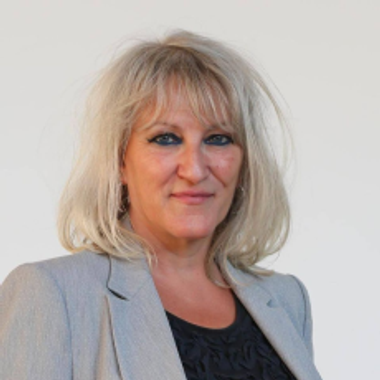
The Cancer Research Centre (CIC), IBSAL (Institute of Biomedical Research of Salamanca) and CIBERONC (Biomedical Research Networking Centre on Cancer), Salamanca, Spain
Prof. Julia Almeida is Full Professor of Immunology at the University of Salamanca (Spain) and President of the Iberian Society for Cytometry (SIC) (2019–2026), having previously served within SIC as Board Member (2005-2009) and Secretary-Treasurer (2009-2013). She coordinates the Chronic Lymphoid Neoplasms Research Group at the Cancer Research Center (University of Salamanca–CSIC) and co-leads research groups at IBSAL and CIBERONC, Spain. Her research focuses on Immunology and Cancer, particularly chronic lymphoproliferative disorders, from ontopathogenesis to clinical application. She is an active member of the ECRIN-M3 and EuroFlow international consortia. Prof. Almeida has supervised 17 PhD theses, co-authored 169 peer-reviewed publications (H-index: 52; >9,000 non-self citations, Web of Science 2026), and she is co-inventor of four patents, two of which have been licensed.
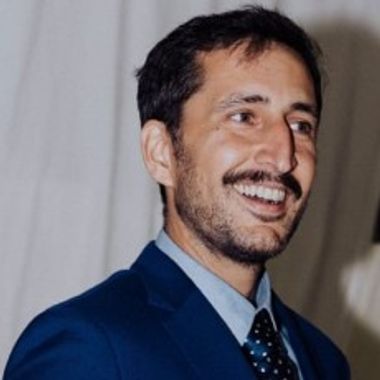
UK Research and Innovation (UKRI), UK
Martin Farley is the Associate Director of Environmental Sustainability at UKRI. He has worked extensively around sustainable research and developed the LEAF programme, and is currently leading UKRI’s SPARKHub. He is the editor of the book titled “The Sustainability of Science”, and initiated sustainable science & laboratory programmes at Edinburgh, King’s College London, and UCL, as well as co-founded UK Network for Sustainable Research (formerly LEAN).

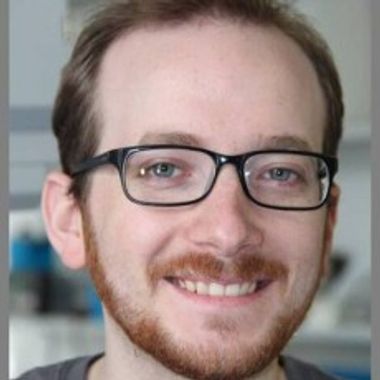
Medical University of Vienna, Austria
Richard Haindl is a Principal Investigator in Host-Pathogen Imaging at the Center for Medical Physics and Biomedical Engineering at the Medical University of Vienna. Trained in medical physics, he develops imaging methods and quantitative analysis tools for biomedical research. His work spans optical coherence tomography, photoacoustic imaging and multimodal microscopy, with applications ranging from ophthalmology and pharmaceutical imaging to organoid and tissue models.
Through the European ISIDORe research infrastructure programme, he contributed to the development of label-free, multimodal 3D imaging workflows for infected organoid and tissue models, extending his work into infectious disease. His current research addresses host-pathogen interactions in tuberculosis. One recent example is his work on the higher-order architecture of Mycobacterium tuberculosis biofilms, combining structural and spectroscopic imaging with biochemical approaches to investigate how these bacterial communities are organized. Alongside experimental imaging, he develops quantitative image-analysis, machine-learning and software tools to extract information from imaging data beyond standard analysis workflows.
He is also a Unit Head within Austrian BioImaging/CMI, the Austrian Node of Euro-BioImaging, where he represents optical coherence tomography and photoacoustic microscopy and contributes to providing access to these technologies for the wider research community.

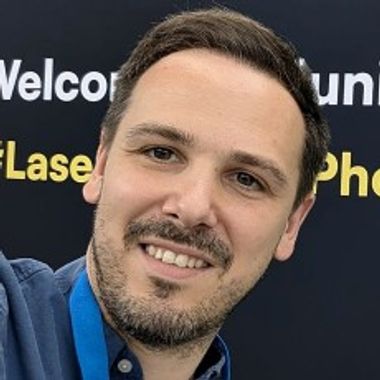
Institute of Science and Technology (ISTA), Imaging and Optics Facility, Austria
I studied pharmaceutical chemistry and biomedicine in Dublin and Vienna, followed by a PhD at the Medical University Vienna in the group of Johannes Schmid, focusing on the biophysics of molecular interactions in living cells with a heavy emphasis on quantitative imaging and cytometry. After a Postdoc, where we developed AI-powered routines for prostate cancer tissue classification, I switched to the core facility at ISTA. There, I was directly involved in the recovery from a heavy cyberattack that happened only a few weeks after I joined, and have ever since been key in our data management and developed an interactive database to keep track of all our systems, equipment, QC data and much more. Currently, I am teamlead of our "Imaging and Cytometry Support" subteam and together with a team of 4, take care of cytometry, imaging services and general infrastructure within the facility.
Tampere University, Finland
Laura Kummola is a Postdoctoral Research Fellow at Tampere University, where she has been leading the Flow Cytometry Unit since 2018. In this role, she provides both technical expertise and scientific guidance to researchers utilizing a wide range of flow cytometry approaches. With a background in immunology, her research interests center on host-environment interactions, particularly how environmental microbes influence immune regulation and overall human health. Her work integrates fundamental immunological research with translational applications aimed at improving immune resilience and well-being.
VIB Technologies, Belgium
Saskia Lippens holds a Ph.D. in Biotechnology from Ghent University. With over a decade in fundamental Life Sciences research at Ghent University and the University of Lausanne, she switched gears in 2012 when she joined the endeavor to launch VIB's BioImaging Core. Initially, her primary focus revolved around the implementation of volume EM and the development of correlative light and electron microscopy workflows, catering to diverse research domains within the Life Sciences.
In 2017, Saskia took on the role of Head of the Bioimaging Core, where she expanded its capabilities and services. In 2023, she assumed the position of Deputy Technology Director at the core facilities program that is branded as VIB Technologies, and works together with the VIB Technology Director and a team of over 100 tech professionals dedicated to advancing life science research through cutting-edge technology.
Saskia's passions are deeply rooted in interdisciplinary collaboration and the creation of frameworks to attract, nurture, and cultivate the talent needed to drive future life science technologies.

Medical University of Innsbruck, Austria
Sebastian Peer is a postdoctoral researcher in the Cytometry Unit Innsbruck, where he is responsible for operating a range of instruments. He currently serves as Vice President of the Austrian Society for Cytometry.
After obtaining his master’s degree in Molecular Cell and Developmental Biology from the University of Innsbruck in 2014, he completed the doctoral programme Molecular Cell Biology and Oncology at the Institute of Cell Genetics, Medical University of Innsbruck, in 2019. His doctoral research focused specifically on T-cell biology.
He continued this research as a postdoctoral researcher, during which he already used several instruments at the Cytometry Core Facility, before joining the facility in 2023. Since then, he has supported a variety of research groups in operating the FACSDiscover S8, Cytek Aurora 5L, Symphony A5, and MACSima systems, continually expanding his technical and cytometry expertise.

European Molecular Biology Laboratory (EMBL) in Rome, Italy
Gerald is the Head of the Flow Cytometry Facility at the European Molecular Biology Laboratory (EMBL) in Rome, Italy. His career in advanced biological research and flow cytometry spans decades and continents, beginning with his studies in Austria, where he earned a Master's in Biology and two PhDs in Biology/Protistology and Biomedical Sciences. Gerald also holds a Specialist in Cytometry (SCYM) certification from the American Society for Clinical Pathology (ASCP). Before joining EMBL in 2021, he led the Bio-optical Center of the Institute for Biomedical Aging Research in Innsbruck, contributed to research at the Oswaldo Cruz Foundation in Brazil, trained professionals across Europe in flow cytometry and cell sorting for BD Biosciences in Belgium, and developed and managed the Flow Cytometry Core Facility at the Qatar Biomedical Research Institute. Gerald is passionate about exploring new technologies and in general embracing new experiences and challenges - especially in international and multicultural settings.

Max Planck Institute for Molecular Genetics Ihnestrasse, Berlin, Germany
Flow Cytometry has been a constant companion during Dr. Melanie Piédavent-Salomon’s scientific and professional career. She received her Ph.D. from the University of Hamburg, where she used flow cytometry and cell sorting in multiple sclerosis research. In 2014, she joined Sony Biotechnology as a Technical Application Scientist, providing service, support, and training on spectral and conventional flow cytometers and cell sorters to a broad customer base across Europe. This role allowed her to work closely with diverse users and applications, further deepening her expertise in flow cytometry technologies and broadening her perspective through industry experience. In 2023, she returned to academia and joined the Flow Cytometry Core Facility at the Max Planck Institute for Molecular Genetics in Berlin. There, she supports scientists through comprehensive flow cytometry and cell sorting services, develops new applications, and collaborates with research groups to make flow cytometry as accessible and impactful as possible.
European Molecular Biology Laboratory (EMBL), Heidelberg, Germany
More speaker information coming soon...
UCB, Brussels, Belgium
Catherine Simpson is Director of Cytometry Services at UCB, working with a team to manage the flow and mass cytometry laboratories on the UK campus. Her career spans nearly 30 years working in diagnostic, academic, industry, and biopharma environments. These include roles at the University of Edinburgh, Cancer Research UK, Imperial College London, Australian and NZ hospitals and UK instrument vendors. Catherine is passionate about cytometry, and her experience covers many aspects within the discipline from core facility management to training and field service engineering.
State Research Institute Centre for Innovative Medicine, Vilnius, Lithuania
Dr Ilona Uzielienė is a Chief Researcher at the Department of Regenerative Medicine, State Research Institute Centre for Innovative Medicine, Vilnius, Lithuania. Her research focuses on mesenchymal stromal cells, extracellular vesicles, regenerative medicine and reproductive biomarkers, including menstrual blood- and semen-derived EVs in infertility. She is President and co-founder of the Baltic Flow Cytometry Society and supervises doctoral research in EV biology.
VIB Flow Core Ghent, Belgium
Gert Van Isterdael is head of the VIB Flow Core Ghent. After obtaining his Bachelor of Science, he was subsequently a member of the De Jaeger lab (2003-2007) and the Beeckman lab (2007-2013) at the VIB Center of Plant Systems Biology (PSB). During his time at PSB, he became the cell sorter operator for the department and his passion for flow cytometry started. Early 2013, he joined the VIB Center for Inflammation Research (IRC) in the Lambrecht and Hammad lab. He became responsible for all flow cytometers and cell sorters located at IRC and was strongly involved in the conception of the IRC Flow Core facility, which matured in the VIB Flow Core Ghent. His primary role is to provide flow cytometry expertise to the users of the core facility.
He is an active member of ISAC, the International Society for Advancement of Cytometry and has received an ISAC SRL Emerging leader award (2016-2020).
Please accept {{cookieConsents}} cookies to view this content