
The 13th Botanical Microscopy Meeting is the latest in a long running series of RMS sponsored meetings that run once every four years, dating back to the 1960s and encompassing all aspects of bioimaging relating to modern plant cell biology. There will be a plenary talk by George Coupland, one of the four Directors of the hosting Max Planck Institute for Plant Breeding Research on the Sunday evening plus a further 8 keynote speakers, covering seven scientific sessions. The rest of the programme will be chosen from offered talks, with a poster session on the Monday evening. Topics will be a mix of state-of-the art microscopy combined with the latest developments in plant cell biology, including morphogenesis & meristems, organelle interactions & cytoskeleton, membrane & trafficking, cell wall & biomechanics, plant-microbe interactions & mycorrhiza, quantitative microscopy & image analysis as well as tools & techniques. There will be an exhibition from vendors of microscopes and microscopy-related equipment on Monday to Wednesday and a guest lecture from a Director of our sister MPI for Radio Astronomy in Bonn on imaging projects of stars, galaxies and black holes. Detailed information on the conference dinner will be announced closer to the conference date.
Optional tours will be available around the MPIPZ Central Microscopy facilities, the plant cultivation facilities, the Science Barn, and the surrounding estate Vogelsang where field trials are performed.
Chris Hawes Poster Prize and Image Competition Prize will be presented at this meeting.
Scientific Organisers
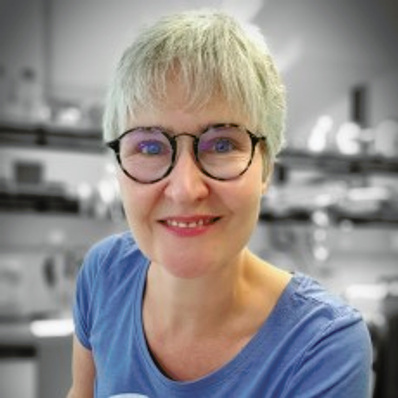
Ulla Neumann
Dr Ulla Neumann received her degree in Biology from the University of Marburg, Germany, and a PhD from the Université Pierre et Marie Curie in Paris, France, working on the haustorial structure of African parasitic plants. Subsequently, she was a postdoc in Professor Chris Hawes lab at Oxford Brookes University working on small Rab GTPases and involved in setting up a BBSRC-funded high-pressure freezing unit. Since 2008, she is the TEM expert in the Central Microscopy facility of the Max Planck Institute for Plant Breeding Research in Cologne, Germany, adding an ultrastructural, cell biological angle to many research projects as varied as seed coat development, morphogenesis of different leaf shapes, plant-pathogen interactions, or stamen maturation in barley. In recent years, she has been particularly interested in 3D EM, CLEM and XRM techniques in the field of plant microscopy. Ulla is member of the RMS since 2000 and scientific editor to the Journal of Microscopy since 2019.
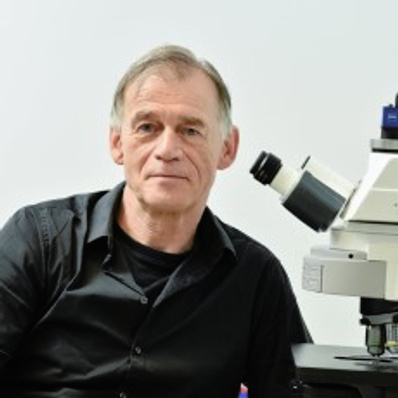
Ton Timmers
Dr Ton Timmers is since 2016 head of Central Microscopy, the imaging facility of the Max Planck Institute for plant breeding research in Cologne, Germany He received his degree in Biology from the Radboud University in Nijmegen, the Netherlands, and a PhD in Agricultural and Environmental Sciences, focusing on plant embryogenesis, form the Wageningen University & Research, the Netherlands. He worked as researcher at the Free University of Amsterdam on the nucleo-cytoplasmic transport of ribosomal proteins in yeast and subsequently moved to Toulouse, France, to work on plants symbiotic interactions in the Laboratory of Plants Microbes and Environment Interactions.
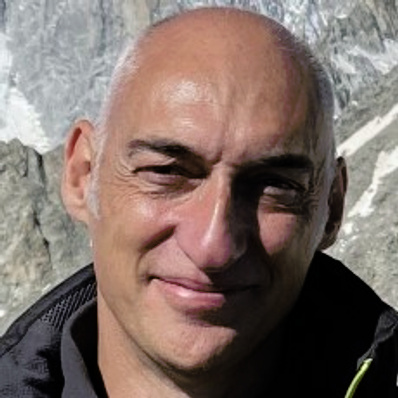
Andrea Genre
Andrea Genre is Full Professor of Plant Biology at the University of Turin (Italy) and is in the scientific board of the department’s imaging facility IMAG3D. He specialized in plant cell biology, with a focus on arbuscular mycorrhizal symbiosis since he obtained his PhD in Fungal Biology and Biotechnology from the University of Turin in collaboration with INRAE/CNRS in Toulouse.
His research combines microscopy and molecular biology to investigate plant fungus interactions involving calcium signaling, membrane trafficking, and host cell cycle reactivation in mycorrhizal symbiosis, with insights in sustainable agricultural applications.
Andrea Genre has contributed to over 100 scientific publications in leading journals and currently serves as Associate Editor for New Phytologist and Chief Editor for Frontiers in Plant Science (Symbiotic Interactions section).
In addition to research and teaching, he is actively involved in academic service, outreach, and science communication initiatives.
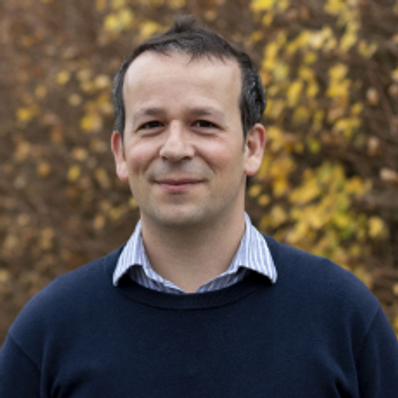
Pau Formosa-Jordan
Pau Formosa-Jordan is a group leader at the Max Planck Institute for Plant Breeding Research in Cologne (MPIPZ), Germany. His group combines theory and experiments to understand the dynamics of plant developmental processes, using microscopy, quantitative image analysis, theory building, and modeling. Pau’s group focuses on two main questions: how cells become different from one another in plant tissues, forming different kinds of cellular patterns, and how the shoot meristem changes from producing leaves to flowers, a process known as the floral transition. Pau is a physicist by training. In 2013, he earned a PhD in theoretical biophysics at the University of Barcelona, in Spain. Afterwards, he did a postdoc at the Sainsbury Laboratory at the University of Cambridge, in the UK. In 2020, he started his research group at the MPIPZ.
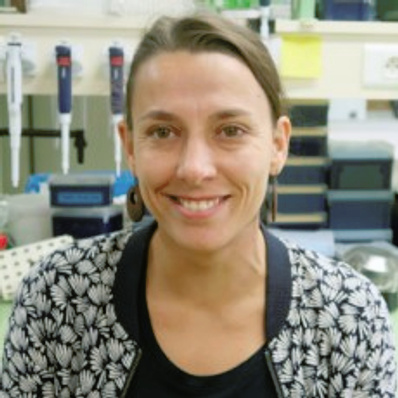
Alice Vayssières
Alice Vayssières is the Microscopy Core Facility Manager at Institute Jean-Pierre Bourgin for Plant Sciences (IJPB, INRAE, Versailles, France) since 2024. She obtained her PhD from the University of Lorraine (Nancy, France), where she investigated poplar root architecture and hormonal pathways during symbiotic interactions. She then moved to Cologne to study shoot architecture, flowering time, and shoot apical meristem shape at the Max Planck Institute for Plant Breeding Research (MPIPZ). Her current work focuses on plant morphogenesis, using advanced imaging approaches such as fluorescence lifetime imaging microscopy (FLIM) and stimulated emission depletion (STED) microscopy.
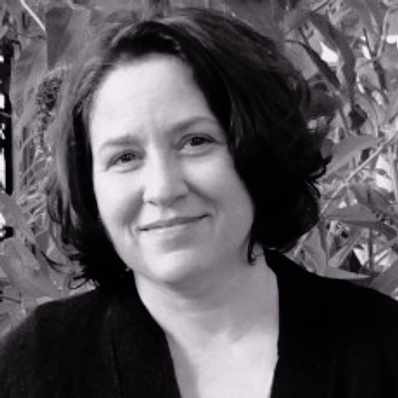
Verena Kriechbaumer
Verena Kriechbaumer is Professor of Plant Sciences and Biotechnology at Oxford Brookes University, where she leads the Endomembrane Structure and Function research group. Her research lies at the intersection of cell biology, molecular biology, and advanced imaging, with a focus on the organisation and function of the plant endoplasmic reticulum and the secretory pathway. She takes an interdisciplinary approach that connects fundamental plant science with applied goals, including engineering plants for methane detoxification and the production of human therapeutics.
Verena completed her Diplom in Biology and PhD in Plant Genetics and Biochemistry at the Technical University of Munich, where her research centred on tryptophan and auxin biosynthesis in maize. She subsequently held postdoctoral positions at Oxford Brookes University and Sheffield Hallam University, developing expertise in ER and Golgi biology, live-cell imaging, and protein–protein interactions.
RMS Contacts



Nick Cameron
nick@rms.org.uk
+44 (0) 1865 254772
Contact Nick for exhibition and sponsorship event queries and RMS Corporate Membership.