
Kevin Cox
Yvon Jaillais
Dorota Kwiatkowska
Adrienne Roeder
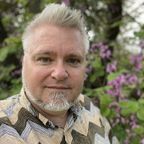
Sebastian Schornack
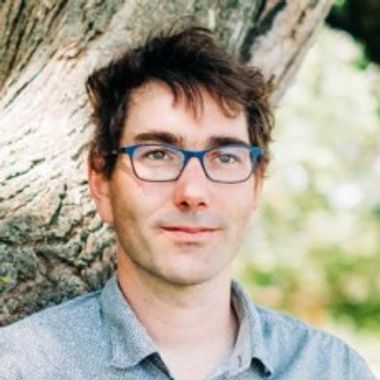
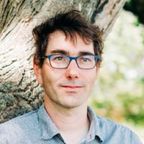
Yvon Jaillais did his PhD at the Ecole Normale Supérieure de Lyon (ENS Lyon, France) in the group of Thierry Gaude, where he studied the link between intracellular trafficking and polar auxin transport. In 2008, he moved to the Salk Institute for Biological Studies (La Jolla, California, USA) to study brassinosteroid signaling in the group of Joanne Chory. He was recruited as a CNRS scientist in 2012 to work in the RDP lab (Lyon). There, Yvon Jaillais started a research program on the role of anionic phospholipids in membrane organization, receptor kinase signaling and plant development. His group focuses on the membrane-based mechanisms that allow plant cells to communicate with each other to regulate plant development and environmental interactions. His lab has built tools to image lipid patterns within membranes at multiple scales, and to perturb them with subcellular accuracy. They now address how those patterns are formed and their role in regulating intra and inter-cellular communication in plants.
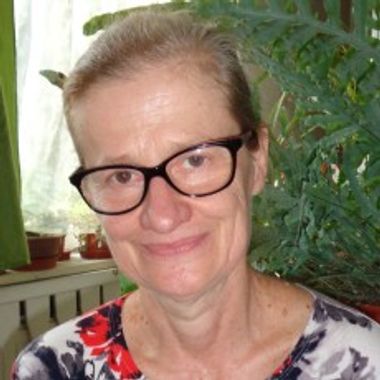
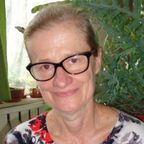
Dorota is a professor in the Institute of Biology, Biotechnology and Environmental Protection. Her research focuses on mechanical aspects of plant development and organ function. Members of the Dorota group investigate plant growth and function combining biophysical, structural, and developmental perspectives. Focus topics include mechanics of the primary and secondary plant cell walls. Our main contributions are development of methods for quantification of plant growth and geometry at subcellular and tissue scales, the discovery of the elastic deformation gradient across the primary wall layers that is crucial for mechanical signal transduction, and uncovering the underlying mechanism of passive deformation of secondary walls during hygroscopic movements, with important implications for the use of biomimetics.
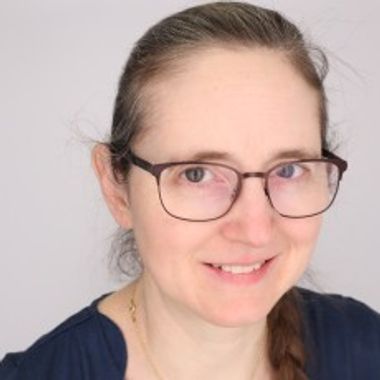
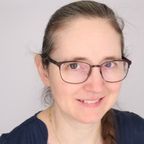
Adrienne Roeder is a Professor in the Weill Institute for Cell and Molecular Biology and the School of Integrative Plant Sciences, Section of Plant Biology at Cornell University. She earned her B.S. in Biological Sciences with a minor in Mathematical and Computational Sciences from Stanford University in 1999. She earned her PhD from UCSD working with Martin Yanofsky in 2005. She completed a postdoctoral fellowship at Caltech with Elliot Meyerowitz before starting her own lab studying Arabidopsis sepal morphogenesis using a computational morphodynamics approach combining live imaging, image processing, and computational modeling. She has a longstanding interest in plant cell and developmental biology. Her lab studies how cell size and organ size are regulated in plants. Specifically, her group studies how plants generate cells with diverse sizes, ranging from giant to small, through regulating endoreduplication. On the flip side, her group also studies how plants form organs, such as sepals, with reproducible size despite variability of cells in their size, growth, and division. Her lab has an interest how organ size and shape emerge from the coordination of cell growth. Strikingly, her lab is finding that plants utilize stochasticity or randomness to produce robustness and regularity.
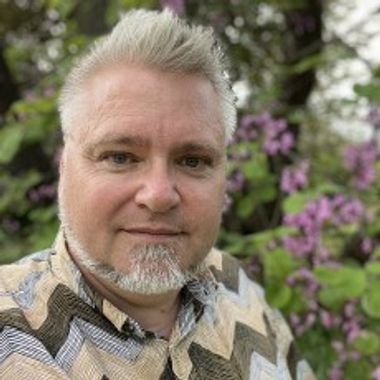
Sebastian Schornack is a Research Professor at the Sainsbury Laboratory, University of Cambridge (SLCU). After earning his PhD from Martin-Luther University Halle in 2006, he co-discovered the TAL effector DNA binding code during postdoctoral work and subsequently researched Phytophthora infestans effectors with Sophien Kamoun in Norwich. Since 2013 his independent lab at SLCU is focusing on Intracellular Plant-Microbe Interactions, supported by Gatsby and Royal Society fellowships. His research investigates the molecular mechanisms of plant colonisation by filamentous pathogens and symbiotic fungi. Utilising diverse plant models from bryophytes to angiosperms, his team pursues comparative and evolutionary approaches to uncover plant processes that govern plant-microbe interactions, ultimately aiding crop protection and improvement.