

Oliver Burton
Fiona Cullen
Adrian Hayday
Virginia Lutwin

Wiebke Nahrendorf
Samson Rogers

Tamar Tak
Mary Wu

Division of Immunology, Babraham Institute
I did my doctoral work under Prof. Anne Cooke in the Department of Pathology at the University of Cambridge, researching innate immunity and type 1 diabetes. Afterwards, I joined Dr. Hans Oettgen at Boston Children’s Hospital where I studied food allergy pathogenesis and tolerance induction. Responding to an advert for a flow cytometry specialist, I joined Prof. Adrian Liston’s lab in Leuven and moved with him to the Babraham Institute where I am employed as a staff scientist. My work currently focuses on regulatory T cell biology in the tissues, but I help out with lots of projects including those dealing with neuroimmunology and respiratory infection responses.
Wiebke is a senior scientist and co-investigator with Phil Spence at the University of Edinburgh (UK), where she studies the development of disease tolerance following malaria infection using complex human challenge models as well as ex vivo perfusion of human spleens. This follows on from her postdoc showing that host control of inflammation is imprinted through tissue remodelling. Wiebke has unpicked the mechanisms of malaria immunology since her PhD in the labs of Jean Langhorne (National Institute for Medical Research, London, UK) and Robert Sauerwein (Radboud University Medical Center, Nijmegen, The Netherlands). Outside of work she enjoys scuba diving in the cold waters of Scotland, digging up the garden and whiskey sours.
Experimental medicine for a mechanistic understanding of disease tolerance in human malaria Thursday @ 11:20 AM
Samson leads the Cytkit project, to provide open-source cytometry hardware and software. Samson has also co-founded the company Astute Devices to sell Cytkit kits, so people can build, tinker with, and get data from their own Cytkit instrument easily and at low cost.
Samson’s main previous achievement in cytometry was Cellular Highways, started in 2016 and acquired by Stemcell Technologies in 2025, whose product Highway1, a sterile and GMP cell sorter, is now in use by many research institutions and cell therapy companies worldwide.
Samson has a research background in biological physics of molecules and cells, and an entrepreneurial background in life science tools. Samson also contributes to the ISAC CYTO Innovation Committee, in particular the “Next Big Things in Cytometry” webinar series.
Open source spectral cytometry: introducing Cytkit and Honeychrome Thursday @ 10:10 AM
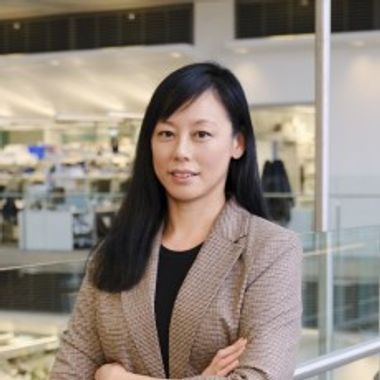
Mary leads the Viral & Immune Surveillance Platform at the Francis Crick Institute. After a PhD with Caroline Hill, she held a Sir Henry Wellcome Postdoctoral Fellowship with Jim Smith at NIMR, then brought her expertise in screening and cell-based assay design to the Crick’s High Throughput Screening STP. During the COVID-19 pandemic, she built the Crick’s microneutralisation platform, generating data behind 25+ publications and informing SAGE and JCVI policy decisions. Her five-person team now applies the platform across translation, research and public health projects in infectious disease, from antiviral drug testing with partners including AstraZeneca, GSK and Google DeepMind to mucosal neutralisation assays from nasosorption samples, which aim to support mucosal vaccine development. Their work contributes to the Crick’s role in the 100 Days Mission for pandemic preparedness, and they are now developing flow virometry on the NanoFCM to characterise viruses at the single-particle level.
Every Particle Counts: Single-Virus Profiling with Nanoflow Cytometry Thursday @ 2:20 PM