
Confirmed Invited Speakers

Lucy Collinson
Lucy is Head of Electron Microscopy at The Francis Crick Institute in London. Her degree and PhD were in Microbiology, followed by a post-doctoral position in Cell Biology using light and electron microscopy to investigate membrane trafficking pathways at University College London. Following that she ran biological EM facilities, first at UCL and then at the Cancer Research UK London Research Institute, which became part of the new Francis Crick Institute in 2015. Her microscopy interests cover 3D EM, Correlative Light and EM, X-ray microscopy, image analysis, and microscope design and prototyping.
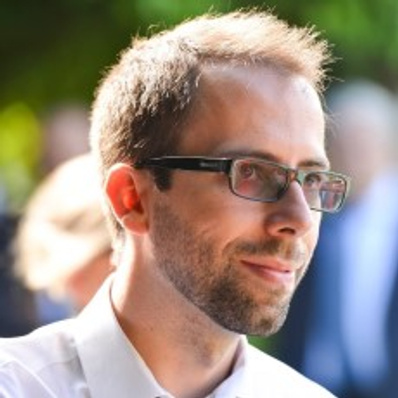
Ricardo Henriques
Ricardo Henriques is a Particle Physicist by training that fell in love with Biological Physics shortly after graduating. He carried out his PhD studies in both the Musa Mhlanga and Christophe Zimmer laboratories, doing research between IMM (Portugal), Institut Pasteur (France), CSIR (South Africa) and Andor Technology (UK and USA). During this time, he entered the field of Super-Resolution Microscopy, developing technologies that enable imaging of cellular and viral structures at unprecedented resolution. During his PhD and postdoc, he applied the methods he developed to study Cell Signalling, T-cell Immunology and Viral Infection. In 2013 he established his first research group at UCL, with a dual emphasis on Developing new Imaging Technologies and Cell Biology research. In 2017 he was further invited to extend my group into the Francis Crick Institute, where he established a second small laboratory. In 2019 he was promoted to full Professor at UCL. He moved his laboratory to Portugal in 2020, and currently leads his research group at ITQB NOVA. His technological developments are widely disseminated to the Cell Biology and Biomedical research community. Ricardo and his team developed algorithms, such as QuickPALM, NanoJ, SRRF and SQUIRREL, which are among the most used analytical methods in the Super-Resolution Microscopy field. His core philosophy has been to make research reproducible, transparent, and open-source.

Paul Verkade
Paul Verkade is a Professor of Bioimaging at the University of Bristol, UK. He has been working in the field of microscopy from the start of his scientific career and over the last 15 years has established himself as one of the leaders in the field of Correlative Light Electron Microscopy (CLEM).
As a champion of Correlative Microscopy and a passion for training the next generation of microscopists, he has taught on and organised numerous RMS and other courses including 4 EMBO practical courses on CLEM in Bristol and edited 5 books on Correlative Microscopy.
He is a long-standing member of the Electron Microscopy section of the RMS, having served as chair and other functions. He has been involved in the set-up of the RMS mentoring scheme that started in 2022.
One of the main efforts is to bring together imaging communities and organise the funding of imaging infrastructure, Paul has been an active member of the BioImagingUK community since the beginning, set up EM-UK as an EM network together with Pippa Hawes (Pirbright institute) and in 2019 initiated the organisation of the volume EM community, together with Lucy Collinson (Crick) and Gerard Kleijwegt and Ardan Patwardhan (EMBL-EBI).